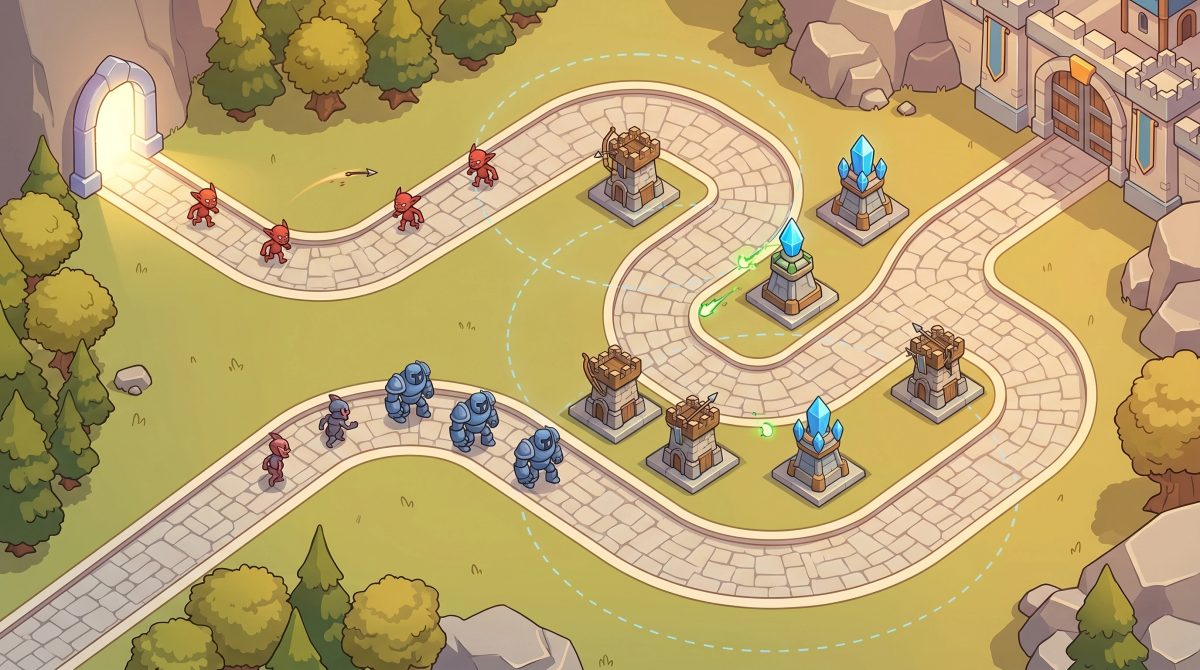
10 Best Tower Defense Games Where Crowd Control Wins Waves
Discover tower defense games where slows, stuns, blocks, and knockbacks buy your damage dealers the time they need.
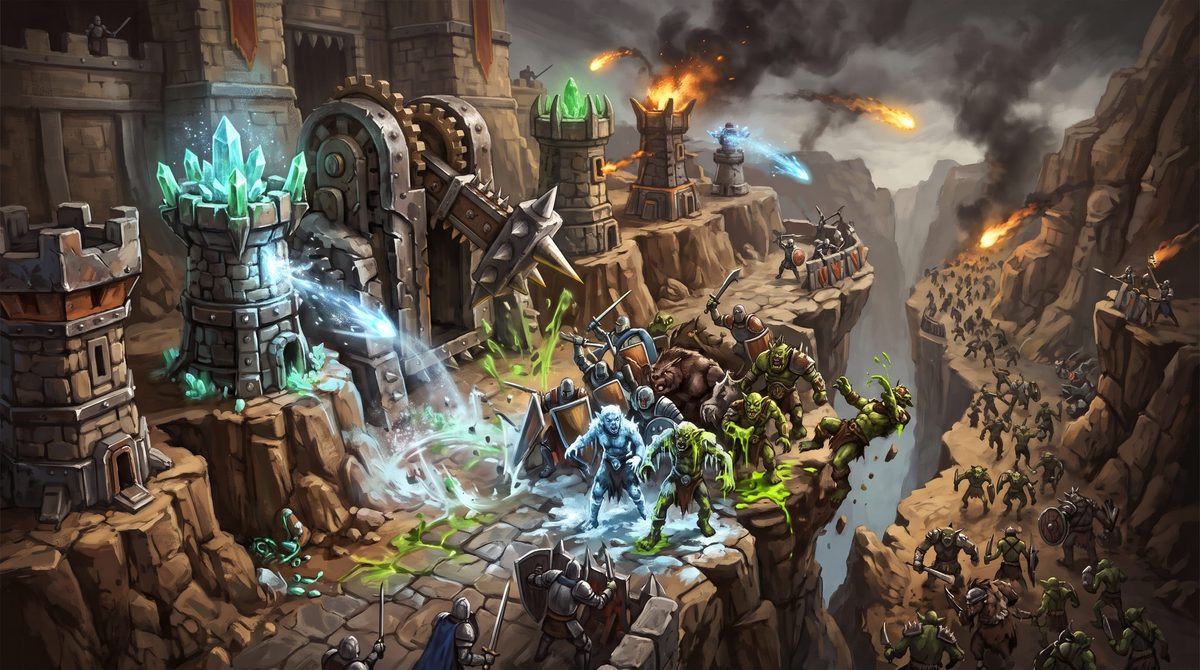
The best tower defense games with crowd control make a slow or block feel like a placement decision, not just another upgrade. The payoff is extra firing time. The risk is spending that money on delay while the wave stays alive.
This ranking favors games where control changes coverage, chokepoints, or the outcome of a wave. The top of the list is classic lane and trap defense, where a slow, a push, or a body-block is the plan. The bottom is action hybrids and lighter lane games, where control is real but you are also fighting, managing characters, or solving a much simpler lane. If you want to manage towers rather than fight alongside them, start at the top.
Quick take
- Best status support: Bloons TD 6. Glue and Ice are only as good as the towers that can hit what they catch.
- Best terrain control: Dungeon Warfare 2. Knockback is useless unless the push has somewhere useful to send the enemy.
- Best body-blocking: Kingdom Rush. Barracks create the choke, and they can fall.
- Best single-purpose slow: Defense Grid: The Awakening. One Temporal tower, placed where the damage already is.
- Hybrids: Orcs Must Die! 3 and Sanctum 2 belong here only if you want to stand in the killbox. The wider list is action tower defense where placement still matters.
1. Bloons TD 6
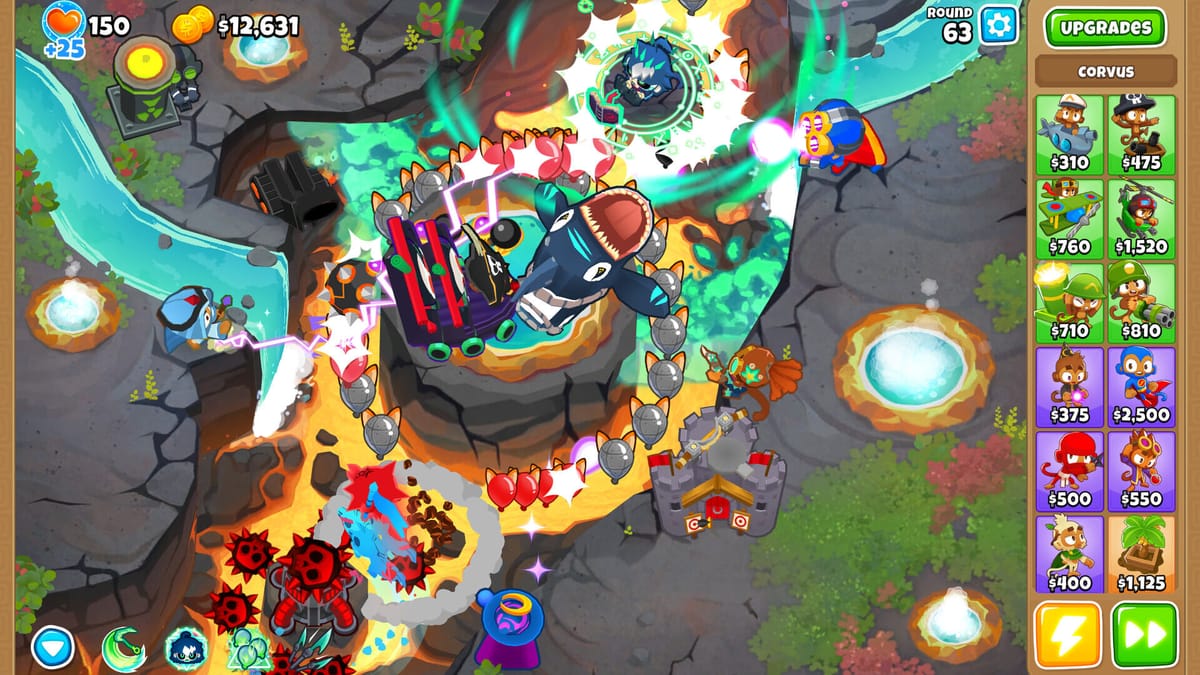
Best for: Players who want support placement and damage specialization to work as a single system.
Glue and Ice are Bloons TD 6's control toolkit, and neither one is a damage plan. A slow at the entrance can look productive while doing less than the same tower placed where several attackers already share coverage. The useful stretch is the one where a small speed cut gives those towers another shot.
Immunities are the other half of the placement. A freeze that sharp towers cannot damage, or glue on a bloon the rest of the defense ignores, stalls the wave and still leaks. Upgrades change which bloons a support tower can catch, so a setup that holds one wave can open a hole on the next.
The tradeoff is tower space and upgrade cost. A second slow is not automatically better than a damage tower that can use the first one.
2. Dungeon Warfare 2
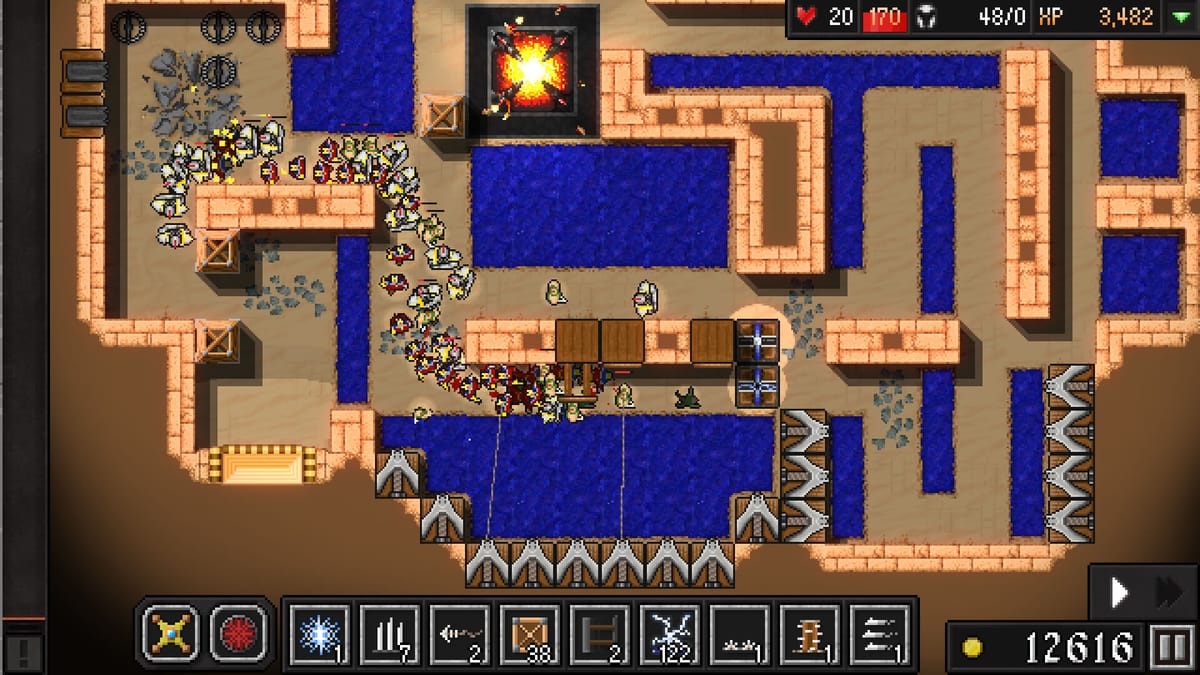
Best for: Players who want traps and terrain to decide how a wave falls apart.
Knockback makes the map an offensive resource. A push can send a vulnerable enemy away from the exit or into a pit, so the question is not only whether the trap reaches the lane. It is whether the push has a useful direction. A wall with a hazard beside it is a different trap from the same wall facing open floor.
That is also the failure mode. On a flat corridor, or against an enemy that resists displacement, the same investment does very little. This clicks if you rebuild around each dungeon. It is a poor fit if you want one tower layout that works on every map.
3. Kingdom Rush
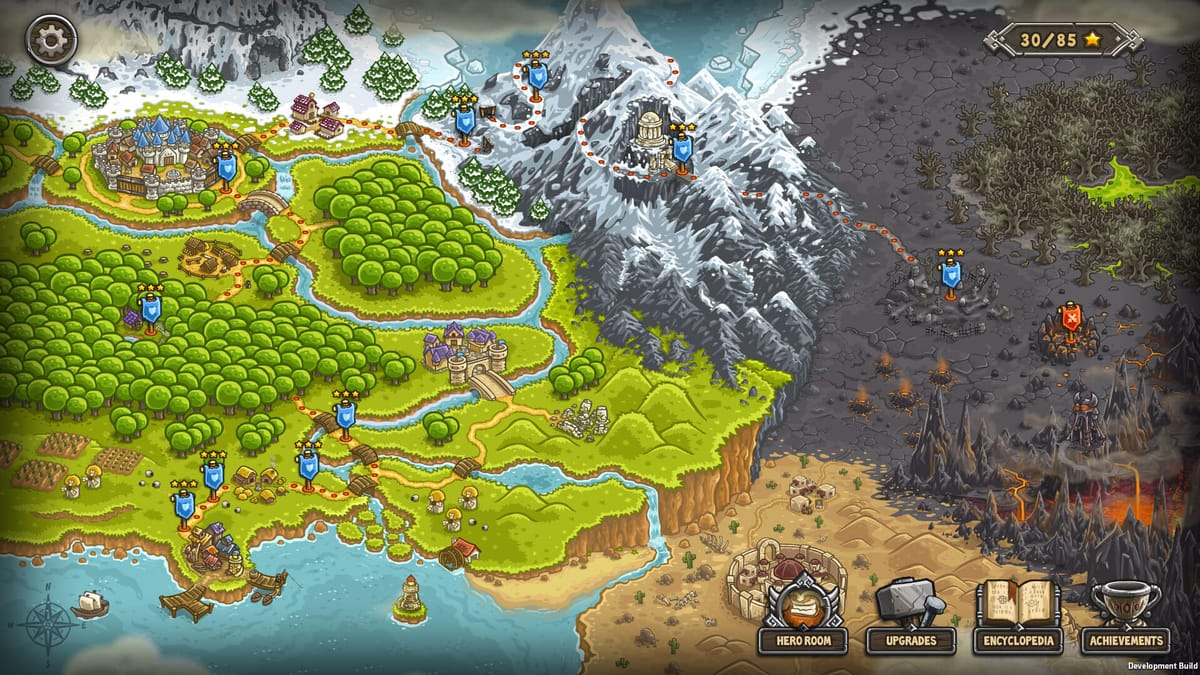
Best for: Players who like tight chokepoints and active wave response.
Barracks turn crowd control into a physical contest. Soldiers hold enemies in place while nearby towers fire, and the Reinforcements ability is a second stall when that line is about to break. The placement decision is where those blocked enemies stand. A hold point inside several tower ranges is worth more than one sitting just outside your main damage.
Soldiers die. A layout that assumes the barracks will hold forever needs enough damage to clear the wave before the line collapses. If you want a purely passive tower grid, the hero and the ability bar will feel like extra work.
4. GemCraft: Frostborn Wrath
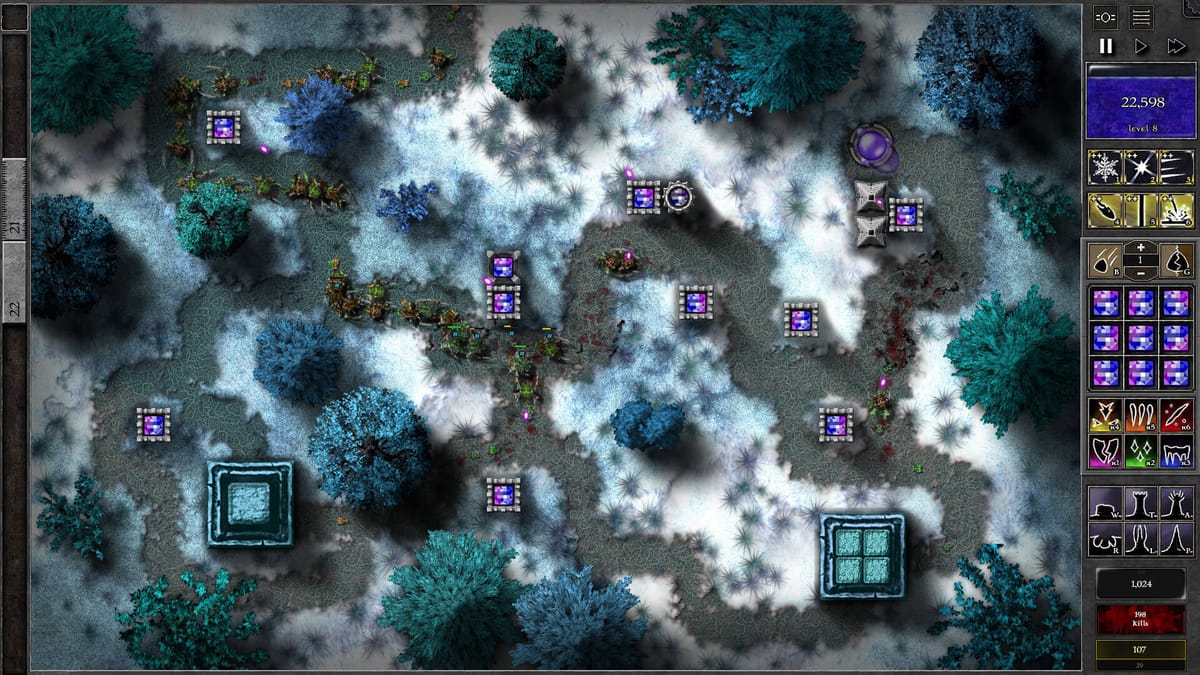
Best for: Players who enjoy tuning support effects across long, demanding runs.
Slow is a gem component, not a tower you drop and forget. Combining it into a gem means that slot is not a damage component, so the decision is how much of the gem's power should be delay. A slow near a concentrated damage gem gives that gem more time to work. The same slow on an empty stretch of path only postpones the leak.
Endurance runs and layered progression make this a strong fit if you like tuning a build over a long session. They also make it less immediate than a compact tower defense game where each tower has one job.
5. Defense Grid: The Awakening
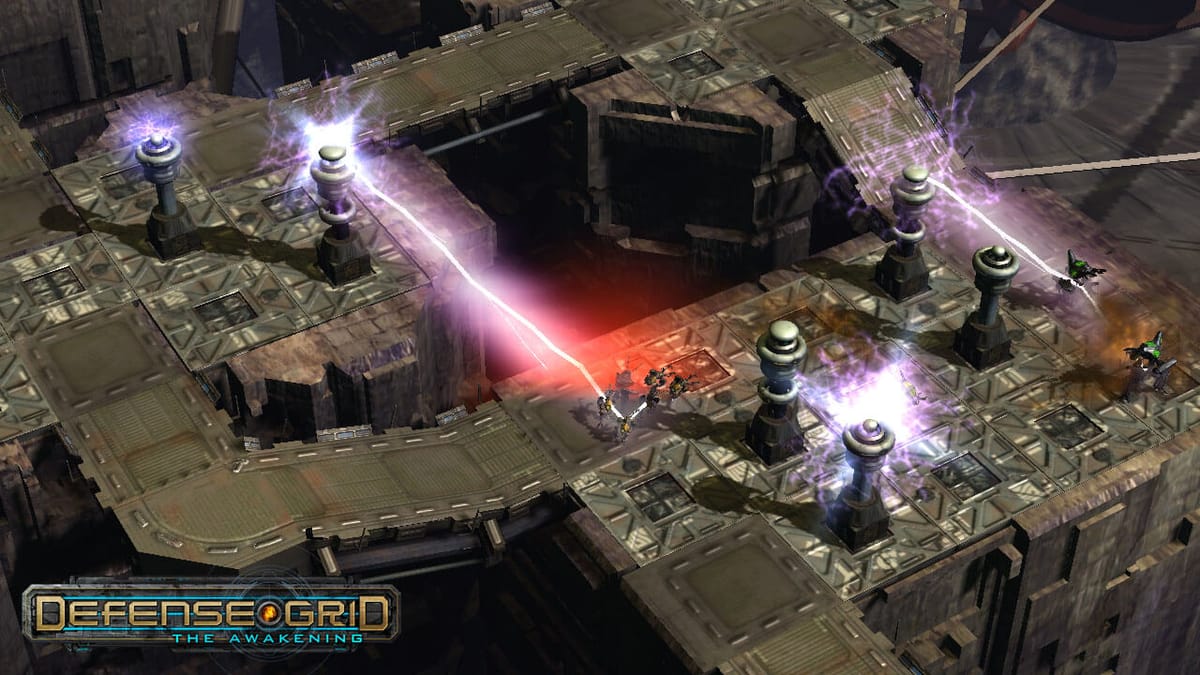
Best for: Players who want a readable map and a precise reason for every support tower.
The Temporal tower slows enemies in its area, and that is most of the control toolkit. Put it on a bend or a stretch of route where several damage towers can reach the slowed enemies for most of the time they are in the field. Coverage on an empty stretch wastes the tower.
The appeal is that restraint. You are not sorting a catalog of status effects. One well-placed slow changes the efficiency of a defensive pocket, and players who want elaborate combinations will find the control side narrow on purpose.
6. Infinitode 2
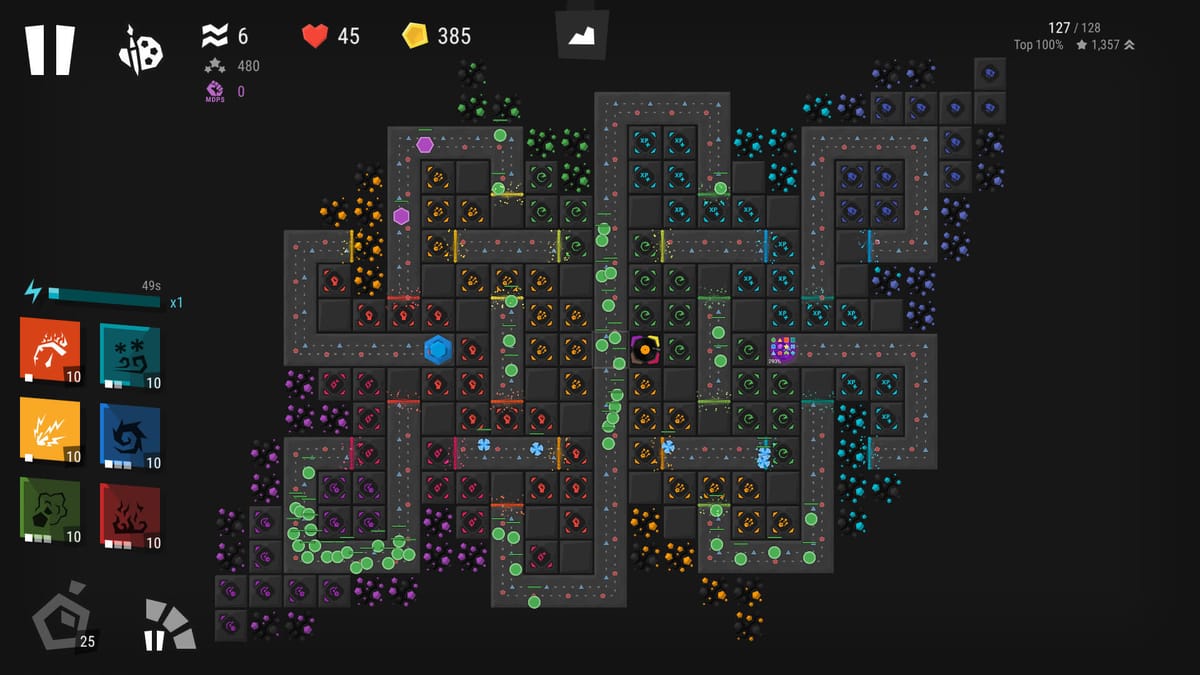
Best for: Players who want to refine support coverage alongside a long-term research system.
The Freezing tower slows enemies inside its radius, so placement is a coverage problem as much as an upgrade problem. The radius can look large while touching a lot of unused ground. What matters is how much of the slowed path sits inside other towers' range.
Research and custom maps give that optimization room to grow, and they also pull attention off the current wave. If you want the whole puzzle contained in one short session, the research layer is more than you need.
7. Orcs Must Die! 3
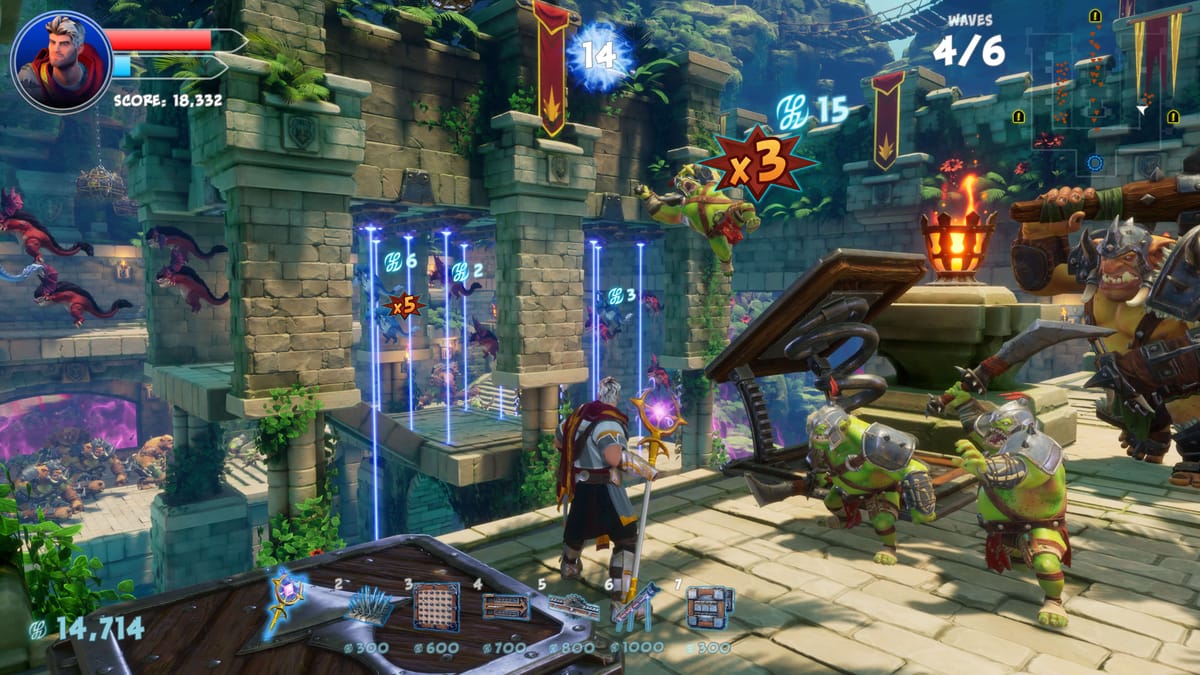
Best for: Players who want to fight while their traps hold a chokepoint.
Tar slows enemies, which is useful where wall and floor traps can keep hitting the same group. Barricades funnel attackers into that kill zone. More tar is not the goal. The setup has to keep enemies inside overlapping damage long enough to justify the floor space, and you are part of that damage during the wave.
This is an action-defense game. Barricades can break, and a layout you cannot save with your own weapons will fail even if the tar is in the right place. If you want the problem solved before the wave arrives, look higher on this list.
8. Plants vs. Zombies
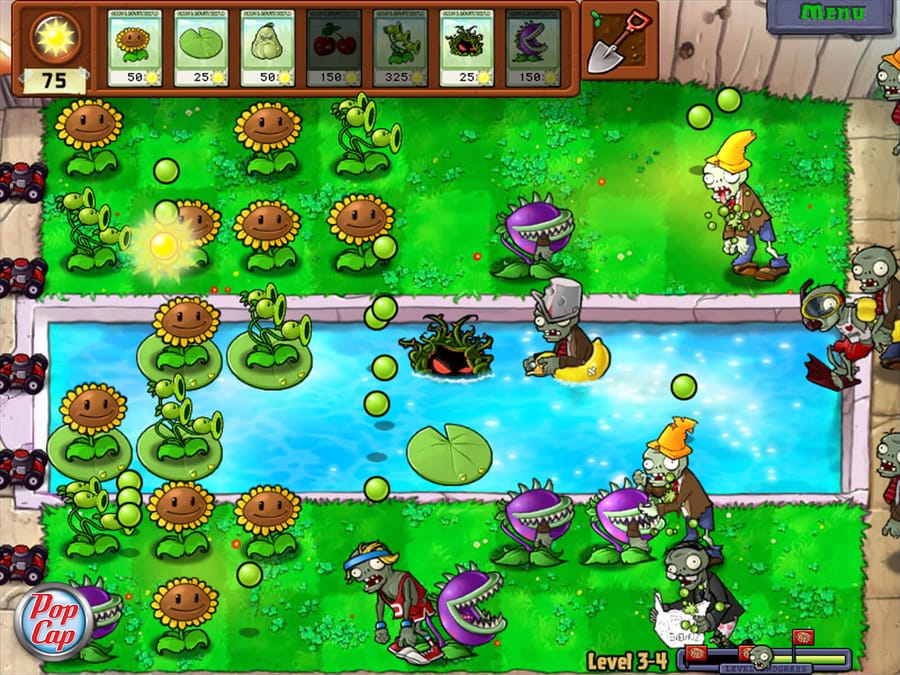
Best for: Players who want clean lane decisions without a dense upgrade system.
A Snow Pea slows zombies in its lane. A Wall-nut holds them in place. Together they buy the plants behind the blocker time to shoot, and the decision is which lane gets that pair. The lane still needs enough damage to finish the zombies before the Wall-nut is eaten.
Sun spent on slowing or blocking is sun not spent on another attacker. That trade is easy to read, which is why the game is a good introduction to lane control and a narrow pick if you want deep tower customization.
9. Defender's Quest: Valley of the Forgotten
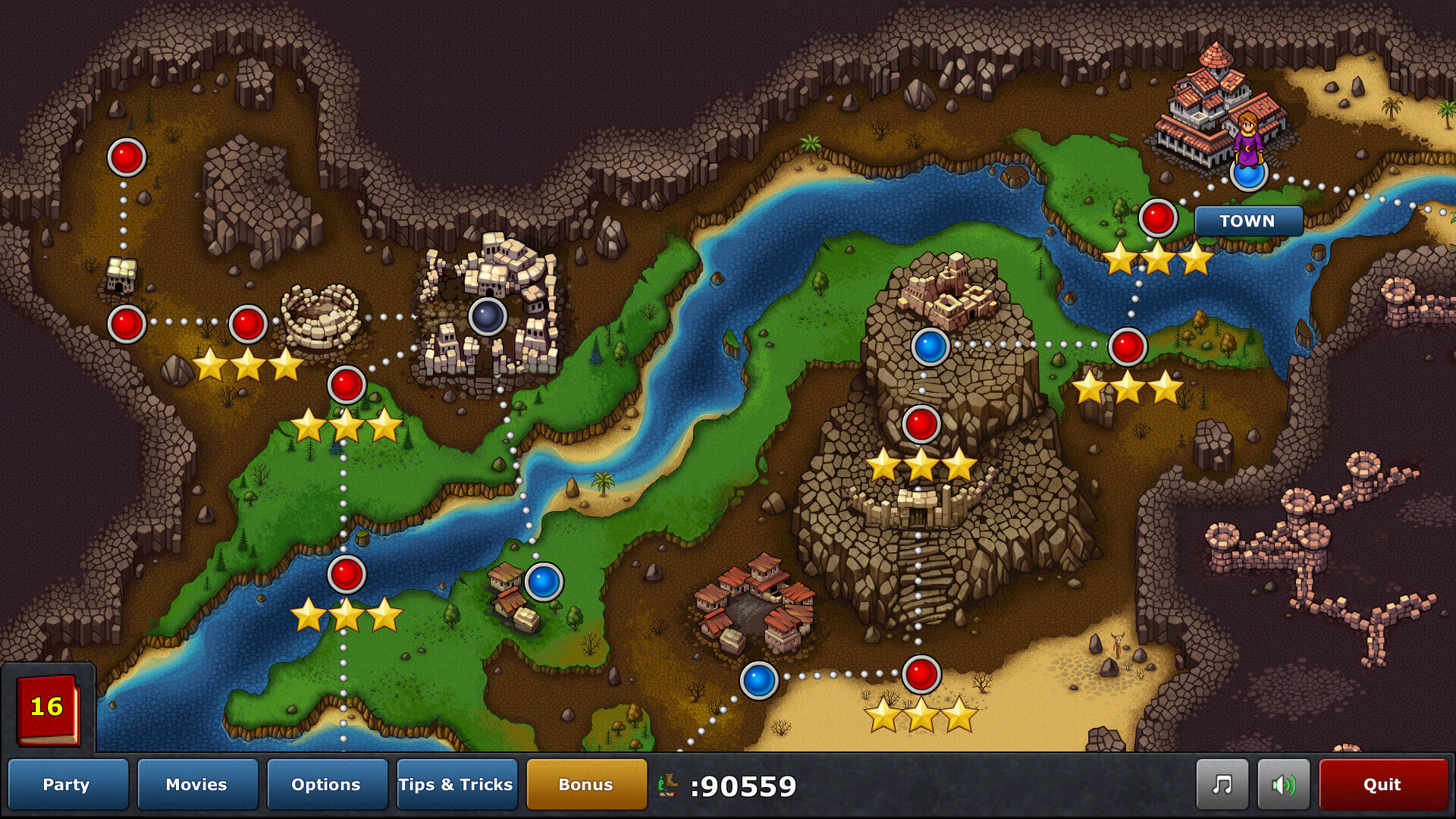
Best for: Players who want RPG progression wrapped around a defendable front line.
Knights block while ranged characters attack from safer tiles. Place the blocker where those attackers can reach the held enemies, not merely at the first tile on the route. A durable unit buys time only if the rest of the formation can use it.
Character levels and equipment replace tower upgrades. If you want to swap interchangeable towers and status effects, the party structure is a less direct fit. The defense is still a front line and a back line, and that split is the crowd-control decision.
10. Sanctum 2
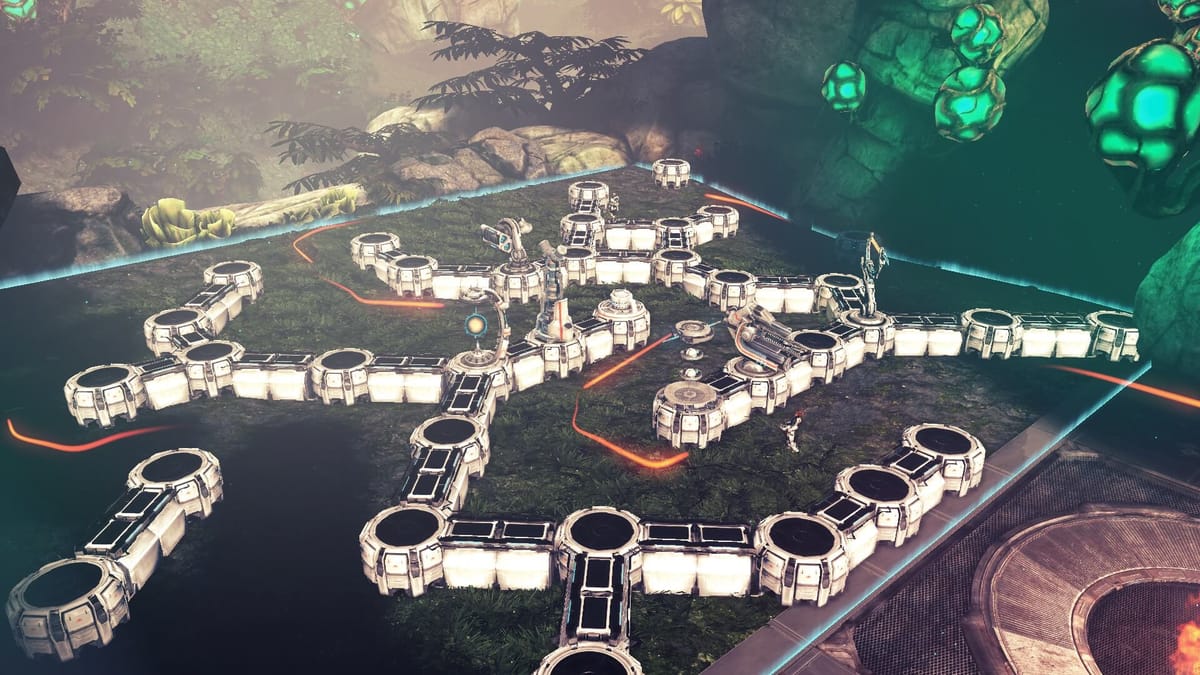
Best for: Players who want to shape enemy routes and then defend them in first person.
This is the least conventional control pick here. Blocks redirect ground enemies along a longer path, which creates more time for towers to fire. A longer route that your towers cannot see is just a walk. The useful maze keeps enemies inside coverage the whole way.
You also shoot during the wave. Choose Sanctum 2 for pathing plus first-person defense, not because you want a traditional slowing-tower puzzle.
How to judge a control placement
Delay earns its cost when damage can use it. Before adding another support tower or trap, check three things:
- Overlap: How many damage sources can reach the enemy during the delay?
- Reliability: Can these enemies actually be slowed, blocked, or displaced?
- Cost: Would another damage source clear the wave faster than more control?
Be careful when stacking effects. Two slows that barely add firing time can leave a wave stalled and still alive.