Kingdom Rush vs Bloons TD 6
Kingdom Rush is the better tower defense game to learn, but Bloons TD 6 is the better one to master. This comparison breaks down which defensive style fits you and where each game wins.
Kingdom Rush vs Bloons TD 6
Kingdom Rush and Bloons TD 6 get compared constantly, but they barely play the same way. In kingdom rush vs bloons td 6, the real split is not quality. It is what kind of defensive thinking each game rewards once the waves start stressing your lanes.
Both are classic tower defense. Both are about holding routes, upgrading towers, and surviving escalating pressure. But one is built around reading the map, locking down chokepoints, and solving lane problems cleanly. The other is built around reading tower synergies, refining builds, and pushing optimization much further. That is the line that matters.
Quick verdict
Kingdom Rush is the better game to learn tower defense. Bloons TD 6 is the better game to master it.
Start with Kingdom Rush if you want cleaner lane structure, faster map readability, and a campaign that teaches placement discipline. Pick Bloons TD 6 if you want more room to optimize towers, stronger long-term depth, and co-op that changes the defense dynamic in a meaningful way.
Defensive structure: map reading vs tower synergy
This is the core of the kingdom rush vs bloons td 6 choice.
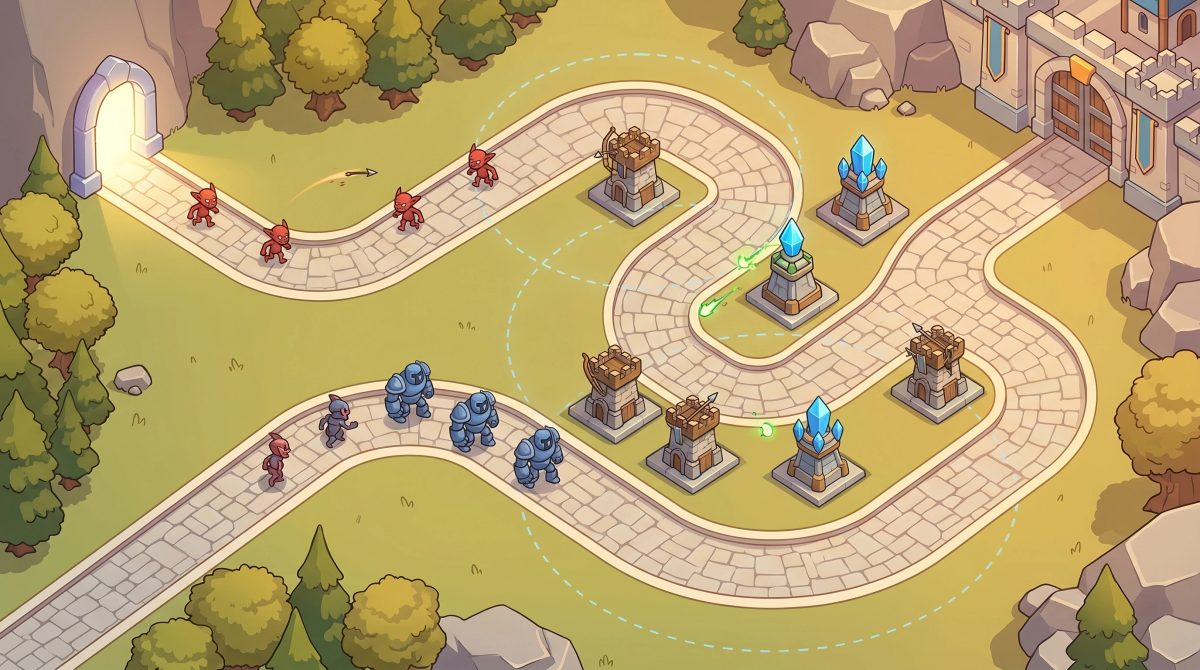
Kingdom Rush is about reading the map. Its fixed tower pads, obvious lanes, and compact chokepoints push you toward route control first. You are constantly deciding where barracks should stall, where artillery should catch clustered enemies, and which lane needs mage coverage before armor starts slipping through. It often feels like a puzzle being solved. The map is asking a question, and the right tower layout is the answer.
Bloons TD 6 is about reading tower synergies. The lane structure is still clear, but the real game lives in tower combinations, upgrade paths, support stacking, and coverage planning over time. Good placement matters, but the bigger skill jump comes from understanding how one tower changes the value of the next. That makes it feel more like a build being optimized than a puzzle being solved.
For pure defensive planning, Kingdom Rush is tighter. For systemic depth inside that planning, Bloons goes further.
Pacing: short tactical reads vs long-form optimization
Kingdom Rush gets to pressure fast. Maps are compact, waves escalate quickly, and mistakes in lane coverage show up early. You usually know why a defense cracked. A leak happened because a chokepoint lacked burst, stall, or armor-piercing at the exact moment pressure spiked. That clarity is a big reason it teaches the genre so well.
By contrast, Bloons TD 6 has a broader rhythm. Early and mid-game can look controlled, then later rounds start exposing weak scaling, bad support placement, or greedy upgrade paths. Its challenge curve is less about a campaign steadily teaching you lane discipline and more about how much depth opens up once you understand the meta. Kingdom Rush gets harder the further into the campaign you go. Bloons gets harder the more you understand what the game is really asking from your builds.
So the pacing question is simple. Kingdom Rush is more methodical at the map level. Bloons is more layered at the run level.
Complexity and readability: cleaner lessons vs bigger ceiling
Kingdom Rush is the cleaner read. The defensive language is direct: a lane, a pad, a choke, a threat type, a response. You can scan a map, place a tower, and understand the job it is doing almost immediately. That makes it the stronger teaching tool for new or rusty players who need to understand lane control before they worry about build theory.
Bloons TD 6 is readable on the surface, but its real complexity sits underneath. Tower roles branch hard through upgrades. Support effects matter more. Small placement differences can reshape how an entire defense scales. Once you start learning the systems, the game gets much richer. It also gets less forgiving of lazy planning.
That is the trade. Kingdom Rush is more legible moment to moment. Bloons has the larger mastery curve, but it asks you to care about synergies, efficiency, and long-term tower value much earlier than some players expect.
Co-op vs solo fit: Bloons wins multiplayer, Kingdom Rush wins onboarding
Co-op tips the scale toward Bloons hard. The shared map changes the dynamic entirely. One player can handle core damage towers and economy decisions while the other covers support, ability timing, and weak sections of the route. On harder maps, that split turns the whole defense loop into coordinated build planning instead of parallel play.
By comparison, Kingdom Rush is the better solo teaching game because the whole map belongs to your decisions. Every choke, every stall point, every bad upgrade is easier to track back to one choice. That makes improvement cleaner. It is easier to see what the defense needed and why your lane plan failed.
If multiplayer matters, Bloons TD 6 has the stronger edge. If the goal is learning classic tower defense fundamentals alone, Kingdom Rush is still the sharper recommendation.
Action vs planning balance
Neither of these games is a hybrid action-defense title, but they still land differently on active involvement.
Kingdom Rush uses heroes, reinforcements, and spells to keep you active without ever taking focus away from lane structure. Those tools matter, especially when a wave threatens to break a choke or when you need to stall for a critical upgrade. But they support the plan. They do not replace it.
Bloons TD 6 stays more build-focused overall. You are still active through abilities, targeting tweaks, and tactical adjustments, but its identity is less about emergency lane patching and more about whether your tower network was built to scale in the first place. That gives it a slightly less theatrical feel moment to moment, but a much stronger optimization hook over time.
Kingdom Rush feels more tactical and immediate. Bloons feels more systems-heavy and mastery-driven.
FAQ
Which tower defense game should most players start with?
Kingdom Rush. It teaches the genre better because map readability is stronger, lanes are easier to parse, and the link between tower placement and wave outcome is clearer. You learn chokepoints, damage coverage, stall timing, and route control without needing to absorb a huge synergy layer first.
Is Bloons TD 6 better than Kingdom Rush?
As a mastery game, yes. As a first classic TD, no.
Bloons TD 6 has the higher ceiling because tower synergies, upgrade paths, support planning, and co-op give you more to optimize over time. But that same depth makes it a less clean first lesson in basic lane defense.
Which game has better strategy depth?
Bloons TD 6 has more long-term strategic depth. Kingdom Rush has cleaner tactical depth.
That sounds similar, but it is not. Kingdom Rush asks you to solve the map in front of you. Bloons asks you to solve the map and the build structure behind it. If you like refining synergies and scaling plans, Bloons gives you more room.
Which game is better for solo play?
Kingdom Rush has the stronger solo onboarding because every defensive decision is easier to read and evaluate. It is easier to understand why a lane held or failed.
Bloons TD 6 is still excellent solo, but it shines even more once you start digging into tower interactions or playing with another person on the same map.
Kingdom Rush or Bloons TD 6 for co-op?
Bloons TD 6, clearly. The shared defense makes co-op feel meaningful instead of incidental. Splitting roles across damage, support, and lane coverage changes how you build and react to pressure.
Takeaway
For kingdom rush vs bloons td 6, the clearest answer is this: Kingdom Rush is the better game to learn tower defense, and Bloons TD 6 is the better game to master it. Pick Kingdom Rush for map reading, chokepoints, and disciplined lane planning. Pick Bloons for tower synergy, higher optimization depth, and co-op that genuinely improves the defense loop.