Best Overlooked Co-Op Tower Defense Games
The best overlooked co-op tower defense games — trap hybrids, factory TD, and base-defense picks worth playing once you've finished the obvious shortlist.
Best Overlooked Co-Op Tower Defense Games
If you've already run Orcs Must Die!, Dungeon Defenders, Sanctum 2, and Bloons TD 6 into the ground, the problem isn't that you're out of co-op tower defense games. The problem is that every list hands you the same eight names.
This is the second shelf. These are co-op defense games that changed the loop in some real way — a maze you paint onto the map, a trap grid you and a friend layer over each other, a factory whose conveyor belts feed the turrets, a base under siege from a whole alien biosphere — and then never quite got the audience they deserved. A couple sit slightly outside classic tower defense and land in base-defense or Ops-style wave survival instead. All of them make a second player matter.
Every co-op mode listed below was verified against the developer, the store page, or the game's own patch notes before it went on the list. Where co-op is local-only, console-only, or bolted on after launch, that's stated plainly. If you want the mainstream shortlist first, start with our guide to the best co-op tower defense games and come back here when you've worked through it.
Quick take
- Axon TD: Uprising is the lead pick for anyone who wants pure tower defense with no hero-shooter layer. It lets you expand the map itself, which turns mazing into a two-person design conversation.
- Deathtrap is the closest thing here to a trap-and-hero action defense game. Four-player co-op, a proper map editor, and a genuinely nasty asymmetric PvP mode on the side.
- Sanctum is worth revisiting even if you've played Sanctum 2. The original gives you far more block freedom, which means far more room for two people to argue about lane geometry.
- The Last Friend is the couch pick. Two players, split screen, one brawler and one mech — and no online co-op at all, so plan accordingly.
- The Riftbreaker and Mindustry are the base-defense entries. Both make co-op about production and logistics as much as wave survival.
- PvZ: Garden Warfare 2 and Battle for Neighborville are the Ops picks: four-player wave defense with placeable plant defenses, wrapped in a shooter. They're the most casual entries and the ones with the most platform caveats.
The 8 picks
Axon TD: Uprising
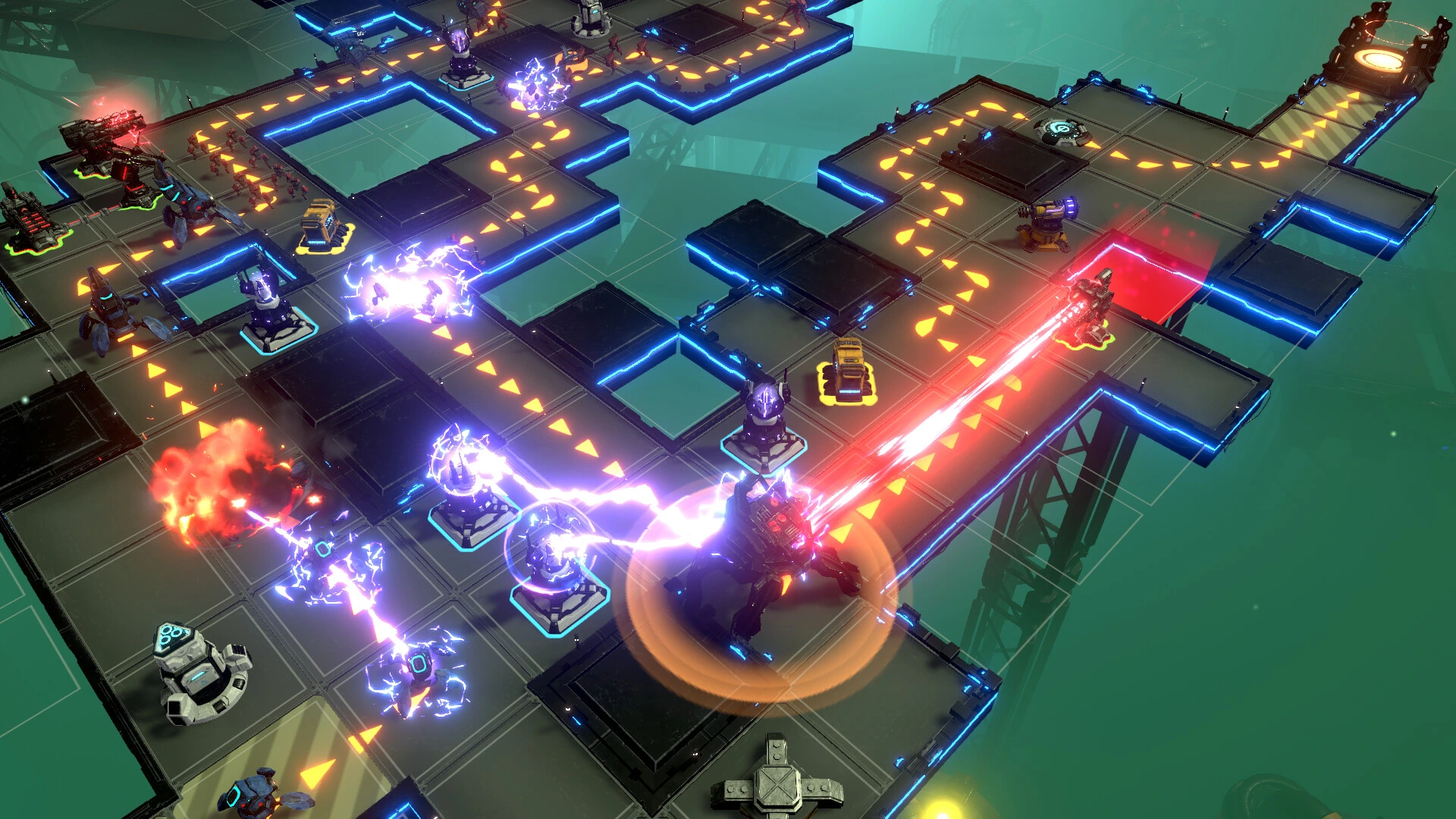
Co-op support: Online co-op for up to 4 players. Co-op campaign runs 2-player, 18 purpose-built co-op maps support up to 4, and co-op survival is 2-player. The map editor can produce your own co-op maps.
This is the pure tower defense pick on the list, and it comes from the team behind Element TD 2 — people who have been building mazing TD since the Warcraft 3 custom map era. That heritage shows.
The hook is that you don't just place towers along a fixed path. You get a brush, and the map is your canvas. You paint tiles to extend the maze, open up new territory, and stretch the route enemies have to walk. Add a partner and that becomes a genuinely different game. Two players expanding the same map have to agree on where the maze is going before either of them commits resources, because a badly placed extension doesn't just waste money — it changes the route your partner built for. The tower arsenal runs past 40 options with multiple upgrade paths, and the enemy roster past 35 types, several of which specifically punish sloppy mazing by teleporting or accelerating around corners.
This fits duos who want to plan. If your ideal session is two people staring at a layout and working out whether the extra loop is worth the tiles, this is the best pick on the page.
The tradeoff is that there's no hero to jump in with. When a wave breaks through, you don't get to save it with reflexes — you get to watch your plan fail and rebuild. It's also worth knowing that some players have reported multiplayer connection trouble in specific regions, so run a quick test lobby with your partner before you commit to a long campaign.
Deathtrap
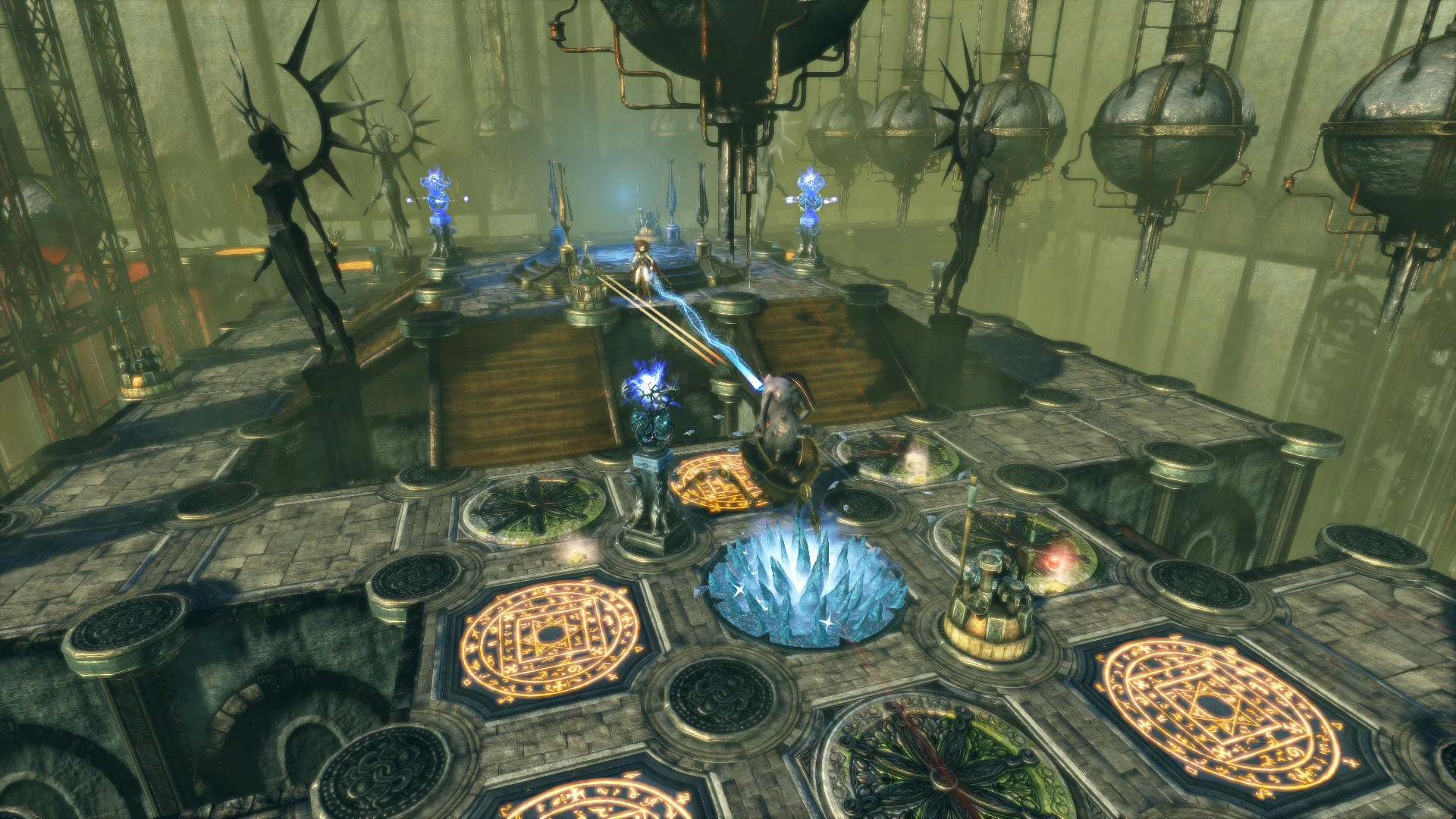
Co-op support: Online co-op for up to 4 players across the campaign, plus a separate asymmetric PvP mode and a shared map/monster editor.
First, the disambiguation, because it trips people up constantly: this is NeocoreGames' 2015 Deathtrap, set in the Van Helsing universe. It is not Orcs Must Die! Deathtrap, which is a different game by a different studio. If you came here from an OMD list, this is the one you probably haven't played.
It's a tower defense game wearing an action RPG's clothes. You pick a hero class, kit them out with loot and skills, then defend a stronghold by rebuilding and upgrading the ancient trap machinery running through it — rotating blades, magical mechanisms, the works. In four-player co-op, the trap network becomes a shared build. One player can specialize in stalls and slows while another stacks burst damage in the same corridor, and a third handles the routes nobody has covered yet. Because heroes have real combat identity, the co-op split isn't just "who builds where" — it's also who abandons their post when a lane starts leaking. The PvP mode inverts everything: one side defends while the other possesses and directly controls individual monsters in the invading army, which is a strange and very good time once you've exhausted the co-op content.
This suits groups who want loot progression and hero builds attached to a defense game, and who don't mind a slightly older interface.
It's not top of the list because it shows its age. The isometric camera is less immediate than a third-person trap game, the loot grind is more Diablo than defense, and the wave pacing can feel slow next to modern action-defense. But at its usual discount it's one of the best value co-op TD games available.
Sanctum
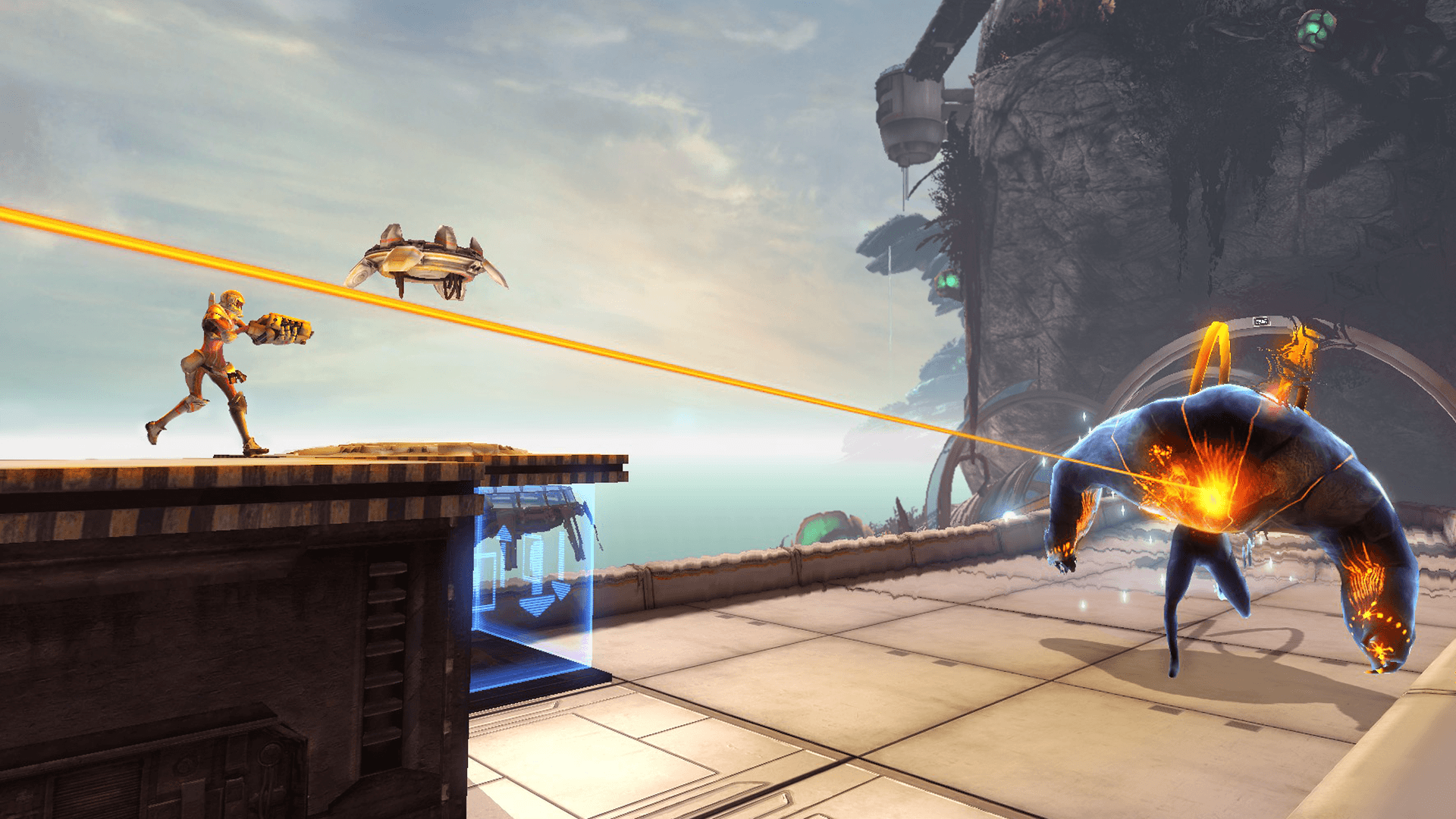
Co-op support: Online co-op for up to 4 players. Four-player support, co-op building, and map pinging were added in a post-launch update a few months after release.
Yes, Sanctum 2 was on our mainstream list. Play the original anyway, because the two games are less similar than the numbering suggests.
Sanctum is the first-person shooter tower defense game, released in 2011 by Coffee Stain. The loop is: place blocks to build a maze, mount towers on those blocks, then pick up a gun and personally shoot whatever survives the run to the Core. What makes the original the better co-op experience is freedom. The maps are large, the block budgets are generous, and the maze designs the community produced ran to genuinely absurd lengths — dozens of turns, hub layouts built to keep enemies circling a single defended point, sightline management as an actual discipline. Sanctum 2 tightened all of that: fewer blocks, a hard tower cap, smaller maps, more shooting. Better for action, worse for two people designing a maze together.
That's exactly why it belongs on an overlooked list. In co-op, one player can commit to maze construction while the other handles tower placement and firing angles, and the sheer size of the layouts means you'll actually need to divide the map. The ping system exists because the developers understood you'd be calling out lanes.
The reason it's mid-list is age and roughness. It's a 2011 Unreal Engine 3 game and it plays like one. The gunplay is stiffer than the sequel's, and the tutorialization is thin. If you want polish, play Sanctum 2. If you want the deeper mazing sandbox, play this.
The Last Friend
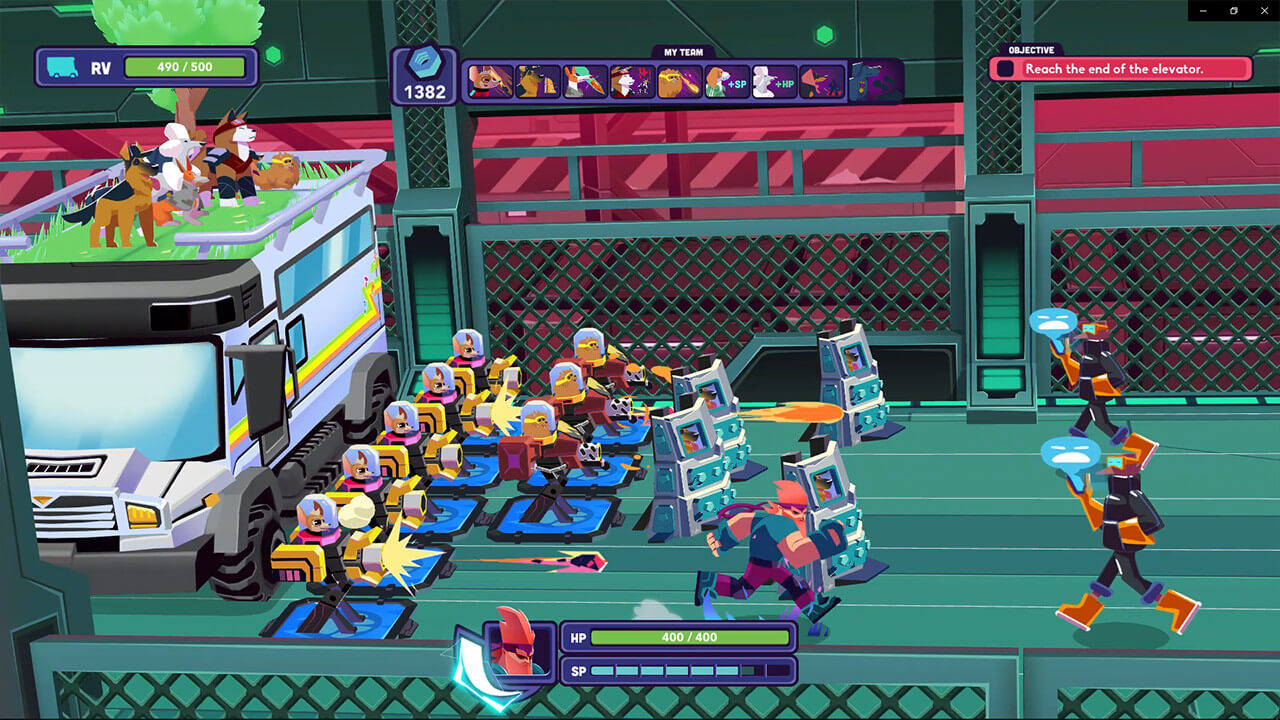
Co-op support: Local shared/split-screen co-op for 2 players only, plus Remote Play Together. There is no native online co-op.
This is the couch co-op standout, and it's the pick most likely to be new to you — it's a 2021 indie that reviewed extremely well and then largely vanished.
The setup: a post-apocalyptic beat 'em up where you defend a lane at the right of the screen while punching, kicking, and grabbing mutants moving toward it. Your defenses are traps, walls, and water cannons, and your units are rescued dogs, each of which brings a different passive or ability — a Newfoundland that heals, a Tibetan Mastiff with a beast mode, and so on. In co-op, one player takes Alpha, the brawler, and the other takes T. Juan in a mechanical suit. That split is the whole appeal. One of you is a mobile damage dealer wading into the crowd; the other anchors the line and manages the defensive layer. It's a much cleaner role division than most 2D games manage.
This is for pairs on one couch, or one Steam library and a Remote Play session. It's short, it's charming, the pixel art is excellent, and it does not overstay its welcome.
The reason it isn't higher is scope. The defensive systems are shallow compared to anything else here — you're not engineering kill corridors, you're patching a single lane. And the local-only limitation is a genuine constraint. Remote Play Together works, but it's a streaming solution, so input lag is a real factor in a game with active combat.
Riftbreaker
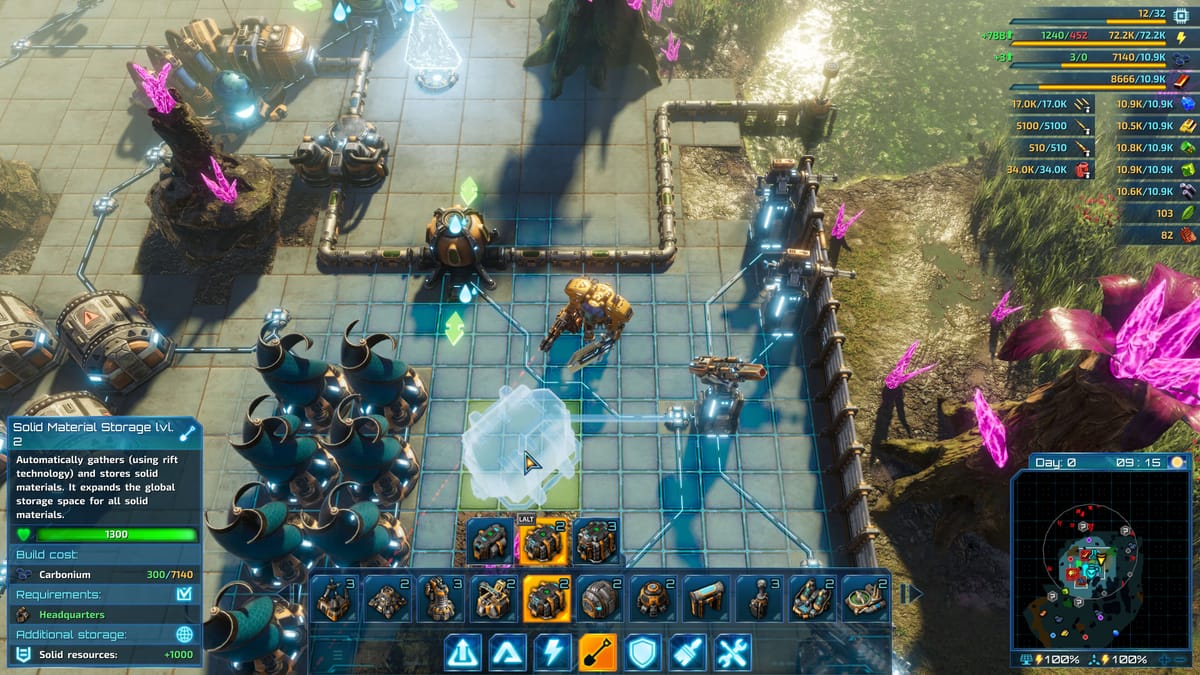
Co-op support: Online or LAN co-op for up to 4 players, covering the full story campaign, survival mode, and prologue. Co-op arrived with the 2.0 update in August 2025 — it was not in the game at launch, which is why a lot of older coverage misses it.
If you bounced off The Riftbreaker before 2025, it's a different proposition now. Exor Studios spent years building four-player co-op into it and shipped the whole thing at once alongside an expanded endgame.
The defense loop is base-building first. You're on Galatea 37 in a mech suit called Mr. Riggs, and you build a power grid, resource extraction, and supply chains — then the local wildlife decides your base is a problem. Defense means walls, turret placement, ammunition logistics, and knowing which side of your sprawl is actually exposed. In co-op that scales beautifully, because the failure mode of the solo game is that one person can't be everywhere. Four players can split into economy and defense, or hold separate outposts, or send two out to scout while two fortify. When a swarm arrives, the person who noticed the eastern wall was underbuilt actually has time to do something about it. The 2.0 update also added Megastructures — massive buildings with brutal resource and upkeep requirements — which give a co-op group a shared long-term project to organize around.
This fits groups who like factory games and want the waves to make their logistics decisions matter.
It's mid-list here because it's the least tower-defense-shaped pick in the top half. Turret placement matters, but there are no lanes in the classic sense and no build phase in the classic sense. Also worth confirming before you buy: co-op landed on PC storefronts first, with other platforms following later, so check your specific version.
Mindustry
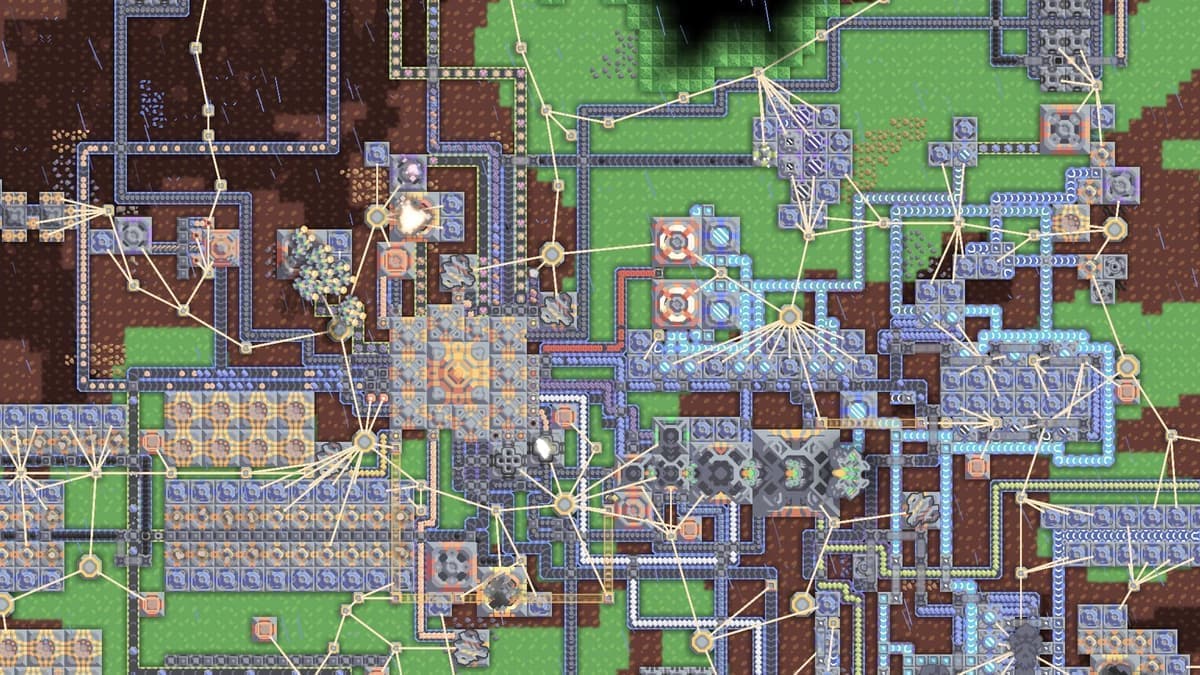
Co-op support: Cross-platform co-op over LAN or the internet, hosted from the pause menu. The Steam build defaults to a 16-player cap, and there are public co-op servers. It's free and open source; mobile and itch builds cost nothing.
Mindustry is the factory-TD crossover, and it's the most mechanically distinct game on this list. Your turrets don't just have range and damage — they have ammunition, and that ammunition has to physically arrive via conveyor belt from something you built.
That single design decision changes what co-op means. Defense is a supply problem. A turret with a broken belt feed is a decoration. So the natural division of labor is one player running production and routing while another handles the frontline placement and repairs, and both of them have to care about what the other is doing, because the belt network is the connection between the two jobs. Add drones for automated mining and construction, liquids for cooling, and hazards like fires spreading through your factory, and there's a lot of surface area for two people to cover. Hosting is trivial: start a game, hit host from the pause menu, and anyone on your network can find it. Over the internet you'll want port forwarding or a public server.
This is for people who liked Factorio's defense layer more than its logistics puzzle, and for groups who want a genuinely free option — the game is GPL-licensed and costs nothing outside of Steam.
It's lower on the list only because it demands the most patience. The tech tree is wide, the UI is dense, and the first hour is confusing. Once it clicks, it's the deepest co-op defense game here.
Plants vs. Zombies: Garden Warfare 2
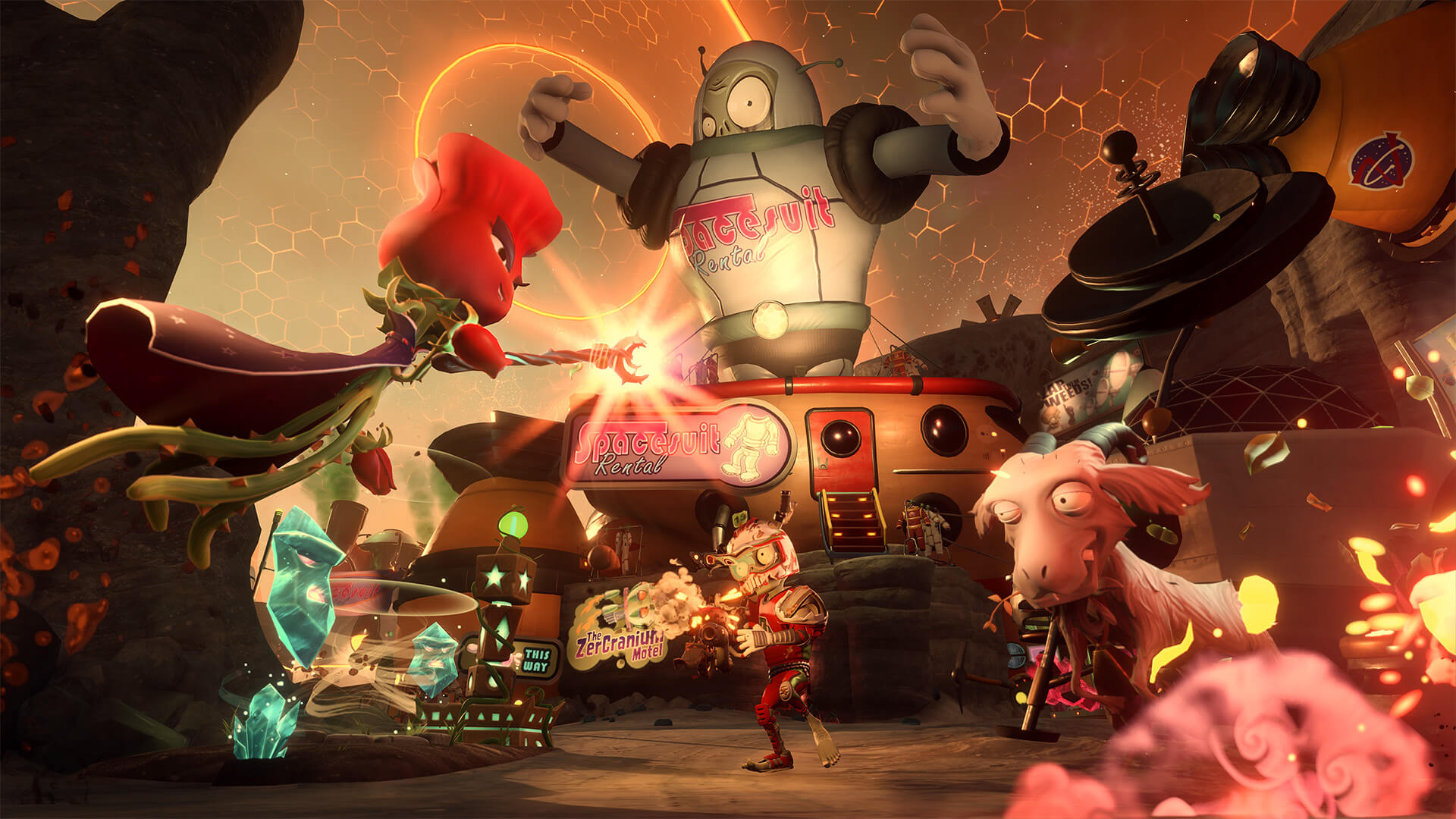
Co-op support: Garden Ops and Graveyard Ops run 1–4 players online. Local split-screen is 2 players and console-only (PS4 and Xbox One) — not available on PC. An internet connection is required even for solo play.
This is the pick for groups who want wave defense without the strategy-game overhead, and it's genuinely more tower-defense-shaped than its reputation suggests.
Garden Ops drops your team of up to four next to a planted garden and runs ten waves at it. Between waves you get a short break — about ten seconds — to heal and fill Plant Pots scattered around the objective with spawnable defensive plants. Boss waves land on five and ten. Special waves fire off randomly in between, including ambushes that skip the break entirely. Survive to the end and you have to physically reach the landing zone to escape. Graveyard Ops is the same thing from the zombie side. In co-op, the pot economy is where the teamwork lives: potted plants are a shared, limited defensive resource, so a group that coordinates who plants what and where holds far longer than four people spamming their own favorites. There's also Infinity Time, an unlockable endless horde mode with a boss every fifth wave.
This fits mixed-skill groups and families. It's readable, it's funny, and the difficulty ceiling on higher settings is higher than the art style implies.
It's near the bottom because the defense layer is the smaller half of the game — most of your time is spent shooting, not building. And it comes with real logistical caveats: server reliability has been inconsistent over the years, split-screen never came to PC, and there's no crossplay between platforms.
Plants vs. Zombies: Battle for Neighborville
Co-op support: Ops mode runs 4 players online, and three free-roam PvE regions support squads of four. Split-screen is console-only (PlayStation and Xbox); there is no local co-op on PC or Switch, and no crossplay.
Battle for Neighborville is the lighter, more forgiving version of the same idea, and it's the right pick if Garden Warfare 2's ten-wave Ops runs feel like a bigger commitment than your group wants.
The Ops structure here is shorter: five waves instead of ten, with the objective — renamed the Gardenator or the Grave-o-matic depending on your side — parked in the middle of the map with more health than before. Elite bosses were added, boss slots can stack up to five at once, and the self-revive system was dropped in favor of unlimited respawns. The result is a faster, more chaotic, more forgiving wave defense that's easier to fit into a short session. Alongside Ops there are three free-roam regions built for four-player PvE questing, which give a group somewhere to go that isn't wave survival. The Team Play characters are the other genuinely co-op-specific idea: one player controls the Oak while teammates ride along as Acorns, which is exactly as ridiculous as it sounds and works better than it should.
This suits casual groups, younger players, and anyone who wants co-op defense in twenty-minute chunks.
It ranks last because it's the least defense-forward game on the page. Ops is accessed through the multiplayer portal and runs online only, so you lose the private and solo flexibility Garden Warfare 2 offered, and the shortened wave structure means there's less room for a defensive plan to develop in the first place. Enjoyable, but it's a shooter with a defense mode rather than a defense game with shooting.
Which type of player will enjoy these most
The picks here split more cleanly than the mainstream list does, because they're further apart mechanically:
- Maze designers and pure-TD duos should start with Axon TD: Uprising, then Sanctum if they want first-person involvement in the same job.
- Trap-and-hero groups who want loot and classes attached to the defense should go straight to Deathtrap.
- Logistics-minded pairs who think defense is a supply problem will get the most out of Mindustry and The Riftbreaker.
- Couch pairs with one screen have exactly one option here, and The Last Friend is a good one.
- Casual or mixed-age groups who want wave defense as a party game should take Plants vs. Zombies: Garden Warfare 2, or Plants vs. Zombies: Battle for Neighborville for shorter sessions.
The dividing question is what your group wants to argue about. Some of these games generate arguments about tile placement and routing. Others generate arguments about who let the belt run dry. Both are good; they're not the same evening.
What matters most when picking your next game
Once you're past the obvious names, "does it have co-op" stops being a useful filter. These are the things actually worth checking:
- Local, online, or neither: Several well-reviewed defense games are local-only. The Last Friend is a genuine couch game with no online mode, and Remote Play Together is a workaround, not a feature.
- Platform asymmetry: Split-screen support frequently exists on console and not on PC. Both PvZ shooters are examples. Check your specific platform before buying for a group.
- When co-op arrived: The Riftbreaker only got co-op in 2025, years after launch. Older reviews and older list articles are simply wrong about it now. Check patch notes, not reviews.
- Player counts that aren't uniform: Axon TD: Uprising supports four players in dedicated co-op maps but two in campaign and survival. "Up to 4" is often mode-dependent.
- Server dependency: Anything running on publisher-operated matchmaking is only as available as those servers. That's a live consideration for both Plants vs. Zombies entries.
- Whether co-op changes the loop: This is still the real test. In Mindustry a second player changes what your defense can physically be supplied with. In a weaker co-op game, a second player is just more damage.
FAQ
What is the best overlooked co-op tower defense game?
Axon TD: Uprising is the strongest overall pick for players who want real tower defense rather than an action hybrid. The map-expansion mechanic gives two players something substantial to plan together, and the tower and enemy variety holds up over a long campaign.
Which of these has proper local co-op?
The Last Friend is the only true couch pick, with 2-player shared/split-screen. Both Plants vs. Zombies games support 2-player split-screen on consoles but not on PC. Everything else here is online or LAN.
Is Deathtrap the same game as Orcs Must Die! Deathtrap?
No. The game on this list is NeocoreGames' Deathtrap from 2015, set in the Van Helsing universe. Orcs Must Die! Deathtrap is a separate 2025 game from Robot Entertainment. Different developers, different games, unfortunately identical names.
Does The Riftbreaker actually have co-op now?
Yes. The 2.0 update added online and LAN co-op for up to four players across the full story campaign, survival mode, and prologue. Any guide that says the game is single-player only is out of date.
Should I play Sanctum if I've already played Sanctum 2?
If you liked the maze-building more than the shooting, yes. The original gives you larger maps and far more block freedom, where the sequel caps blocks and towers to push the game toward action. For two people designing a layout together, the original has more to work with.
Are all of these actually tower defense games?
No, and that's deliberate. This list mixes true tower defense (Axon TD: Uprising, Sanctum), trap and hero hybrids (Deathtrap, The Last Friend), base-defense games (The Riftbreaker, Mindustry), and Ops-style wave survival (both Plants vs. Zombies shooters). What they share is wave pressure against something you have to protect, and a co-op structure that changes how you protect it.
Takeaway
The mainstream co-op tower defense shortlist is short for a reason — those games are good. But it's also short because lists copy each other. Axon TD: Uprising is the best pure-TD pick most people have never installed, Deathtrap is the trap hybrid hiding behind a naming collision, and The Riftbreaker quietly became a four-player game while nobody was looking.
Pick based on what you want your group to be doing between waves: designing a maze, feeding a conveyor belt, or reloading.