Best Tower Defense Games With Heroes
The best tower defense games with heroes if you want active support, frontline patching, and stronger in-wave intervention alongside tower placement.
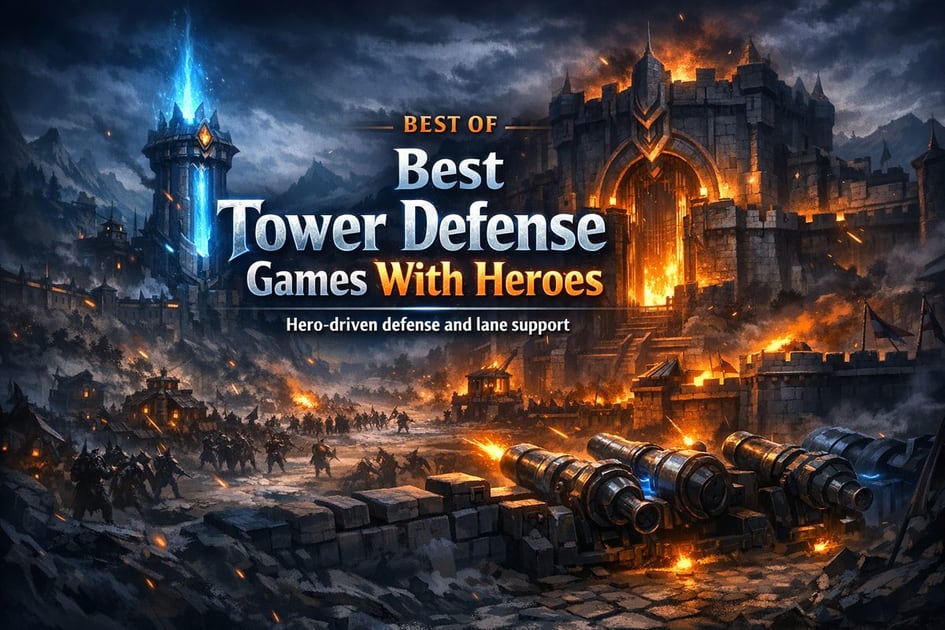
Best Tower Defense Games With Heroes
The best tower defense games with heroes do more than let you drop a strong unit near the lane. They give you active control over wave pressure, let you patch bad tower coverage in real time, and turn hero movement into part of the defense plan.
This list focuses on hybrid defense games where heroes, champions, or direct player-controlled defenders actually matter. Some lean tactical and lane-readable. Others are trap-heavy, action-heavy, or built around frontline intervention during ugly waves. Every pick here is about hold-the-line play, not loose action games with some towers on the side.
Quick take
- The safest picks are the Kingdom Rush games, especially if you want readable lanes and heroes that stabilize leaks without drowning tower placement.
- Orcs Must Die! 3 and Orcs Must Die! 2 are the best fits for players who want direct combat, trap combos, and constant in-wave involvement.
- Dungeon Defenders and Dungeon Defenders 2 push harder into action-defense, where your character is part of the build and wave response, not just a support tool.
- Defender's Quest: Valley of the Forgotten is the most tactical pick here if you want hero units integrated into lane defense rather than action aiming.
- Sanctum 2 is the most shooter-forward option on this list, and the most conditional fit if you still want clear tower lanes and base pressure.
The 10 picks
Kingdom Rush
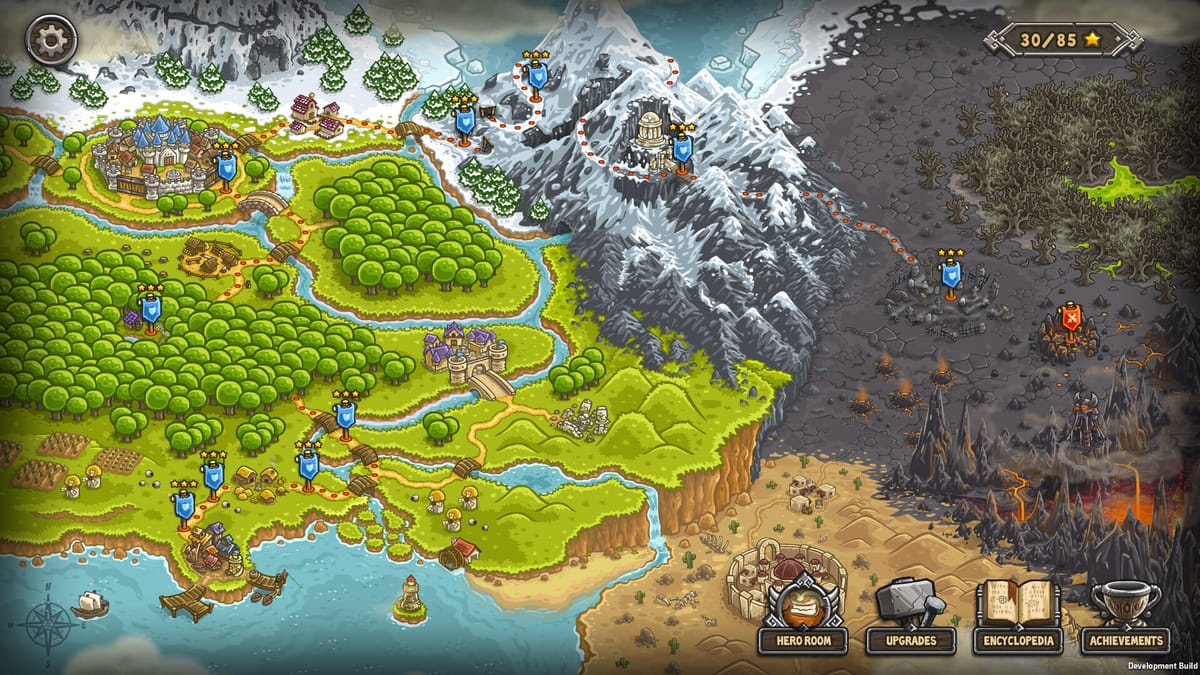
This is still the cleanest answer for most players searching for the best tower defense games with heroes. The lane structure is tight, the choke points are readable, and heroes are strong enough to change a defense without replacing your towers.
Its defense loop is classic lane TD with active hero support. You place barracks, artillery, archer, and mage towers around fixed paths, then use your hero to plug weak spots, stall elite pushes, and clean up leaks before they touch the exit. That matters because the hero is not just extra DPS. In Kingdom Rush, positioning, cooldown timing, and lane assignment can save a shaky build.
It fits this article because hero intervention is constant but controlled. You are still solving tower coverage, armor splits, and wave routing first. The hero sits on top of that as a real tactical layer, not a gimmick.
Best for players who want a tactical, lane-heavy TD with clear map readability and low clutter. It is especially good for people who like making defensive plans, then adjusting one lane at a time under pressure.
The tradeoff is speed and complexity ceiling. If you want heavy direct combat, manual aiming, or a large roster-building game around your heroes, Kingdom Rush can feel too streamlined.
Kingdom Rush Frontiers
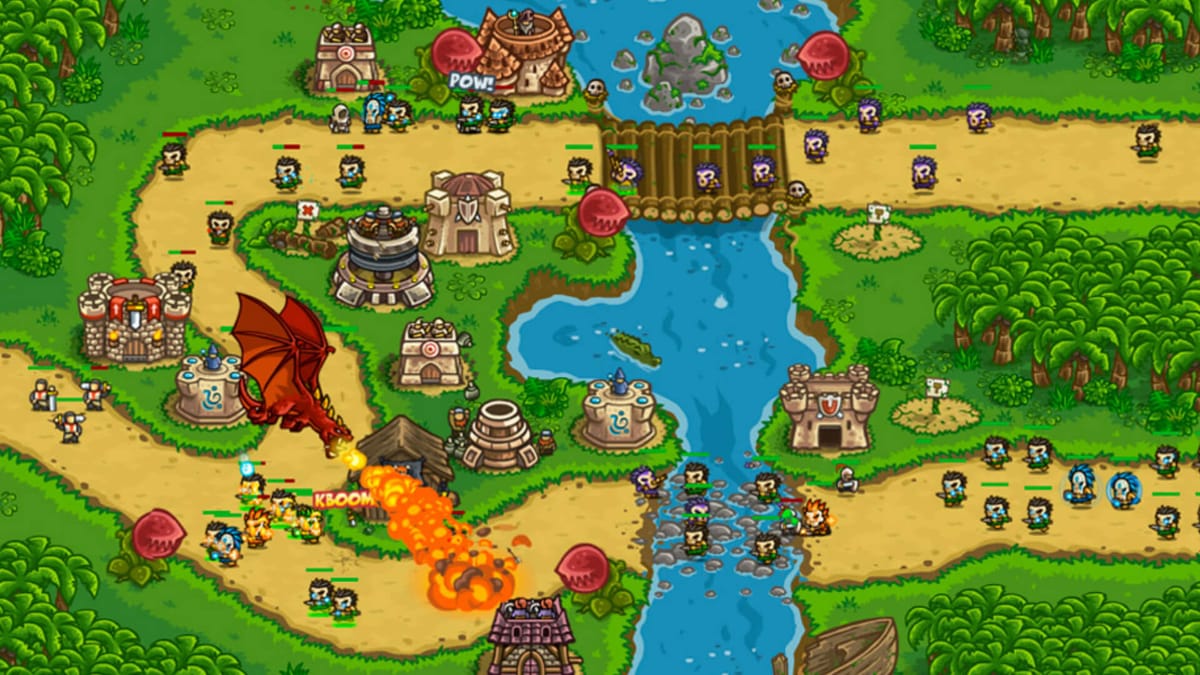
Frontiers takes the same foundation and pushes hero impact harder without losing the core lane-defense discipline that made the first game work. For many players, this is the sweet spot between approachable structure and more aggressive wave management.
The defense loop remains fixed-lane tower defense, but the maps and enemy mixes ask for more active patching. Your hero often has to handle fast flank pressure, support a collapsing chokepoint, or assist a specialized tower setup that cannot cover every threat by itself. That keeps the hero tightly connected to your tower plan.
Why it belongs this high is simple: it sharpens the action-defense balance without drifting away from proper TD structure. You are still reading lanes, selecting kill zones, and choosing where to commit anti-swarm versus anti-armor. The hero just lets you survive mistakes and push riskier builds.
This is the best fit for players who liked Kingdom Rush but want a bit more energy, more aggressive intervention, and slightly more pressure on in-wave decisions. It still feels tactical first, but with more arcade momentum.
The main downside is that it can be less pure and tidy than the original. If you prefer the most straightforward lane readability and the least friction in learning enemy roles, the first game remains the safer entry point.
Kingdom Rush Origins
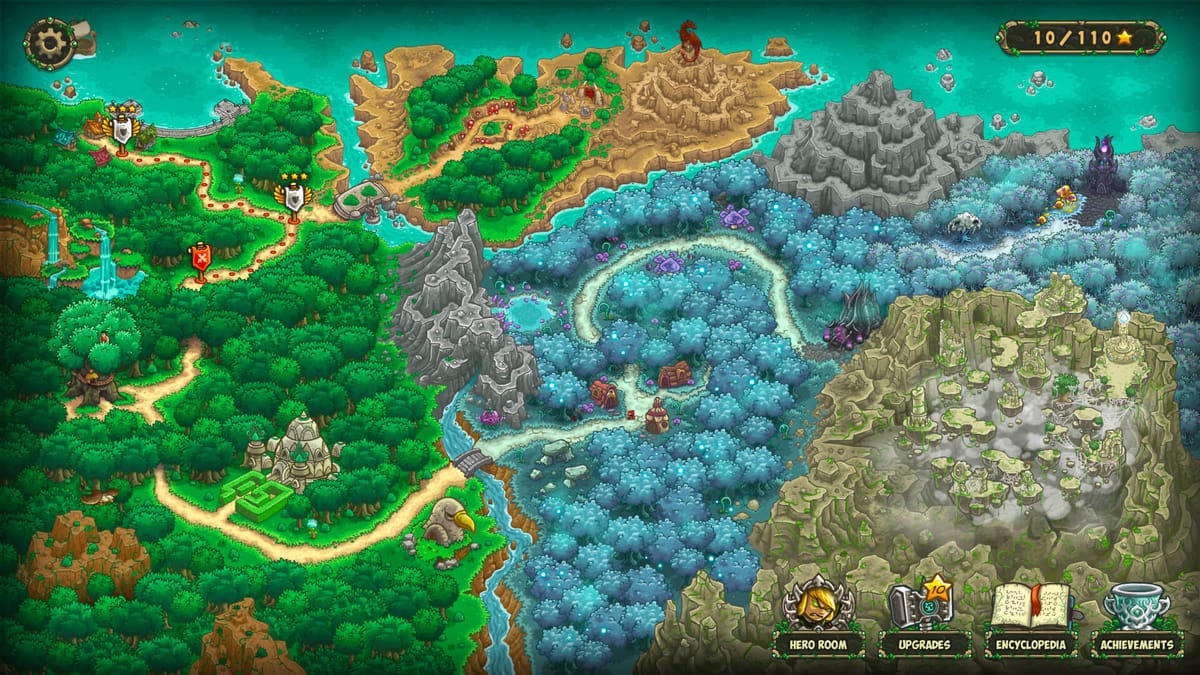
Origins is for players who already know they want hero-driven lane support, but also want a busier, more ability-focused version of the Kingdom Rush formula. It is still very much tower defense, just with a bit more flair and wave-response emphasis.
Its defense identity is lane-heavy and hero-supported, with towers and powers built around tighter synergies and more active timing windows. Heroes matter because the waves often ask you to manage bursts, reposition around pressure points, and reinforce a lane before your tower investments fully come online.
It fits this article because the hero layer feels baked into the defensive rhythm. You are not passively watching optimized towers do all the work. You are rotating support, respecting lane timing, and using abilities to hold formation when wave density spikes.
Origins fits players who want the most polished and active-feeling Kingdom Rush variant without jumping into a much more action-heavy subgenre. It leans slightly more arcade than the first game, but the lane structure stays strong.
The tradeoff is that some players may find it a little less grounded and less immediately readable than the earlier entries. If your ideal TD is all about stripped-down clarity and blunt lane math, this one can feel a touch more effect-heavy.
Kingdom Rush 5: Alliance TD
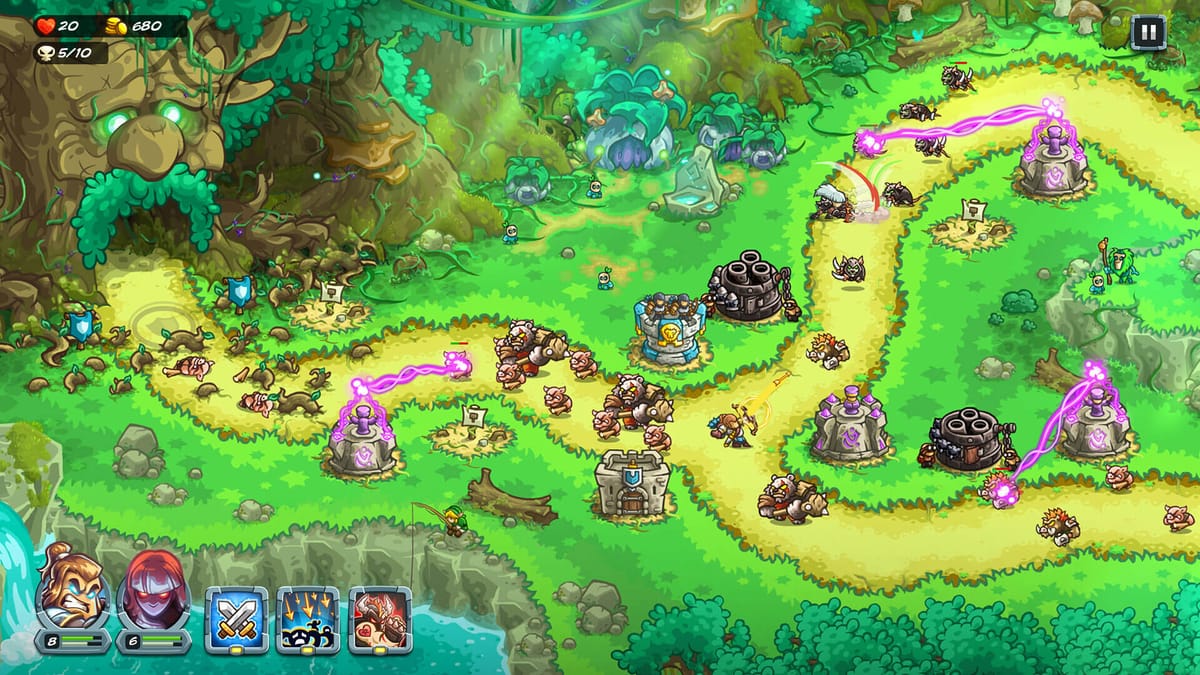
Alliance TD shifts the formula by putting even more emphasis on unit presence and hero-style intervention. That makes it one of the most relevant picks here for players who specifically want td games with hero units that shape the defense loop every wave.
The defense structure is still rooted in lanes and chokepoints, but the game puts more focus on field presence, active support, and the interaction between your deployed defenders and tower coverage. Instead of heroes feeling like one extra tool, the whole defense has a more character-driven rhythm.
That is exactly why it fits this article. When people ask for tower defense games with characters that matter, they usually want more than a stat boost walking beside the road. Alliance TD leans into that. Your active roster decisions and unit positioning matter more to how each lane holds.
This one is best for players who already like the Kingdom Rush style but want it to feel less static and more intervention-heavy. It is a stronger fit for someone chasing hero involvement than for someone chasing the purest classic TD pacing.
The reason it may not click is also the reason it is here: it is less cleanly traditional. Players who want the strictest tower-first identity may prefer the earlier Kingdom Rush games, where the lanes and tower roles stay more front and center.
Orcs Must Die! 3
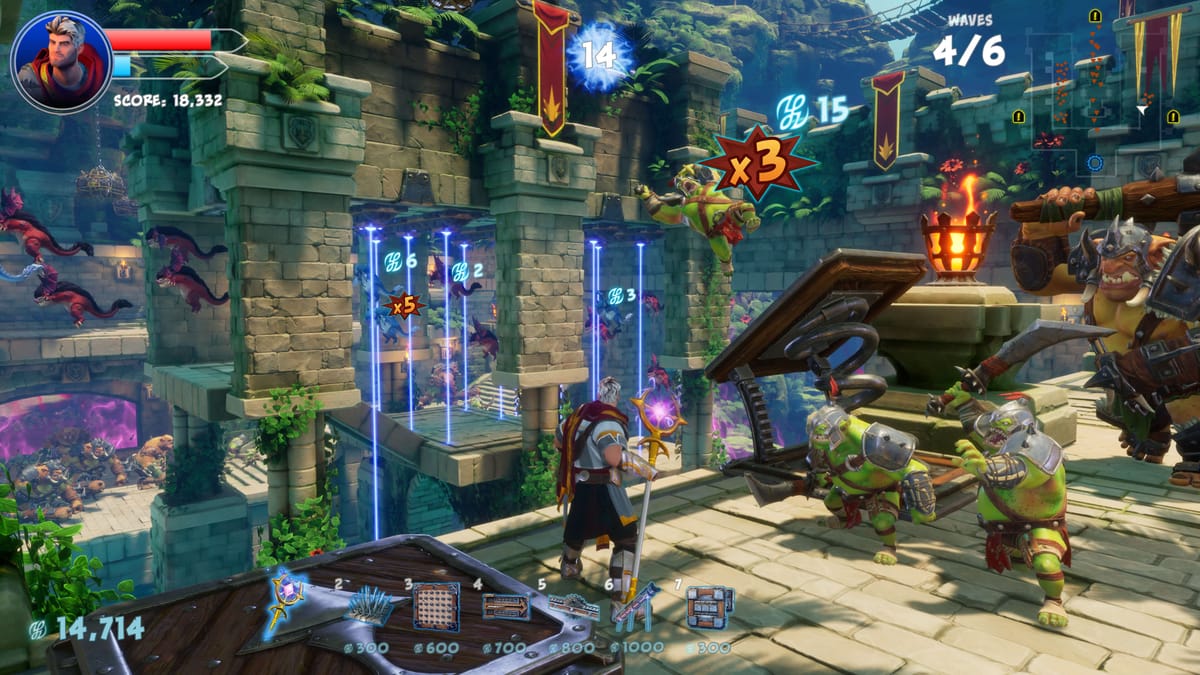
This is the top action-heavy pick on the list. Orcs Must Die! 3 is not about placing towers and then observing lane flow from a distance. It is about building kill corridors with traps, then personally fighting inside them while wave pressure tests every weak angle.
The defense loop is hybrid action-defense built around trap placement, chokepoint shaping, and active combat. You set up tar, spikes, launchers, ranged support, and environmental control, then use your hero to finish armored enemies, recover leaking lanes, and keep the whole defense from collapsing once the wave breaks through your ideal plan.
It belongs here because the player character is inseparable from the defense. This is one of the clearest examples of a hero materially changing the hold-the-line loop. Good play is not just sharp shooting. It is understanding how your personal damage, crowd control, and positioning interact with your trap economy and lane routing.
Best for players who want a trap-heavy, action-heavy defense game with strong co-op appeal and a lot of in-wave agency. If your favorite part of hero tower defense games is personally saving a lane at the last second, this is a strong match.
The tradeoff is reduced structure compared to classic lane TD. You still have clear enemy routes and defense planning, but the game is louder, faster, and more chaotic. Players who want clean overhead readability may prefer Kingdom Rush or Defender's Quest.
Orcs Must Die! 2
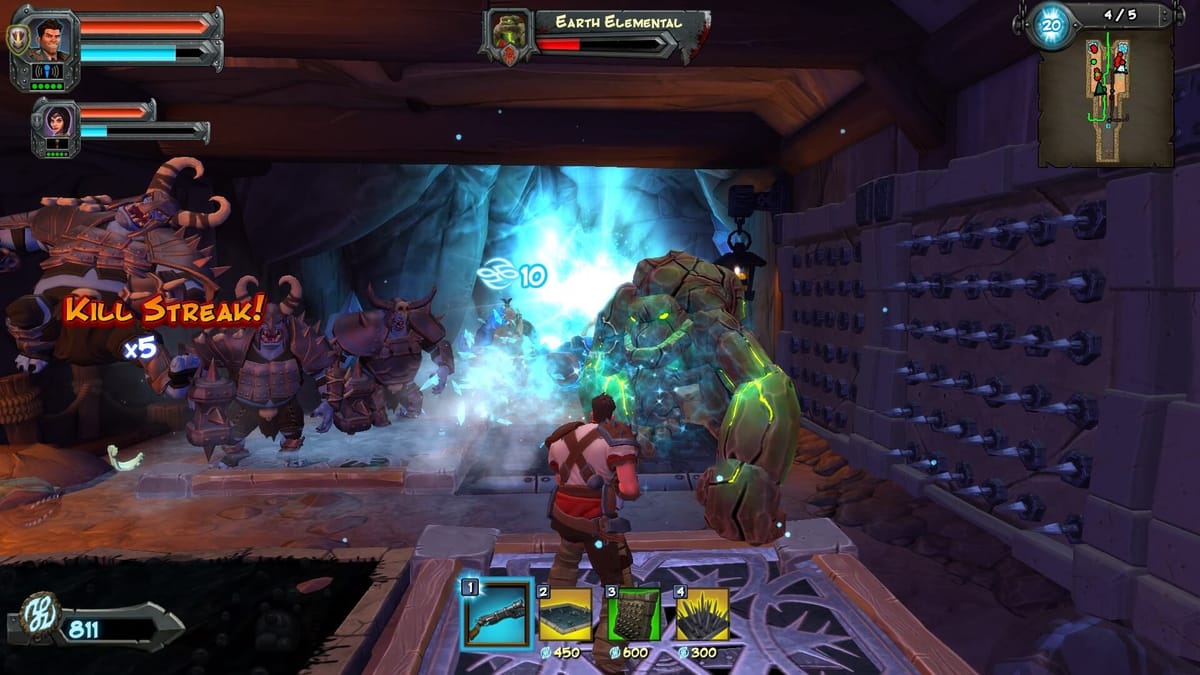
Orcs Must Die! 2 sits just behind the third game because it delivers the same core action-defense strengths with a slightly tighter, earlier version of the formula. For some players, that actually makes it the better fit.
The defense loop is again trap-heavy hybrid TD: build kill boxes, exploit map funnels, and use your hero in direct combat to cover anything your trap layout cannot cleanly solve. That blend of planning and firefighting is the entire point. You do not win by either trapping alone or fighting alone. You win by making those two systems reinforce each other.
This fits the article because hero involvement is constant and meaningful. In many tower defense games with heroes, the hero is just a mobile tower with cooldowns. Here, your movement, aim, and on-the-spot prioritization are part of the lane defense itself.
It is best for players who want a slightly more focused version of the Orcs Must Die formula and do not need the bigger spectacle of the third game. There is less distance between planning phase and wave execution. That can make every bad trap choice feel more educational.
Its real limitation is that it is more specific in appeal. If you want broad spectacle, bigger scenarios, or a more expanded-feeling package, Orcs Must Die! 3 has the edge. If you want classic top-down lane clarity, neither one is the ideal fit.
Dungeon Defenders
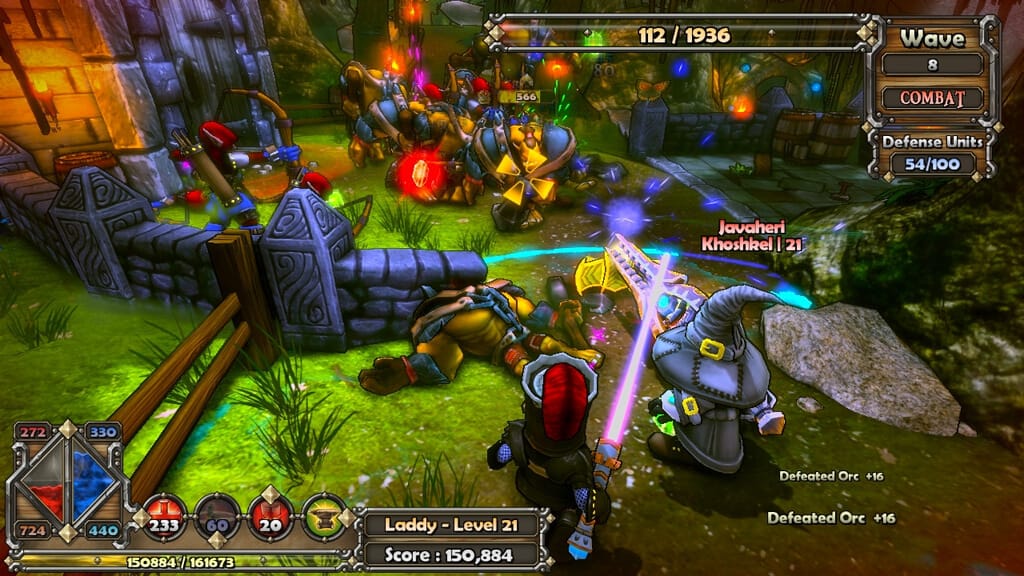
Dungeon Defenders is where tower-building, lane defense, and hero action lock together into a fuller base-defense loop. It is more build-driven than a pure action game, but much more hands-on than a traditional TD.
The defensive structure revolves around defending crystals by placing class-based towers and blockades across incoming lanes, then swapping into active combat during waves to support weak fronts, burn priority targets, and physically hold pressure where the build is not enough. Chokepoints, lane coverage, and resource allocation all matter before the shooting starts.
That makes it a natural fit for this list. Your hero is not optional seasoning. The active phase asks you to repair, fight, rotate, and stabilize the defense under siege. The best builds still depend on your ability to read where the next break is coming from.
This is best for players who like action-heavy base defense but still want tower identity to matter. It suits people who enjoy a stronger sense of ownership over their setup, with class tools defining what each defense can do.
The tradeoff is that it is messier than a lane-pure TD. The battlefield gets busier, the build metagame matters more, and players looking for minimalist tower logic may find the action layer pulls focus away from clean defensive readability.
Dungeon Defenders 2
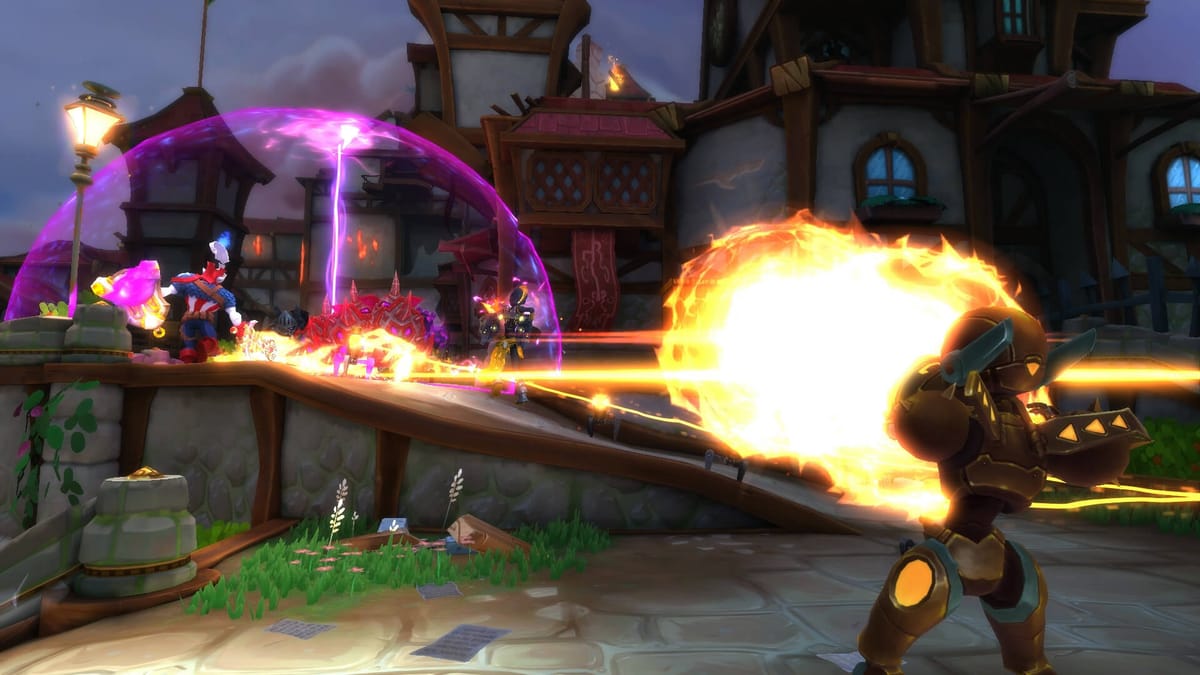
Dungeon Defenders 2 pushes the same core idea into a more system-heavy, more modernized action-defense format. It is a strong pick for players who want heroes that feel central to base survival, not just emergency lane support.
Its defense loop is crystal defense with lane building, blockades, offensive structures, and direct hero combat during waves. You are constantly balancing where to fortify, how much anti-air or anti-ground coverage each lane needs, and when to personally intervene instead of trusting the build.
Why it fits this article is straightforward: the game lives on hero-tower synergy. Active characters matter because wave pressure eventually exposes any defense that is too passive. Good runs come from pairing structures with active damage, lane rotation, repairs, and ability timing.
This is for players who want a broader progression feel and a more action-forward take on hero tower defense games. It leans harder into build experimentation and character-driven defense than the original Kingdom Rush style.
The tradeoff is that the stronger system layer can dilute the immediate elegance some players want from TD. If you are chasing simple lane reads and fast map comprehension, this can feel busier and more gear-conscious than ideal.
Defender's Quest: Valley of the Forgotten
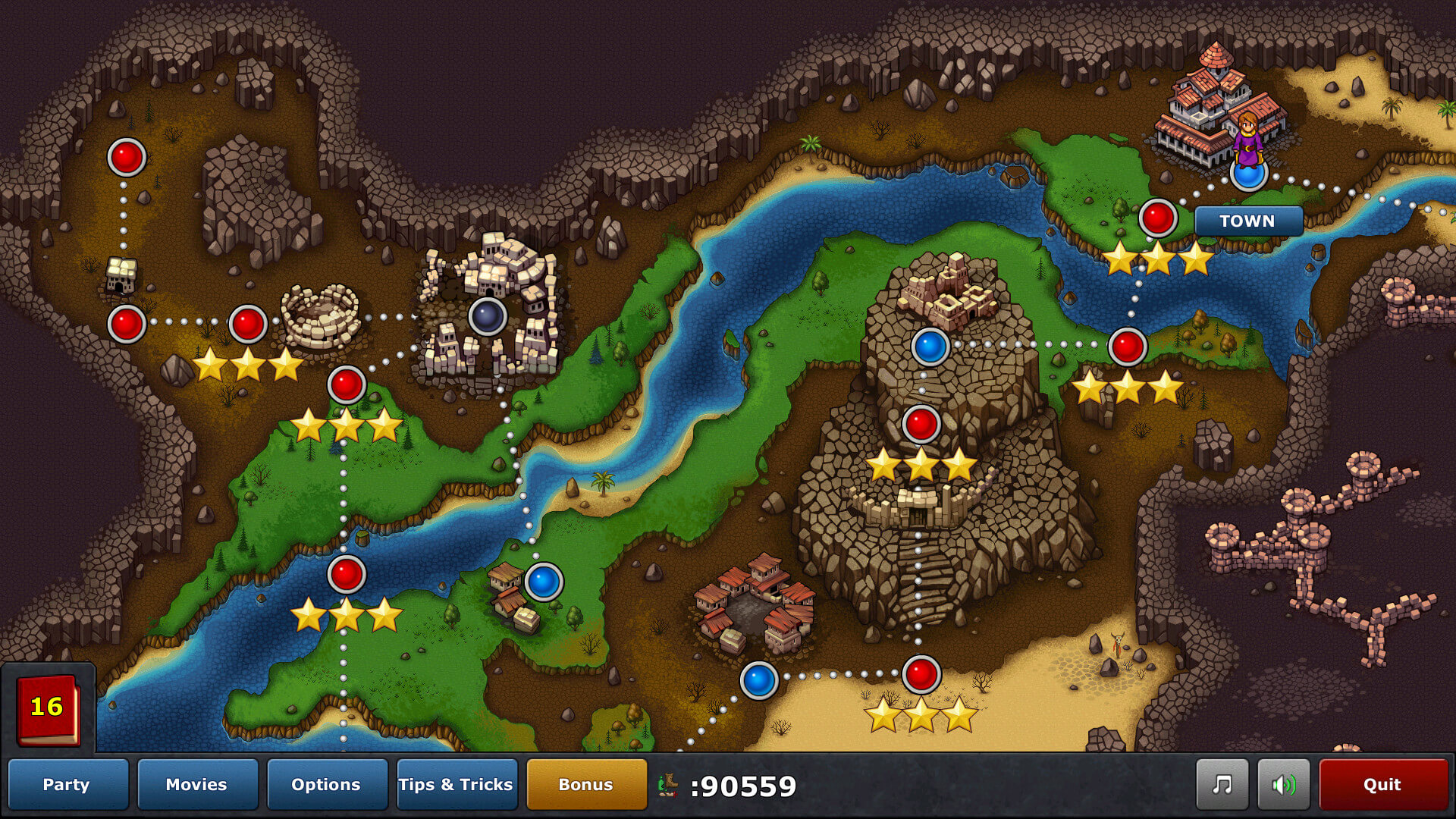
This is the most tactical pick in the lower half of the ranking and one of the clearest examples of hero units carrying a defense game without turning it into an action brawler. It plays closer to a lane-defense RPG than a classic turret-first TD.
The defense loop is side-view lane defense built around deploying characters to fixed positions, managing role coverage, and using abilities to handle wave spikes. Your "towers" are your units, and hero development directly shapes how well each lane survives sustained pressure. Positioning and timing matter more than twitch execution.
It fits the article because it treats heroes as the defense system, not a side mechanic. For players specifically searching for tower defense games with characters, this is one of the strongest conceptual fits even though it is less traditional than Kingdom Rush.
Best for players who want tactical pacing, party-based defense planning, and a stronger RPG layer tied directly to wave survival. It is a good fit if you care more about lane assignments and unit synergy than manual aiming or trap execution.
The tradeoff is obvious: it is a partial fit if your definition of TD requires literal towers and chokepoint construction. The hold-the-line structure is real, but the form is more unit-defense than trap or turret defense.
Sanctum 2
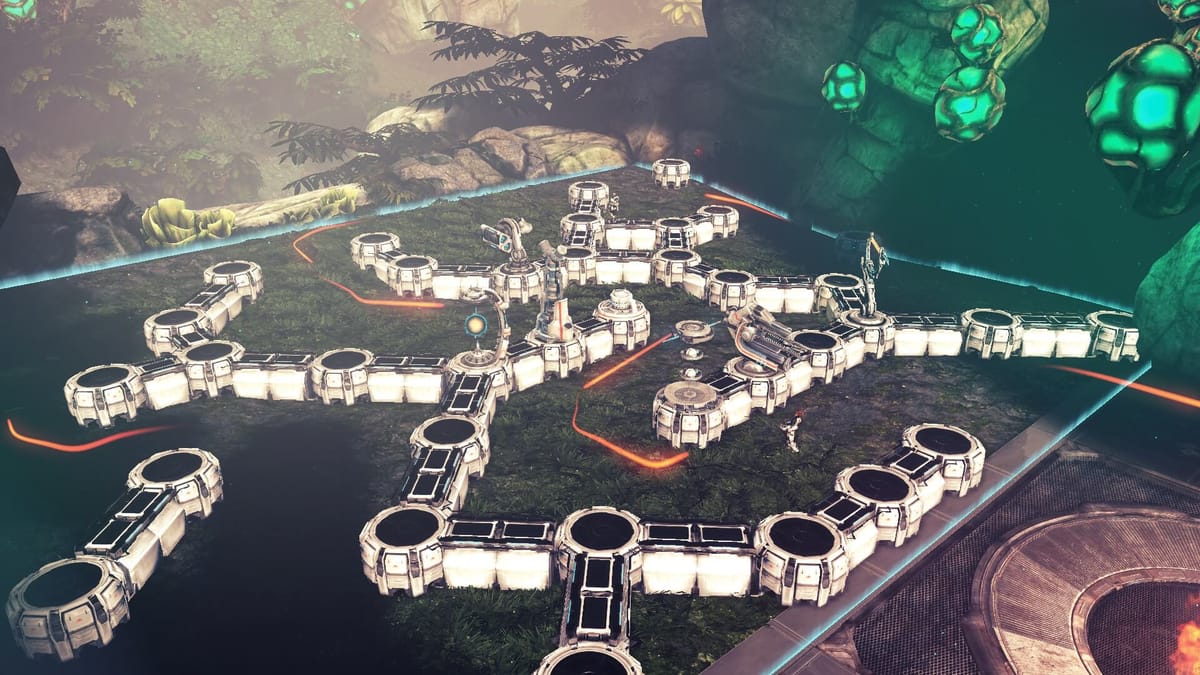
Sanctum 2 is the most conditional recommendation here, but it still earns the last slot because its lane-building and shooter play genuinely intersect. This is not just a wave shooter with token defenses. You actually shape enemy routes, place towers, and then fight inside the plan.
Its defense loop is first-person hybrid TD. You build mazes and firing lanes, place defensive structures, and use your character to thin dangerous pushes, protect key sections, and keep base cores alive when tower coverage is not enough. The route control is what keeps it anchored to defense rather than drifting into pure shooter territory.
It belongs on this list because the player-controlled defender matters every wave. You are not observing your build from above. You are actively enforcing it, which makes hero-style intervention central to success.
Sanctum 2 is best for players who want a shooter-forward interpretation of hero-supported tower defense and still care about route shaping. It is a good fit for someone who likes direct combat but wants defensive planning to remain mandatory.
The reason it ranks last is fit consistency. Compared to the games above, it leans the farthest toward action and the farthest away from classic tower defense readability. If you want stronger lane clarity, cleaner choke management, or a more TD-first loop, the other picks are better.
Which type of player will enjoy these most
These games click for players who get restless in passive tower defense. You still want lanes, bases, wave routing, and stronghold pressure, but you also want to step in when a flank starts leaking instead of just watching the math fail.
The best fit is someone who likes one of these defense styles:
- Tactical lane defenders who want heroes to stabilize weak points without replacing tower planning should start with the Kingdom Rush games.
- Trap-heavy action defenders who want to build kill corridors and personally fight inside them should look at Orcs Must Die! 3 or Orcs Must Die! 2.
- Base-defense players who like defending a central objective while balancing structures and active combat should lean toward Dungeon Defenders or Dungeon Defenders 2.
- RPG-minded defenders who want character placement and unit ability timing instead of manual shooting should pick Defender's Quest: Valley of the Forgotten.
- Shooter-first players who still care about route control and tower lanes can try Sanctum 2, with the understanding that it sits closest to the edge of the niche.
What matters most when picking your next game
The first question is not "how good is the hero?" It is how much of the defense loop you want to handle yourself during the wave.
If you want heroes as tactical support on top of clear lane defense, go with Kingdom Rush, Frontiers, Origins, or Alliance TD. Those games keep towers and chokepoints in the lead role.
If you want direct combat to be half the game, pick Orcs Must Die! 3, Orcs Must Die! 2, Dungeon Defenders, or Dungeon Defenders 2. In these, your character is part of the wall.
Also pay attention to structure versus chaos. Some players say they want hero tower defense games, but what they really want is readable lanes and clean coverage problems. Others want emergency saves, personal DPS, and messy recoveries under siege pressure. Those are very different moods.
One common mistake is picking the most action-heavy option when what you actually enjoy is defensive planning. Another is buying the most classic lane TD when what you really want is constant in-wave intervention. This list covers both, but the right pick depends on where you want the pressure to sit: on the map, or on your hands.
FAQ
What are the best tower defense games with heroes for classic lane defense fans?
Start with Kingdom Rush, then Kingdom Rush Frontiers and Kingdom Rush Origins. They keep the lane structure clear, the tower roles readable, and the hero useful without letting direct control overwhelm the defense plan.
Which games here have the strongest direct combat during waves?
Orcs Must Die! 3, Orcs Must Die! 2, Dungeon Defenders, Dungeon Defenders 2, and Sanctum 2 are the most action-heavy picks. They all ask you to fight, rotate, and actively save parts of the defense instead of relying on towers alone.
Are all of these traditional tower defense games?
No. The top four are closest to classic TD. Orcs Must Die!, Dungeon Defenders, and Sanctum 2 are hybrid action-defense games. Defender's Quest: Valley of the Forgotten is more of a unit-based lane defense RPG. They all fit because heroes materially affect how you hold lanes or defend the base.
Which pick is best if I want traps to matter as much as the hero?
Orcs Must Die! 3 is the strongest answer. Orcs Must Die! 2 is right behind it. Both are built around trap synergy, kill box design, and using your character to make those defenses work under live wave pressure.
What should I pick if I want heroes to matter but still prefer a slower, more tactical pace?
Go with Defender's Quest: Valley of the Forgotten if you want the slowest, most tactical read on hero-led defense. If you still want more traditional towers and lanes, choose Kingdom Rush or Kingdom Rush Frontiers instead.
Takeaway
The best tower defense games with heroes are the ones where your hero changes how a lane holds, how a base survives, or how a bad wave gets recovered. For most players, that means starting with Kingdom Rush and moving toward Orcs Must Die! or Dungeon Defenders if you want more direct control inside the defense.