Best Co-Op Tower Defense Games
The best co-op tower defense games to play with a friend, from action-heavy defense hybrids to more tactical wave-based picks.
Best Co-Op Tower Defense Games
The best co-op tower defense games do more than allow two players into the same lobby. The good ones change the defense loop when you add a partner: one player builds lanes, the other patches breaches, manages elites, or keeps siege pressure off the core.
This list focuses on games where teamwork actually matters. Some are trap-heavy action-defense games, some lean more tactical, and a few are strong multiplayer tower defense games with a clearer lane or base-defense structure than pure action titles. Every pick here is about holding lines, controlling paths, surviving waves, and making co-op feel like an upgrade instead of a checkbox.
Already played these? Here are the overlooked co-op tower defense picks worth trying once the shortlist is done.
Quick take
- Orcs Must Die! 3 is the safest recommendation. It nails two-player trap synergy, lane control, and panic management under real wave pressure.
- Dungeon Defenders and Dungeon Defenders 2 work best for players who want stronger hero roles without losing tower defense structure.
- Sanctum 2 and X-Morph: Defense lean harder into direct combat. They fit players who want to shoot constantly while still shaping enemy flow.
- Legion TD 2 and Bloons TD 6 are less action-forward, but they are excellent co-op TD games when you want cleaner planning and better map readability.
- Lower on the list does not mean weak. It means more specific taste: older structure, more niche pacing, or a co-op hook that appeals to a narrower defense style.
The 10 picks
Orcs Must Die! 3
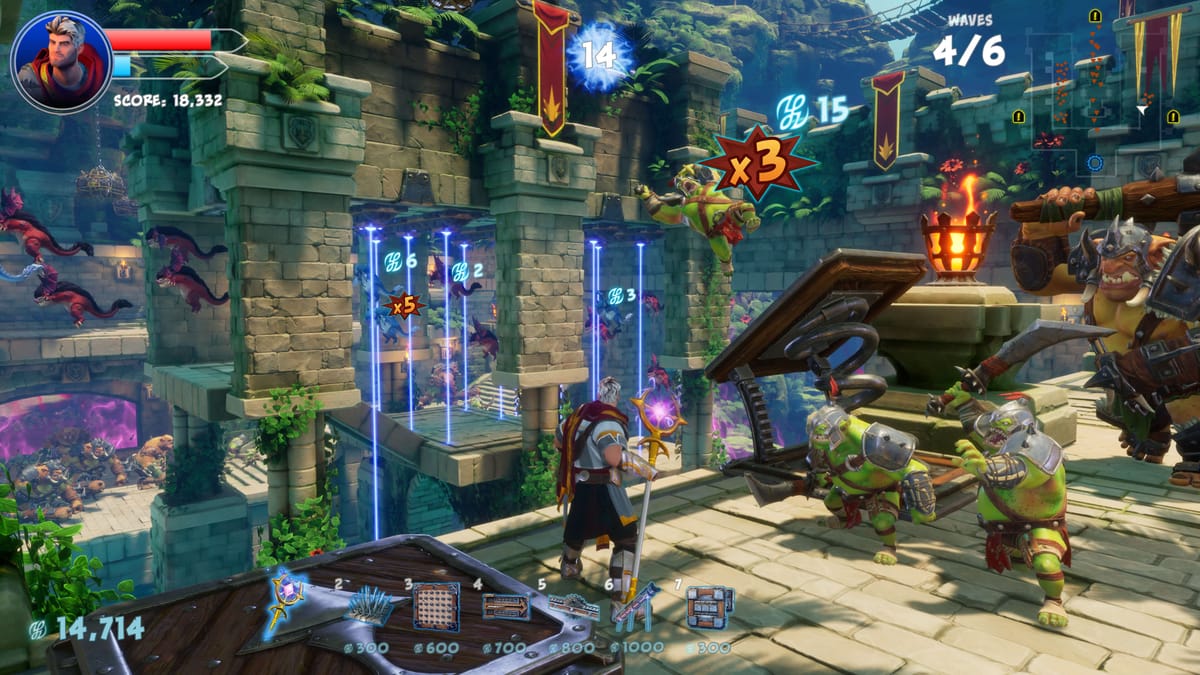
This is the best answer for most people searching for the best co-op tower defense games. Its whole identity is built around two players turning killboxes into controlled chaos, then jumping into the lane when the plan starts breaking.
The defense loop is simple and sharp: funnel enemies, stack traps, create overlapping damage zones, then actively fight to protect weak points and clean up anything your setup misses. In co-op, that loop gets better because roles split naturally. One player can handle barricades, tar, and route shaping while the other focuses on ceiling traps, burst damage, and emergency response. That division matters once larger waves and siege pressure start stretching multiple lanes at once.
It fits players who want a hybrid action-defense game where tower placement still decides the run. This is not passive building. You are constantly adjusting, patching leaks, and using your hero loadout to support the trap network.
The tradeoff is that it is more arcade and more chaotic than a strict lane-defense game. If you want slow planning, perfect readability, and long build phases, this can feel too messy by comparison. But for co-op trap synergy, it is still the clearest top pick.
Orcs Must Die! 2
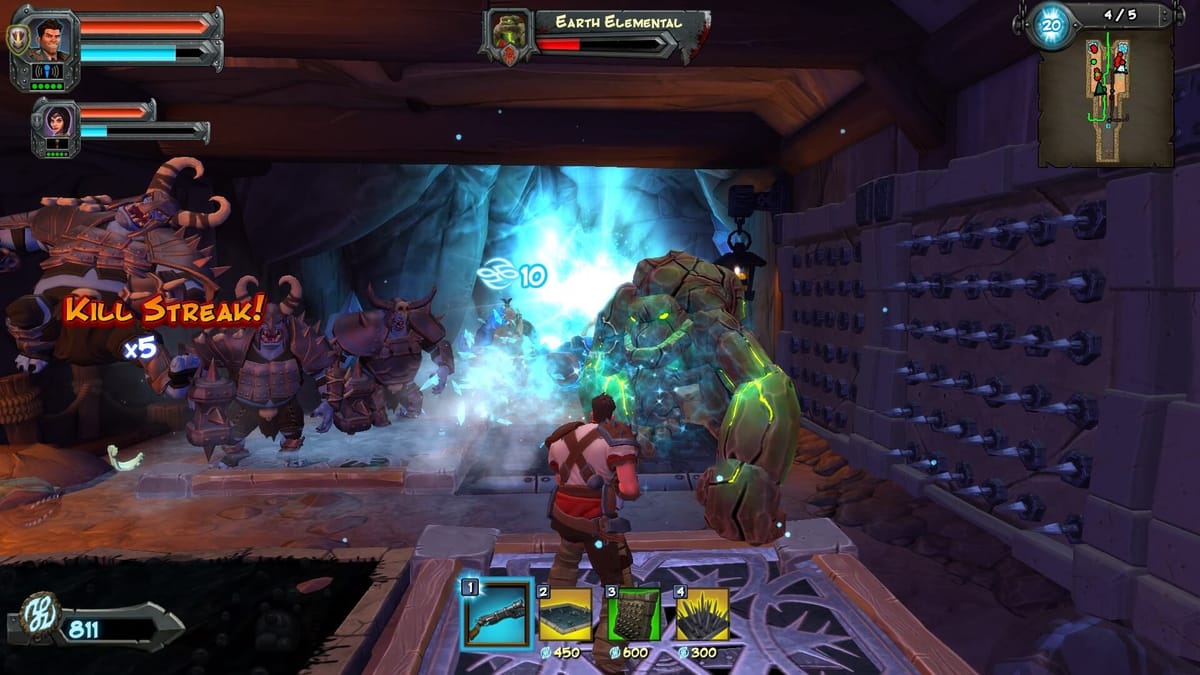
Orcs Must Die! 2 remains one of the strongest co-op TD games because its lane defense is a little tighter and more intimate than the third game. It puts more pressure on your trap logic and less on spectacle.
The core loop is still barricades, funnels, environmental kill zones, and active hero cleanup. In co-op, one player can build the backbone of the lane while the other creates combo layers around it. That makes even small maps feel tactical. Good pairs quickly start thinking in terms of stall, reset, burst, and leak response instead of just damage spam.
This is the right pick for players who want trap-heavy defense first and action second. It rewards partners who like discussing exact tile placement, enemy routing, and how to make each wave enter the same bad corridor.
The main reason it sits below Orcs Must Die! 3 is scale and convenience, not defensive quality. Some players will actually prefer it. But if you want the broadest, easiest recommendation for modern co-op play, the third game is the safer call.
Dungeon Defenders
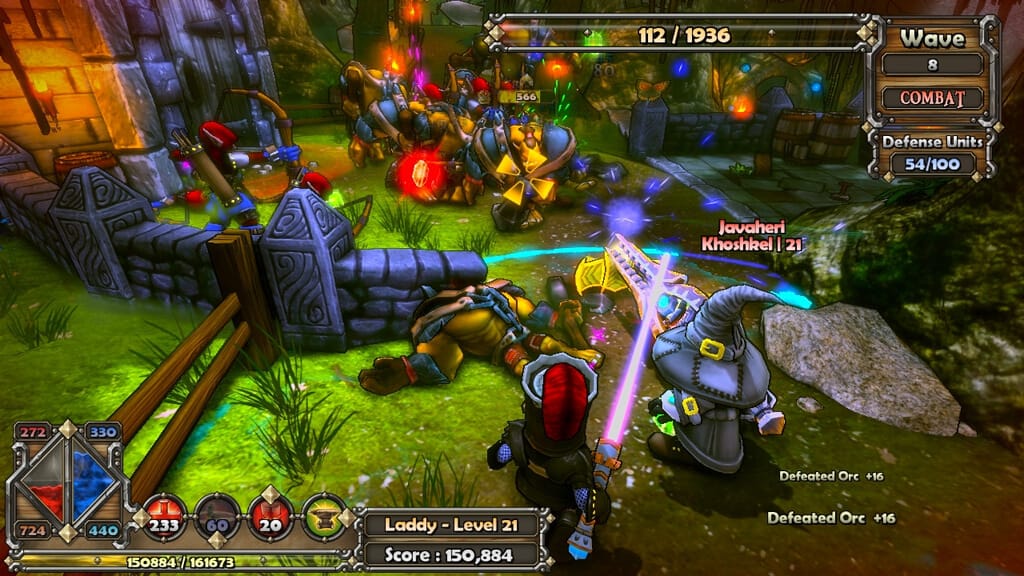
Dungeon Defenders is one of the foundational hybrid tower defense games for co-op. It takes lane defense and gives each player a real combat role without letting towers become secondary.
Its defense structure is stronger than many action-defense hybrids because lanes, crystal protection, and build-phase decisions carry real weight. You place blockades, auras, towers, and support structures during downtime, then switch into wave survival where hero combat reinforces the setup. In co-op, class identity is the point. Different heroes contribute different defensive tools, so teamwork is not just “more damage.” It changes what your build can even look like.
This is best for players who want a heavier RPG layer wrapped around true base defense. If your ideal session is discussing who handles anti-air, who anchors the chokepoint, and who swaps into active lane support during a bad wave, this lands.
The tradeoff is friction. The structure is older, the systems can feel less streamlined, and it asks more patience than the top two picks. But for players who want co-op to matter at the build level, not just in combat, it earns its place near the top.
Dungeon Defenders 2
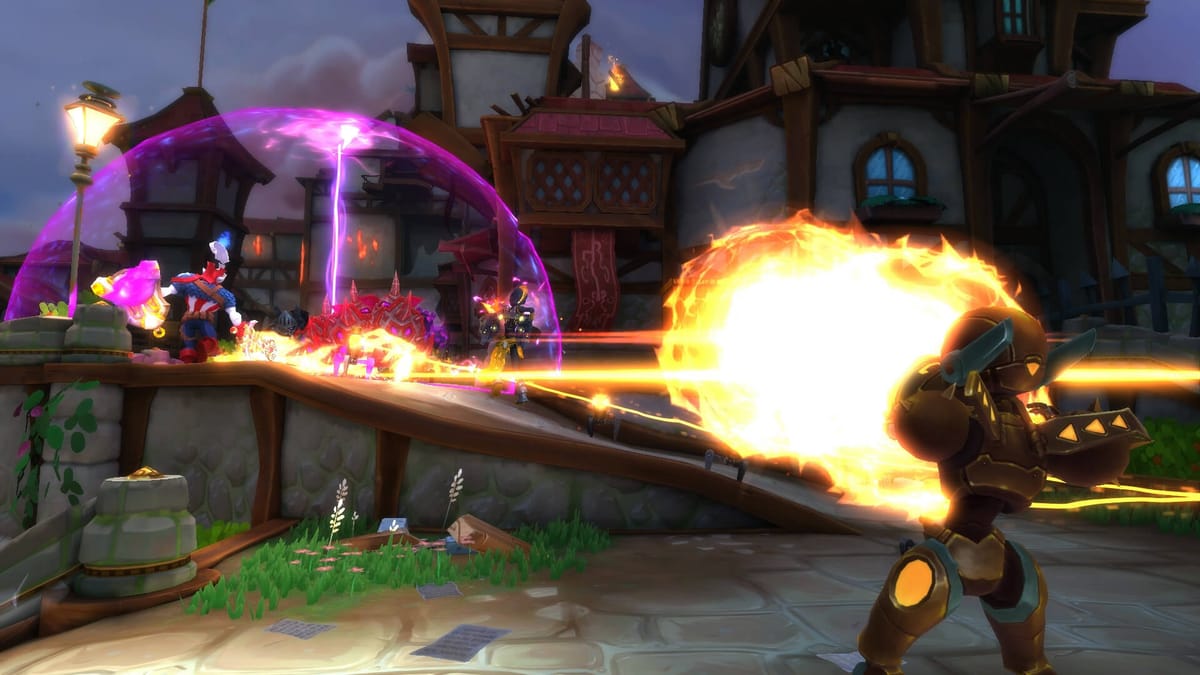
Dungeon Defenders 2 is a more accessible version of the same broad idea: defend lanes with placed structures, then jump into the action to stabilize pressure points yourself. It is still very much a tower-and-hero game, just tuned for a different audience.
Compared with the first game, this one feels easier to get into as a co-op team. The wave flow is readable, hero participation is constant, and the handoff between planning and fighting is smoother. Co-op works well because one player can focus on upgrading and shoring up the base while the other roams, clears dangerous enemies, and keeps weak lanes from collapsing.
It fits players who want multiplayer tower defense games with less old-school friction and more active pacing. If your group likes seeing immediate payoff from builds and wants plenty of things to do during the wave, this makes sense.
Why is it below the original? Because some players will find it less crisp as a pure defense game. It leans a bit further into action, progression layers, and hero presence. That makes it easier to recommend broadly, but a little less pure for players chasing tighter defensive structure.
Sanctum 2
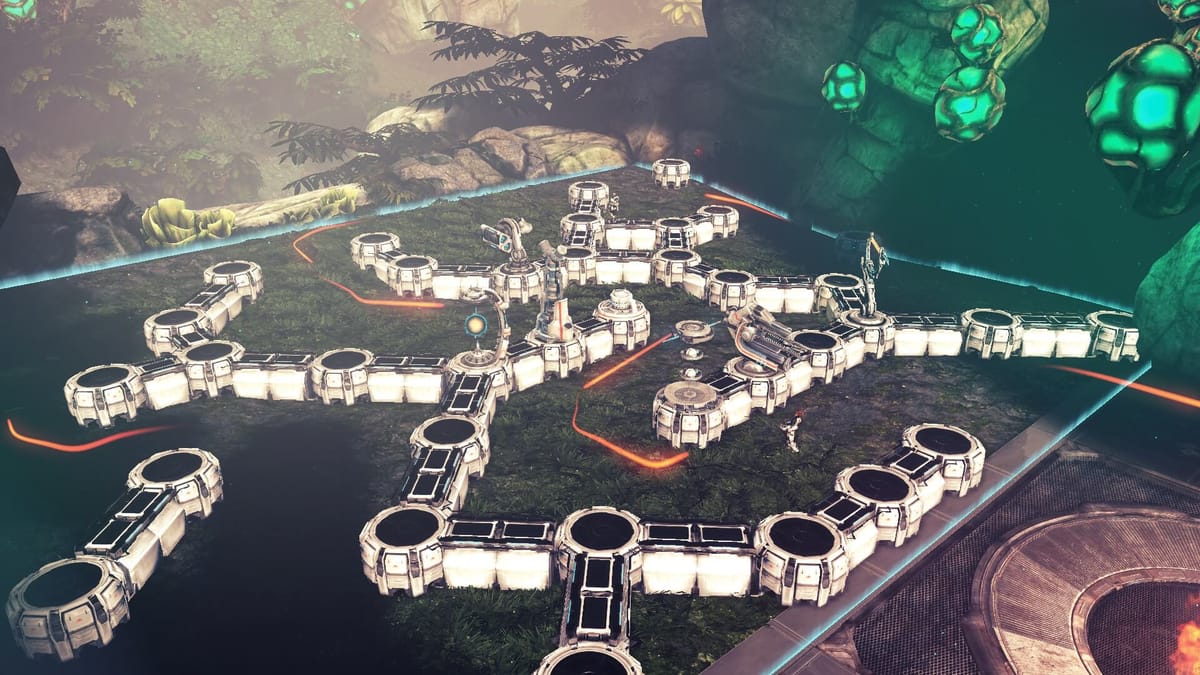
Sanctum 2 is for players who want the shooting to be constant without abandoning lane logic. It is one of the clearest examples of a game where FPS combat and tower defense share the same job instead of competing for attention.
The defense loop is built around pathing enemies through your placed structures, locking down choke routes, and then personally dumping damage into priority threats. In co-op, this becomes much more interesting because one player can focus on keeping the lane geometry efficient while the other plays more aggressively around breach prevention and elite cleanup. A strong duo can hold much nastier wave pressure than either player could alone simply because attention gets split correctly.
This fits action-heavy players who still want visible lane structure. It is especially good if your group gets bored in games where building happens only between long passive waves.
The reason it is mid-list instead of top-tier is that it sits closer to shooter energy than trap-heavy defense. If you want deep trap combos, layered crowd control grids, or heavy build experimentation around multiple lane types, other picks here do that better.
Legion TD 2
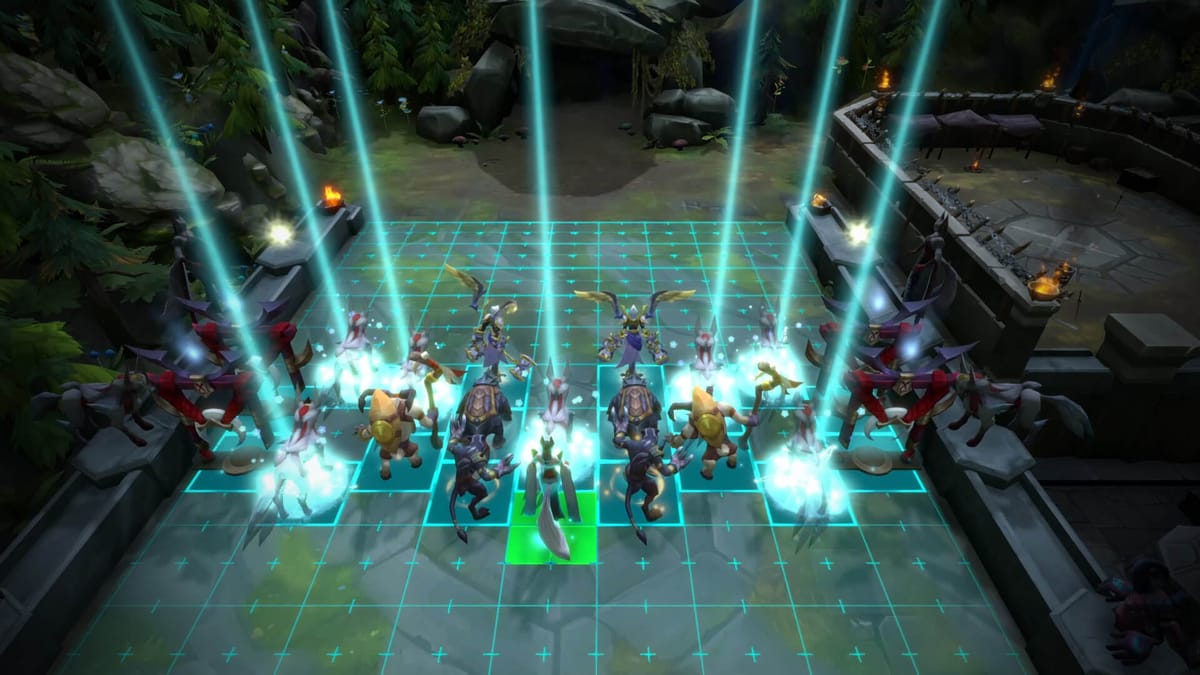
This is the most tactical co-op option on the list. Legion TD 2 drops most of the direct-action fantasy and puts the emphasis back on lane defense, unit placement, wave reads, and economy timing.
The co-op appeal comes from shared planning. You and your partner are not just surviving your own waves; you are reading lane strength, deciding how greedy to be, and building boards that can absorb pressure without collapsing to a bad send. It is much more about defensive forecasting than emergency hero play. That makes it a strong fit for players who want co-op tower defense games where communication matters every round.
The game belongs here because it is still fundamentally about holding lanes against waves with coordinated builds, even if it is less of a classic hero-and-trap hybrid than the top half of the list. Co-op meaningfully changes the experience through planning, not reflex support.
The tradeoff is obvious: if you came here for action-defense, this is not that. It is slower, more structured, and more analytical. Excellent for tactical pairs. Not the pick for players who want to physically run the lane and save the base with clutch combat.
Bloons TD 6
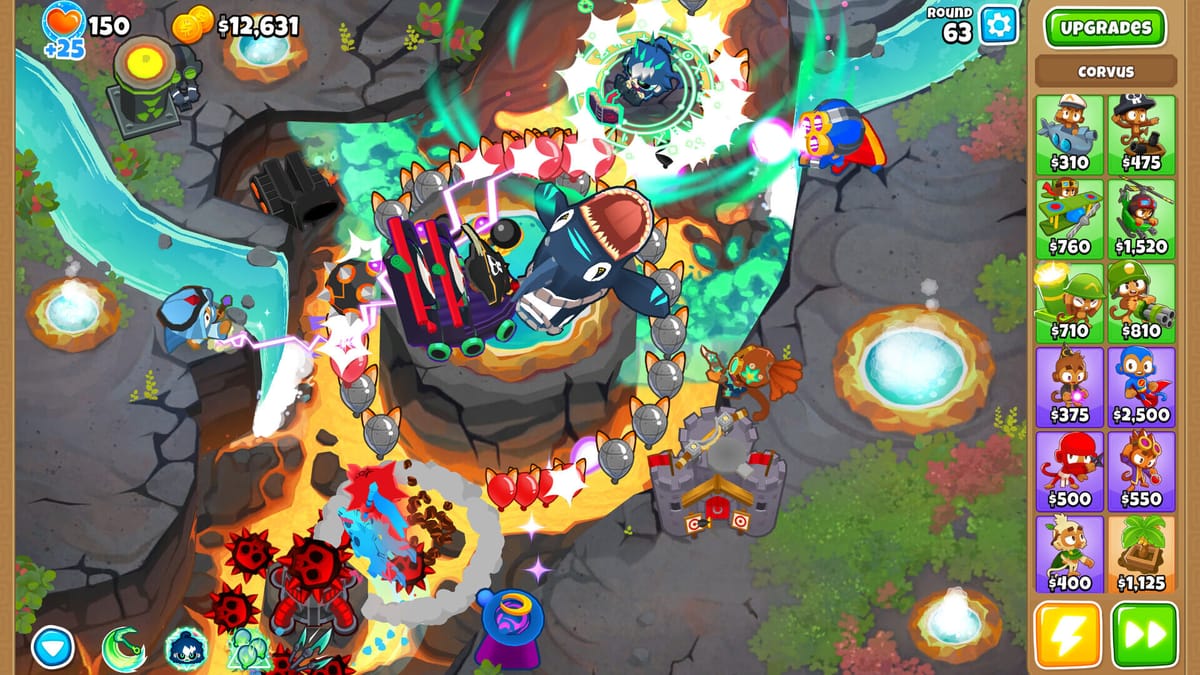
Bloons TD 6 is the cleanest pure tower-defense co-op game on this list, and that clarity matters. Sometimes the best game to play with a friend is the one where lane coverage, tower timing, and upgrade roles are easy to read in seconds.
Its defense loop is classic path control and wave handling. You build around route bends, coverage overlap, armor popping, cleanup, and support synergies. Co-op improves the game because players can divide tower responsibilities and timing calls instead of both trying to do everything. One player can manage economy and support buffs while the other handles frontline damage and wave-specific adjustments. That split turns a familiar lane-defense game into a genuinely collaborative one.
This is best for duos who want structure over chaos. Map readability is high, wave pressure is legible, and mistakes usually come from planning errors rather than camera panic or aim failure.
It ranks lower because it is not really a direct-combat hybrid in the same way as Orcs Must Die!, Dungeon Defenders, or Sanctum 2. Your personal unit involvement is lighter. But as one of the best tower defense games to play with friends, it absolutely belongs.
X-Morph: Defense
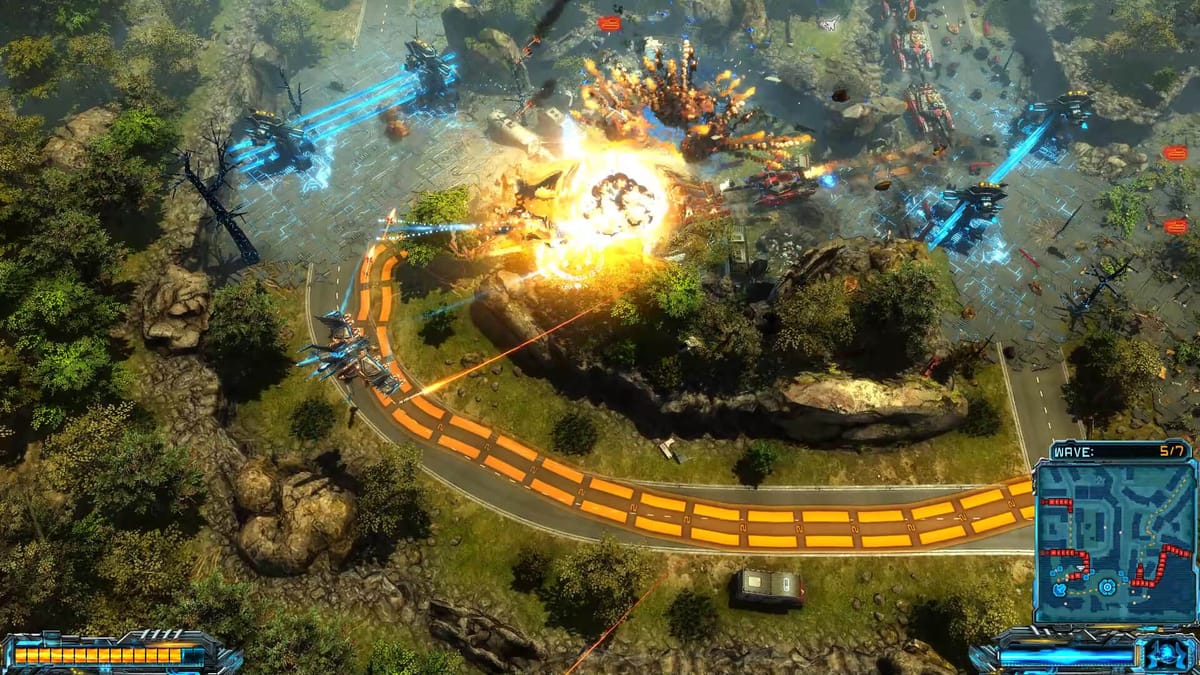
X-Morph: Defense pushes harder into action than most games here, but it still earns the defense label because route control is central. You are not just shooting waves. You are placing towers and using structures to reshape how enemies approach your base.
That path manipulation is what makes the game work in co-op. A duo can coordinate tower coverage and route bending while also splitting combat space in real time. One player can patrol air threats or side angles while the other anchors the main pressure lane. When the map gets busy, that shared battlefield awareness matters as much as raw DPS.
This fits players who want a more kinetic, action-heavy version of hybrid TD. It is especially good for duos who like reacting under pressure and want less downtime between build and combat.
The tradeoff is that it feels less like a classic lane defense game than the stronger upper-tier picks. Structure is there, but the moment-to-moment identity leans heavily toward active destruction. If you want trap stacks, long chokepoints, and visibly engineered kill corridors, this is a looser fit.
Iron Brigade
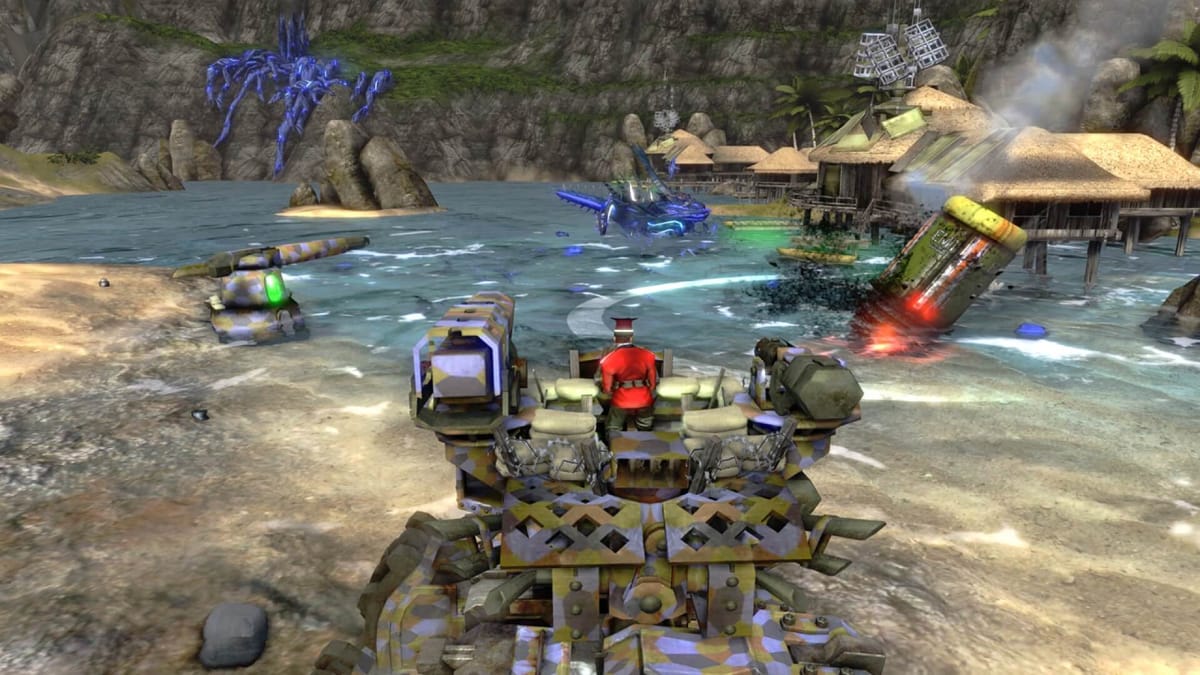
Iron Brigade sits in an interesting middle ground: mobile turret defense, base protection, and third-person shooting all tied together by wave pressure. It is more unusual than the games above it, which is exactly why it makes the list lower rather than higher.
The defense loop revolves around defending key objectives while placing emplacements and using your own combat frame to cover gaps. In co-op, that turns into role coverage. One player can lock down a lane with heavy defensive hardware while the other roams, intercepts leaks, and helps wherever the line starts to bend. That creates a satisfying hold-the-line rhythm when the team is coordinated.
It fits players who want a less conventional co-op TD experience but still need an actual base-defense structure. The defensive identity is real; it is just filtered through a more action-forward chassis.
The reason it will not click for everyone is feel. It is more niche, less cleanly lane-focused than top picks, and less elegant in its tower logic than the strongest games in the genre. Good for players who like characterful hybrid systems. Less ideal if you want tight, readable chokepoint engineering.
Kingdom Rush 5: Alliance TD
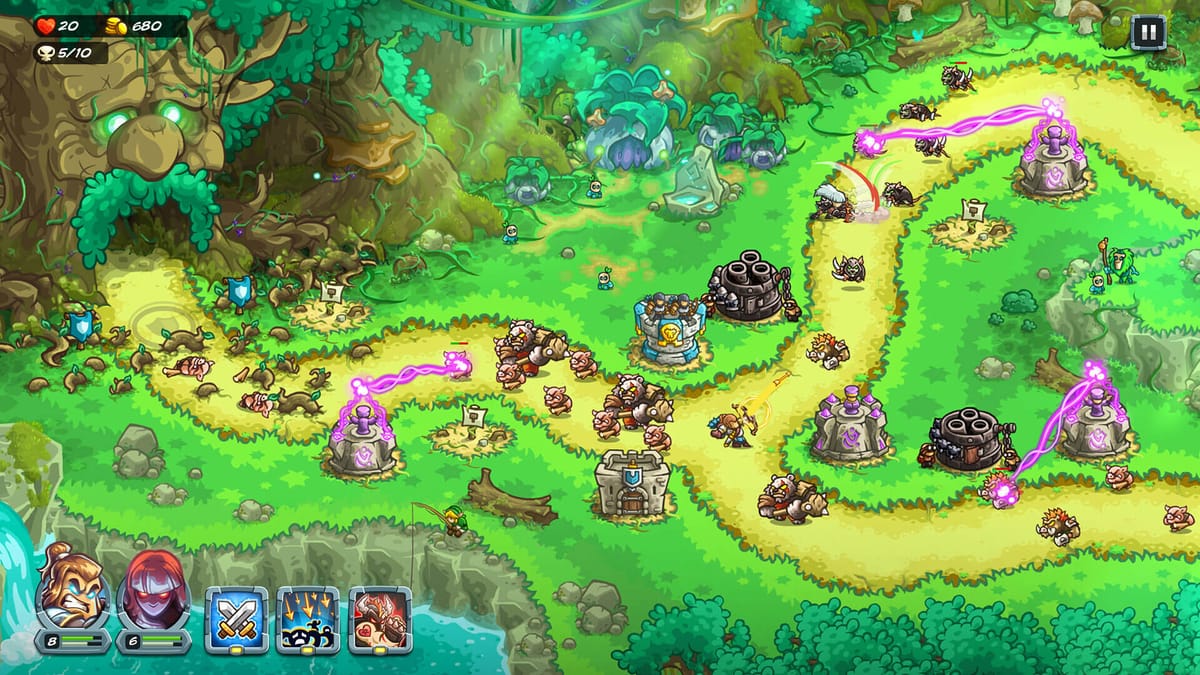
This is the edge-case pick, but it still belongs because the lane structure is strong and the co-op-capable style of hero-supported defense aligns with what many players want from hybrid TD. Kingdom Rush has always understood wave timing, fixed-path pressure, and the value of smart tower placement at choke bends.
Alliance TD fits this article through its hero involvement layered over classic lane defense. You are still reading routes, choosing tower coverage carefully, and solving enemy compositions with the right defensive response. That gives it more hold-the-line DNA than many games that are technically more action-heavy.
It is best for players who want a cleaner, more approachable lane-defense experience with some hybrid flavor rather than full map chaos. If your group prefers readable maps, distinct wave answers, and straightforward defensive decision-making, this can work well.
The tradeoff is that it is the least co-op-defined game in the ranking relative to the leaders above it. It earns inclusion because of how strong the underlying defense design is, not because it transforms co-op hybrid play as dramatically as Orcs Must Die! 3 or Dungeon Defenders.
Which type of player will enjoy these most
These games click hardest for players who like shared defensive jobs, not just shared damage. The best pairings usually fall into one of these buckets:
- Trap engineers and lane planners should start with Orcs Must Die! 3, Orcs Must Die! 2, or Sanctum 2.
- Hero-focused defenders who still want towers to matter should look at Dungeon Defenders and Dungeon Defenders 2.
- Purely tactical duos who prefer wave reads, board planning, and cleaner structure over action should move toward Legion TD 2 or Bloons TD 6.
- Action-first co-op pairs who want to shoot constantly while still managing real defense objectives should pick X-Morph: Defense or Iron Brigade.
- Players who want fixed lanes and readable tower choices without maximum chaos will likely enjoy Kingdom Rush 5: Alliance TD most.
The biggest divider is simple: do you want co-op to mean better planning, better combat support, or both? The top half of this list is strongest when both matter at the same time.
What matters most when picking your next game
For co-op tower defense, the key question is not just “can we play together?” It is “does adding another player improve the defense loop?”
Look for these decision points:
- Role split: The best co-op TD games let one player build while the other reacts, upgrades, or stabilizes leaks.
- Lane readability: If enemy routes are easy to parse, teamwork becomes cleaner. If the map is noisy, co-op leans more on panic control.
- Action vs planning balance: Some games want careful pre-wave setups. Others expect constant in-wave hero intervention.
- Base pressure: Good co-op defense games create moments where the team must decide what lane to save and what lane to risk.
- Build interdependence: Strong co-op happens when your setup actually depends on what your partner is doing, not when both players just place more damage.
A common mistake is choosing based on genre label alone. “Multiplayer” is not enough. Some multiplayer tower defense games are better solo with extra bodies attached. The strongest picks here are the ones where co-op changes how you defend.
FAQ
What is the best co-op tower defense game overall?
Orcs Must Die! 3 is the safest overall recommendation. It has the strongest mix of trap placement, lane control, wave pressure, and meaningful co-op role splitting.
Which game here is best for two players specifically?
For a dedicated duo, Orcs Must Die! 3, Orcs Must Die! 2, and Dungeon Defenders are the strongest fits. All three let two players divide defensive work in a way that feels natural instead of forced.
Which pick is best if we want more planning and less action?
Go with Legion TD 2 or Bloons TD 6. They are better for players who want cleaner structure, clearer lane reads, and less dependence on direct combat.
Which game is the most action-heavy while still being real tower defense?
X-Morph: Defense is probably the most action-forward pick that still keeps route shaping and tower placement central. Sanctum 2 is close, but it feels a bit more visibly lane-structured.
Are all of these pure tower defense games?
No. This list is intentionally built around co-op defense hybrids. Some are classic lane-defense games, some are hero-and-tower blends, and some lean hard into action-defense. What they share is real wave defense, lane or base pressure, and meaningful co-op decision-making.
Takeaway
The best co-op tower defense games are the ones where a second player changes the defense plan, not just the damage output. Orcs Must Die! 3 is the top recommendation for most duos, but the right pick depends on whether you want trap-heavy lane control, hero-driven base defense, or cleaner tactical multiplayer tower defense games. When you've worked through this list, the overlooked co-op tower defense games cover the next shelf — maze builders, trap hybrids, and base-defense co-op most lists skip.