Defense Grid vs Defense Grid 2: Which to Play First?
Choose between Defense Grid: The Awakening and Defense Grid 2 by map problem-solving, tower placement, campaign learning, and reasons to replay.
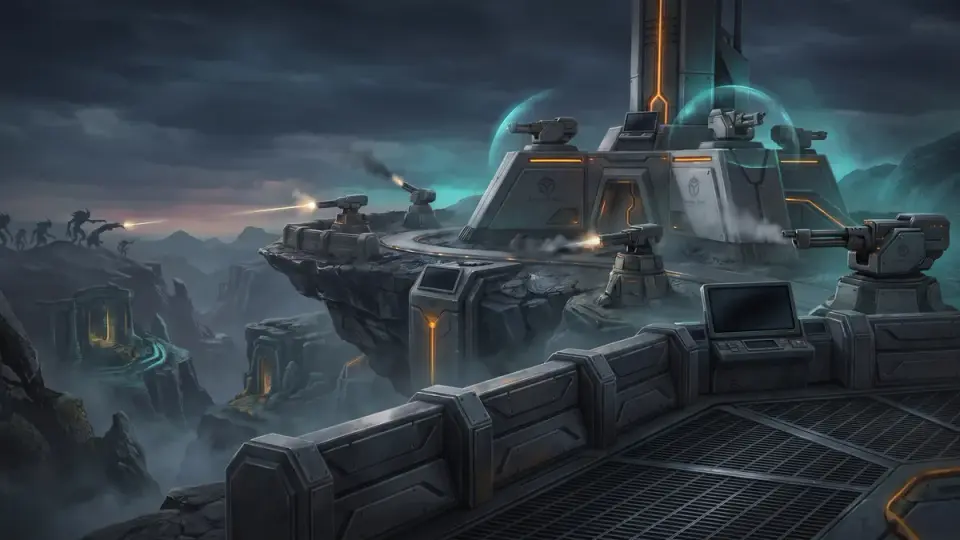
The best tower defense campaigns treat each map as a puzzle, and the answer is where you put your next tower. Start with Defense Grid: The Awakening. Its tight maps and strategic tower placement turn every level into that kind of problem. Choose Defense Grid 2 first only if its new maps, towers, and campaign are what draw you to the series.
Defense Grid: The Awakening vs Defense Grid 2 is a question about which game to play first, not which game is better. Both are classic tower defense games from Hidden Path Entertainment, and both reward deliberate building over reflexes. This guide is for players who want one satisfying campaign to solve.
Quick take
- Defense Grid: The Awakening is the safest first pick. It suits players who want focused, tightly built maps where each placement decision matters.
- Defense Grid 2 is the right start for players who want the sequel's new maps, towers, and campaign without going back to the original first.
- Both, in release order suits players who already plan to finish the series. Each game then adds to what you learned in the one before.
How the two games differ for a first campaign
Both games use the same basic setup. Aliens enter the map and head for your power cores. They try to carry the cores back to an exit. If you kill a carrier, it drops the core, which then drifts back toward its starting point. A map is lost only when cores actually leave it. A map is solved well when no alien gets a clean run at them.
Three properties of a map shape your answer, and it helps to keep them apart:
- Authored layout is the fixed geometry: entrances, exits, core position, and the corridors between them.
- Legal building positions are the spaces where a tower can go at all.
- Route influence is whether your towers can force aliens onto a longer path, or whether the path is fixed and you only pick firing positions.
| Decision | The Awakening | Defense Grid 2 |
|---|---|---|
| Map problem | Tight, authored maps | New maps |
| Placement | Strategic, high-stakes | New towers to place |
| Campaign | Original campaign | New campaign |
Map problem-solving and placement decide which game to start with. They control how you spend most of your time and what each victory teaches you. Onboarding and replay only break a tie, because they change how you get through a campaign, not what you are solving.
Why start with Defense Grid: The Awakening
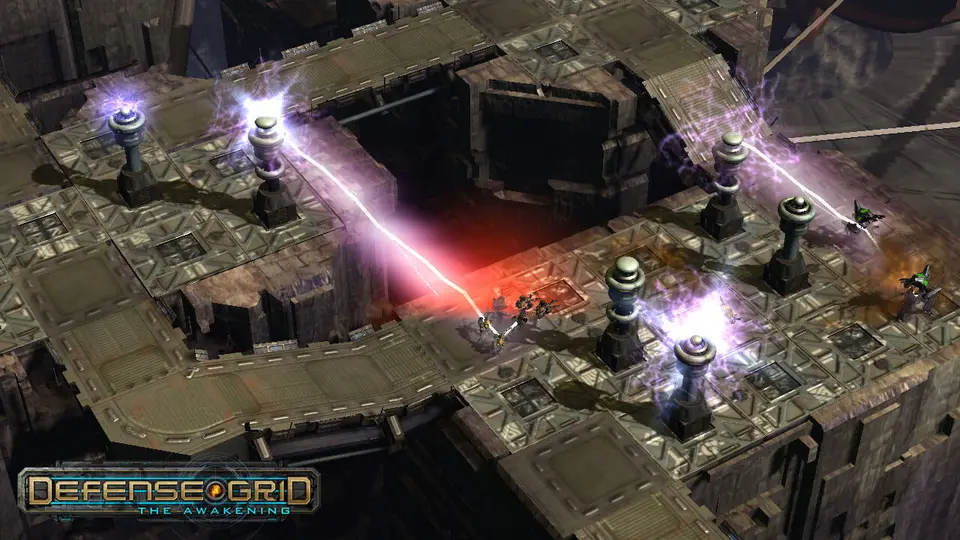
Defense Grid: The Awakening is a Sci-fi tower defense classic with tight maps and strategic tower placement. Those tight maps are why it is the default. A tight map leaves no room for a wasted tower. A badly placed early build costs resources you needed for the next wave, and the map shows the result plainly.
Each level asks the same questions. Which corridor feeds the core room? Where does a tower cover both the approach and the escape route a carrier would take? On open building ground, should you place towers to stretch the alien path, or keep them compact around one killbox? These are separate choices. Picking a firing position is not the same as reshaping the route, and the original makes you work out which one a map calls for. For more on that split, see how fixed paths and mazing change tower placement.
The original is the best training ground for these habits. You learn to read a layout, find its chokepoint, and commit before the waves get heavier. Every later game in the series builds on those habits.
Skip it as your first game if new content matters more to you than where the series began. If going back to an older entry feels like homework, you will play it reluctantly, and a puzzle campaign played reluctantly is a poor start. In that case, the sequel is the better use of limited playing time.
Why start with Defense Grid 2
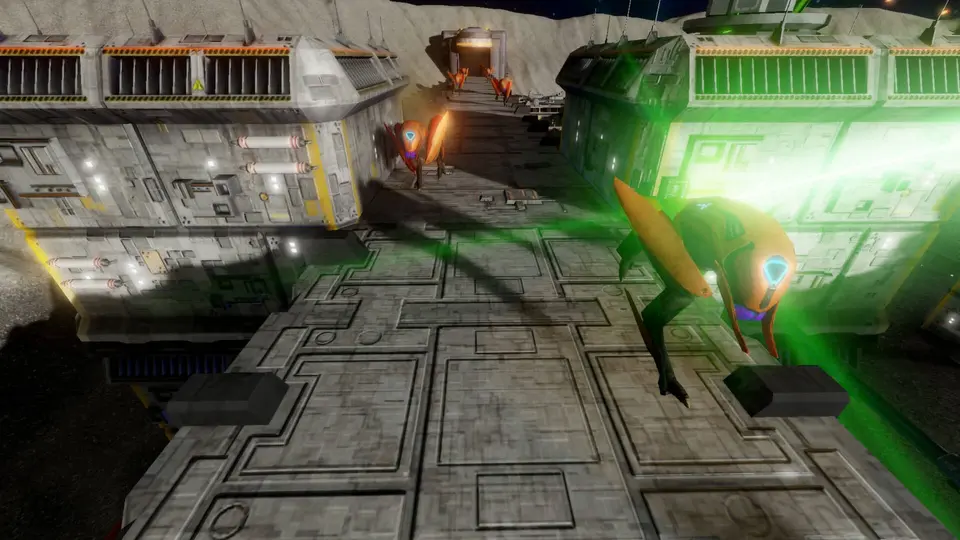
Defense Grid 2 is a Sequel to Defense Grid with new maps, towers, and campaign. That makes it a full campaign of its own, not an add-on. It has its own maps to read and its own towers to fit into your plans. You do not need the original's maps to understand what the sequel's maps ask of you, because the core-defense loop works the same way.
Start here if the sequel's maps and towers are the reason you looked at the series. Players who have already finished other placement-heavy tower defense games may prefer a campaign whose toolset was built with the original's lessons in mind. Starting with the sequel is also sensible if you will only play one Defense Grid, because the newer campaign is the more natural single choice.
Starting here has a cost. If you go back to the original afterward, you will be solving its tight maps with fewer tools than you just had, and some players find that step backward hard to enjoy. Starting with The Awakening avoids that, because each game then adds to the last. Neither order makes either game easier or deeper. The order only changes how each one feels when you reach it.
How each campaign teaches you to play
Separate two kinds of order here. Mechanical familiarity means knowing how cores, carriers, and route pressure behave, and either campaign can teach you that from scratch. Story order is a separate preference. Release order is the natural choice if the narrative matters to you, but nothing in the placement loop requires it.
Spend two minutes on these checks before you commit:
- Difficulty choice. Check the store page or the options menu for selectable difficulty. If one game lets you lower the pressure while you learn and the other does not, that matters more for a new player than map count.
- Tower introduction pace. Check whether the early missions add towers one or two at a time. A slow pace lets you learn each tower's role before a map requires it.
- Restart and retry. Check whether you can restart a mission instantly or must replay it in full. Fast restarts turn a failed defense into a quick second attempt rather than a punishment.
None of these checks overturns the main verdict on its own. They matter when you are torn. If the sequel teaches more gently and you are new to the genre, that can reasonably move Defense Grid 2 into first place.
What brings you back after you clear a map
Replay in a placement-focused game means coming back because you think you can do better, not because a checklist says so. A clear on your first attempt often comes with dropped cores and a scramble in the last wave. Coming back with a tighter build that never lets a carrier near the cores is the real goal for many players of both games.
There are three reasons to return, and each points to something specific to look for:
- To improve a solution. Look for per-map scores or medals that reward spending less or keeping every core. These reward the habits the original builds best.
- For a harder challenge. Look for challenge variants or harder modes on maps you have already cleared. These give a finished map a new problem rather than a repeat of the answer you found.
- For more content. Look for add-on map packs. Their availability depends on the edition, so treat them as separate from the main campaign when you judge either game. A bundle with extra maps is a bonus, not a reason to play one game before the other.
If improving your solutions appeals to you most, the original's tight maps reward a second pass the most, because there is little slack to waste. If more variety brings you back, the sequel's new maps and towers give you more to explore.
Which Defense Grid to play first
Start with The Awakening if you want to solve maps rather than just finish a campaign. Its tight maps build the layout-reading and chokepoint habits that carry into the sequel.
Start with Defense Grid 2 if its new maps, towers, and campaign are what you want, or if you will play only one game. Choose it too if playing an older game first would feel like an obligation. A campaign you look forward to is better than one you put up with.
Before you buy, check difficulty options, how quickly early missions introduce towers, how retries work, and which add-on maps your edition includes. Map and placement preference sets the default, the difficulty, tower-pace, and retry checks can change it, and replay preference settles a remaining tie. If neither game wins you over yet, browse more tower defense games with handcrafted maps and come back once you know which kind of map problem you enjoy.