10 Best Tower Defense Games With Handcrafted Maps
Ranked tower defense games with authored, non-procedural stages that reward replaying, refining choke points, and shaving off every leaked enemy.
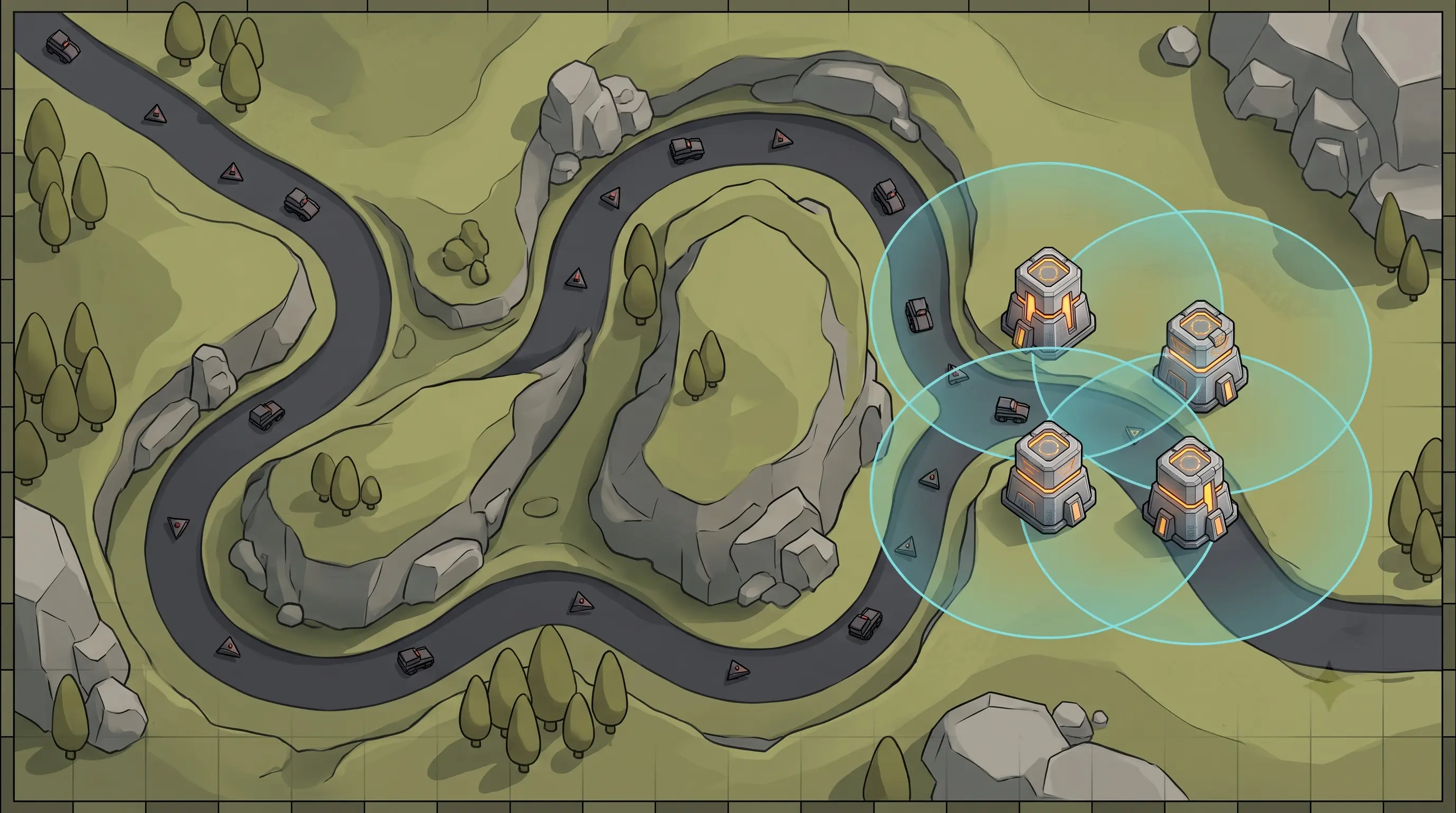
Tower defense games with handcrafted maps hit different when you want mastery instead of procedural noise. The appeal is simple: replay the same stage, move one tower a few tiles earlier, and watch a leak disappear.
This list is for players tired of random layouts and loose wave arenas. I prioritized authored stages — maps a designer actually built — with readable geometry, meaningful chokepoints, and placement decisions you can test, refine, and eventually solve.
Worth setting expectations on one thing: authored does not always mean a fixed path. Some games here hand you a designer-drawn lane and dare you to cover it. Others hand you an authored space and let your towers define the route through it. Both reward the same habit — replay, diagnose, adjust — which is why they share this list. Where a game leans one way or the other, I say so.
What makes a handcrafted map worth mastering?
A good stage should teach you something each time you fail. Wave one matters because the first tower often defines the economy curve. A chokepoint looks risky at first, then obvious once you finally understand how the enemy path, tower coverage, and upgrade timing fit together.
For this ranking, I favored:
- Authored geometry over procedural tile variety
- Placement discipline over raw upgrade bloat
- Stages that reward replaying for cleaner clears
- Defensive pacing where leaks feel explainable
- Maps that support optimization, not just survival
This is not a list of every tower defense game with lots of content. It is a list of the best TD games for map mastery.
1. Defense Grid: The Awakening
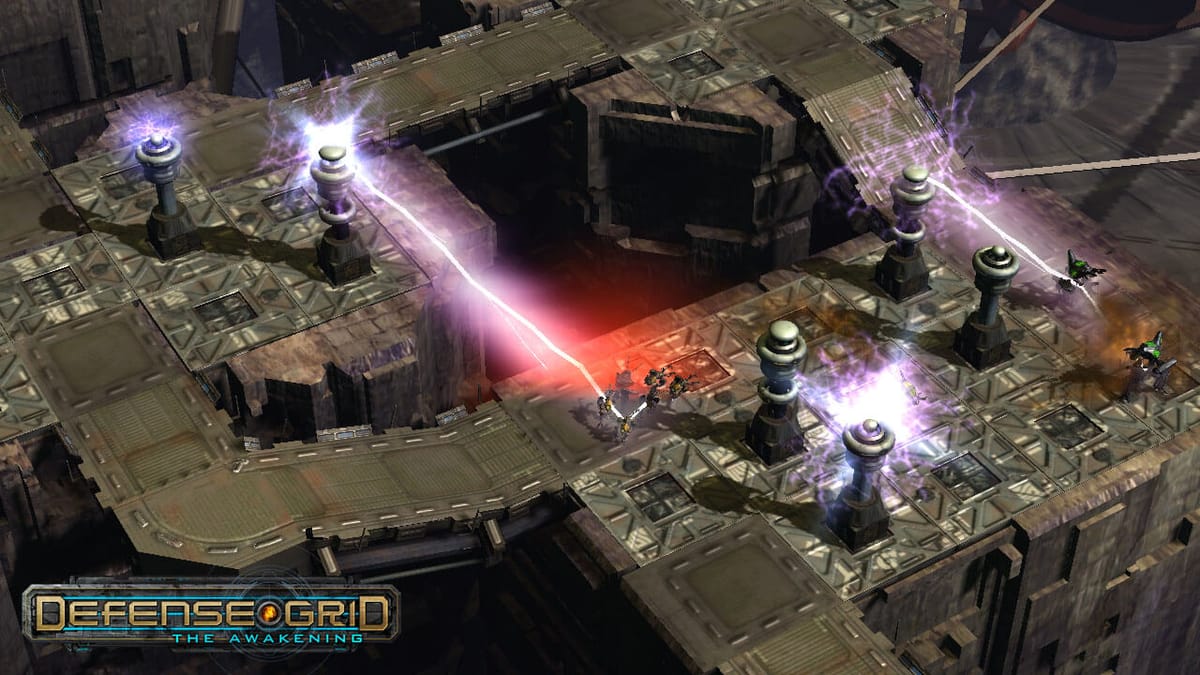
If you want the clearest example of why handcrafted tower defense maps still matter, start here. The strength is not spectacle. It is the way tight sci-fi levels turn tower placement into a long-term economy decision.
Defense Grid: The AwakeningThe core mechanic — literally — is the power core system. Aliens do not damage a health bar; they run in, grab a core, and try to carry it back out. Kill the carrier before it escapes and the core comes home. That single design choice is why Defense Grid rewards replaying more than almost anything else on this list. A leak is not a binary failure. It is a recoverable mistake with a visible cost, and the medal you earn depends on how many cores you kept and how little you spent doing it.
Many levels also open wide and let your towers define the alien route, so the question is rarely "can this tower kill the next wave?" It is whether this position still matters five waves later, whether it stretches the path far enough, and whether it buys enough time to afford the next upgrade without setting up a late-game collapse. Block every route entirely and the aliens simply walk through your towers, which keeps mazing honest.
The main limitation is that it is less flashy than the later hybrids. If you want heroes, constant active abilities, or chaotic action, this will feel restrained. For handcrafted map mastery, the restraint is the point.
2. Defense Grid 2
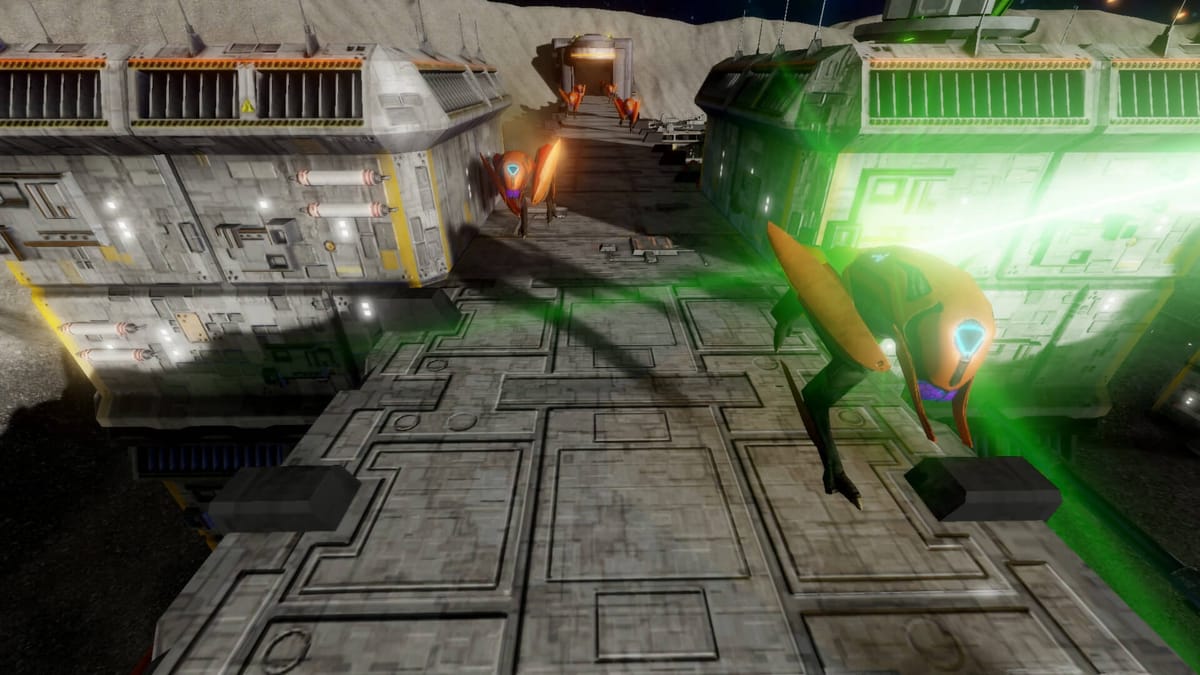
Defense Grid 2 belongs near the top because it keeps that discipline while broadening the campaign. You are still reading the route, finding tower density, and committing to placements that have to hold under wave pressure.
Defense Grid 2The difference is scope. More maps and towers give you more to evaluate, which lands well once you already understand the rhythm of route control. The best stages reward the same habit: replay, find the weak bend or the underused coverage angle, tighten until the whole route works.
For many players this is the better long-term pick after the original. It gives you more to chew on without abandoning what makes fixed levels satisfying.
Focus is the tradeoff. The Awakening has a cleaner classic feel, and more is not always better when what you want is a perfectly contained placement puzzle.
3. Kingdom Rush
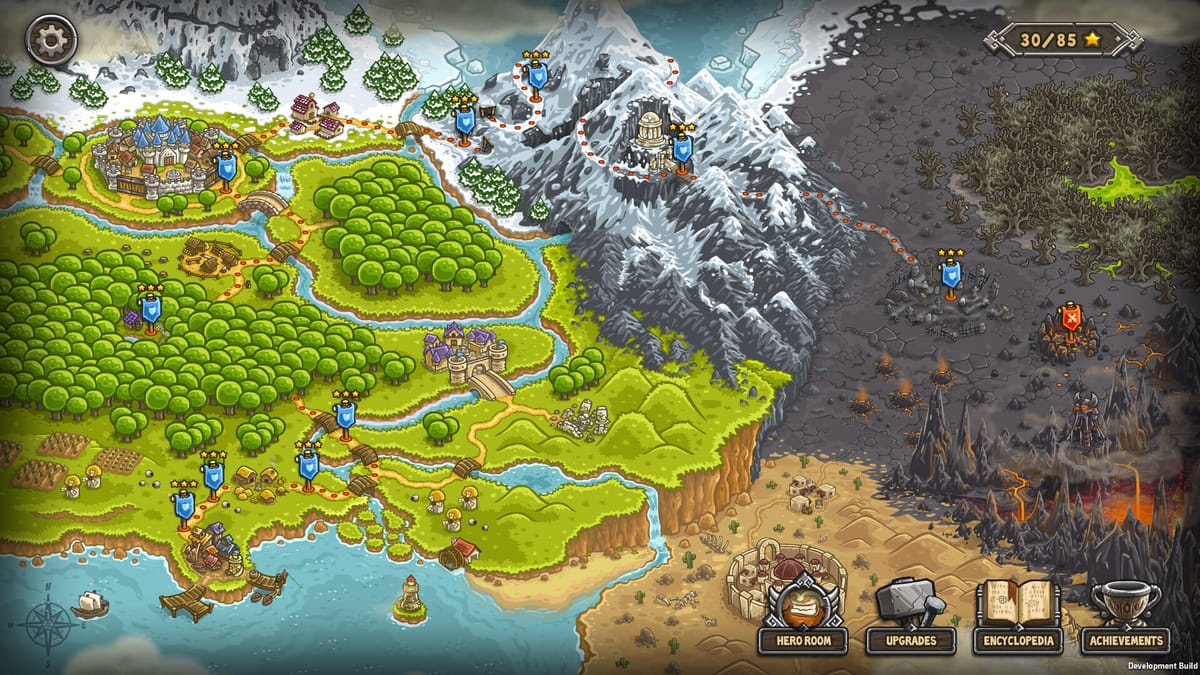
Kingdom Rush is the template. Its maps are still among the most-replayed handcrafted stages in the genre, and that is exactly why the original belongs here ahead of its sequels. Compact lanes, deliberate tower slots, and readable failures make every clear feel like a solved puzzle rather than a lucky upgrade path.
Kingdom RushYou are deciding where barracks should stall a wave, where artillery covers the bend, and when a hero rescue is worth interrupting the larger plan. When a run collapses, the cause is usually visible: the melee stall came too late, the anti-armor answer covered the wrong lane, or too much gold went into range instead of control.
That clarity is the whole point of handcrafted map mastery. Frontiers and Origins add personality and polish, but the 2011 campaign is still the cleanest Ironhide argument for authored stages you can refine forever.
The limitation is build depth compared with systems-heavy games later on this list. If you want endless upgrade trees more than map discipline, start elsewhere. If you want the classic fixed-level Kingdom Rush loop, this is the one.
4. Dungeon Warfare 2
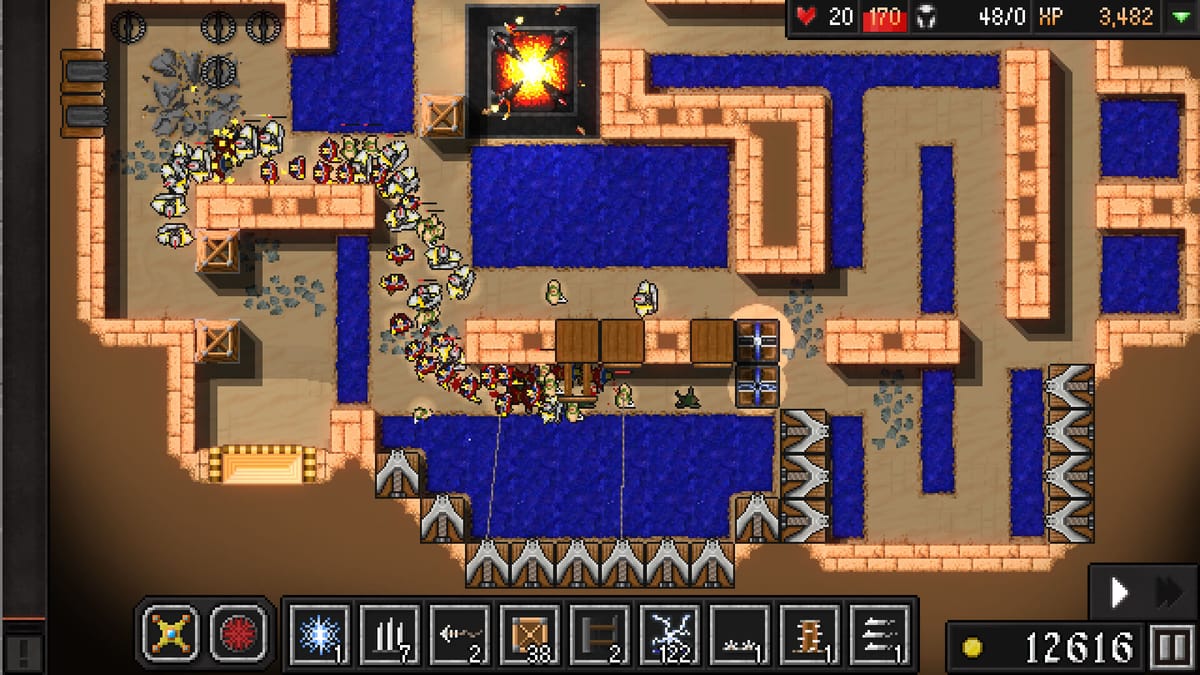
Dungeon Warfare 2 is the trap-heavy pick, and the better entry point into that fantasy than the first game. Instead of asking only where a tower gets the longest firing window, you are asking how to punish movement through tight dungeon spaces.
Dungeon Warfare 2That gives its maps a nasty, satisfying edge. The best moments come when a corridor stops being a path and becomes a machine. Trap placement, lane control, and timing all matter because the dungeon is not merely something you defend. It is something you weaponize.
It clicks hardest if you like chokepoints with teeth. Players who enjoy refining kill zones — making enemy movement itself part of the damage plan — will get more from this than from a cleaner tower-only game. The sequel's broader trap toolkit is why it takes the slot over the original.
Readability is the cost. Trap-heavy defense is less transparent than classic tower coverage, and when a run fails the fix is often less obvious than "move the tower here." Rewarding, but not gentle.
5. Plants vs. Zombies
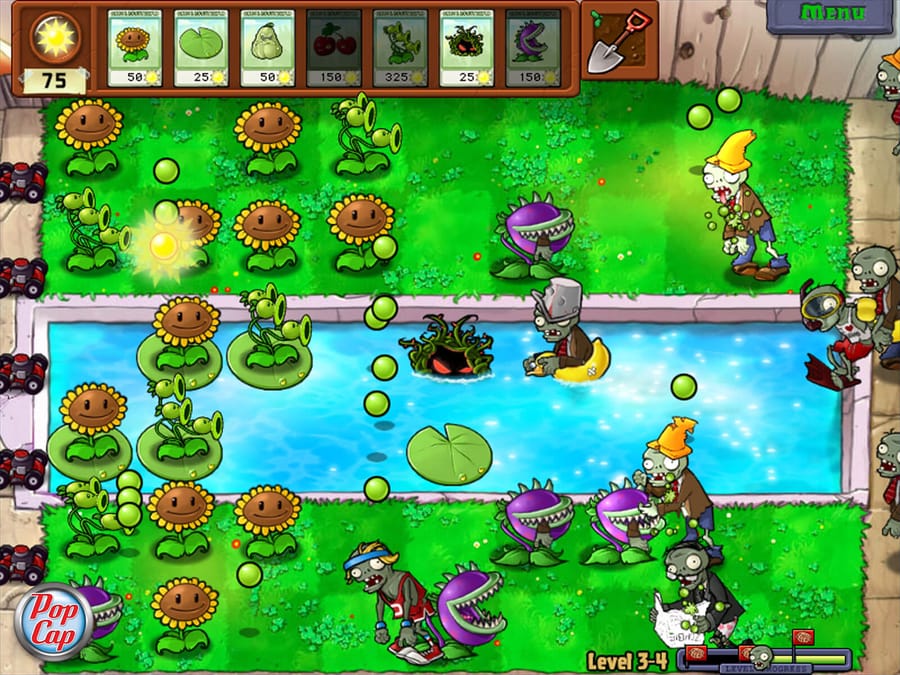
Plants vs. Zombies is the most approachable game here, and approachable is not the same as shallow. Its lane structure is one of the clearest forms of handcrafted defense design: fixed rows, obvious pressure points, immediate feedback when the setup is wrong.
Plants vs. ZombiesReadability is why it belongs. You see the whole problem at once. Every plant has a clear job, and every lane leak tells you exactly where the plan failed. That makes it excellent for learning tower defense discipline without getting buried under upgrade paths or maze logic.
It suits players who want fixed levels that play like compact puzzles. The loop is lane balance, timing, and resource pacing rather than elaborate tower networks.
The ceiling is lower than the deepest games here. If you want complex chokepoint optimization or long endurance pressure, this will feel too controlled. For clean handcrafted lane defense, it stays unusually sharp.
6. Kingdom Rush Frontiers
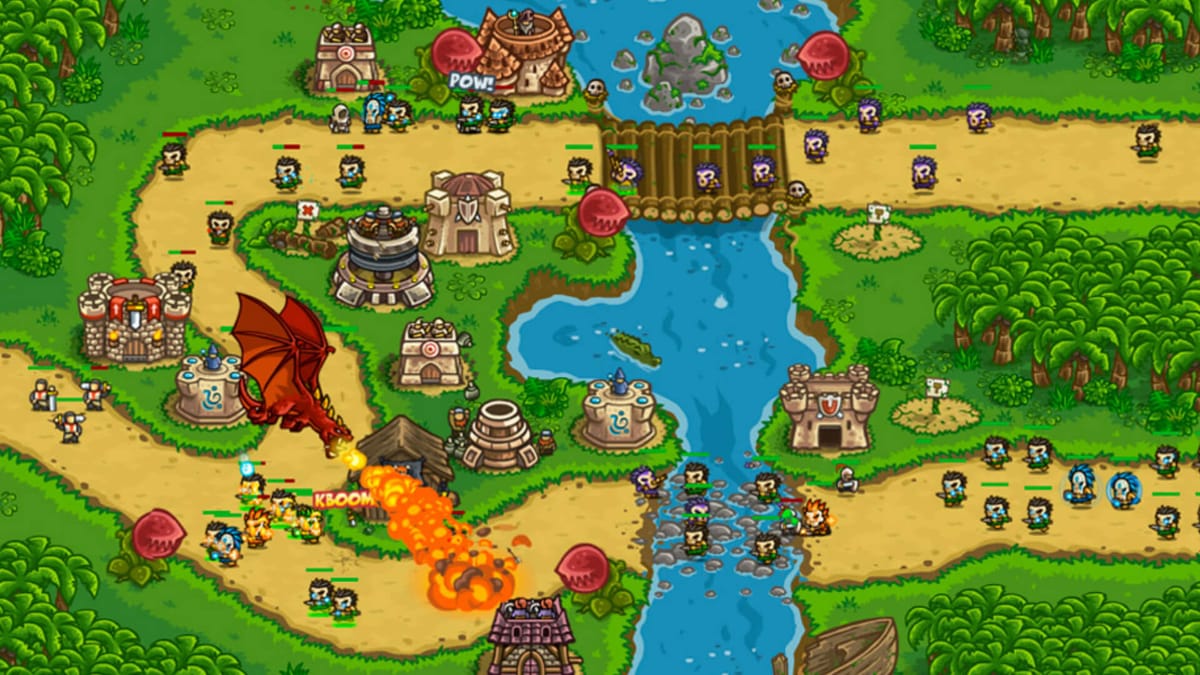
Kingdom Rush Frontiers is the strongest sequel pick if you want handcrafted maps with more personality and active pressure. The tropical campaign, heroes, and tower variety give each stage a distinct identity, but the fixed defensive problem in front of you is still the main event.
Kingdom Rush FrontiersThis is not a spreadsheet tower defense game. It asks you to manage lanes, hero positioning, tower roles, and wave response simultaneously. The maps are readable but never passive — you are usually reacting to pressure while trying to preserve the larger plan.
That suits players who like clear stages but do not want to sit back after building the first choke. Frontiers rewards knowing where the danger lane will be, when to reinforce, and how much ground your hero can realistically cover.
Active tools do blur the purity of the map puzzle. If you want placement alone to decide everything, the hero layer will feel like interference. If you want fixed maps with a sharper sense of battle tempo after the original Kingdom Rush, it works extremely well.
7. GemCraft: Chasing Shadows
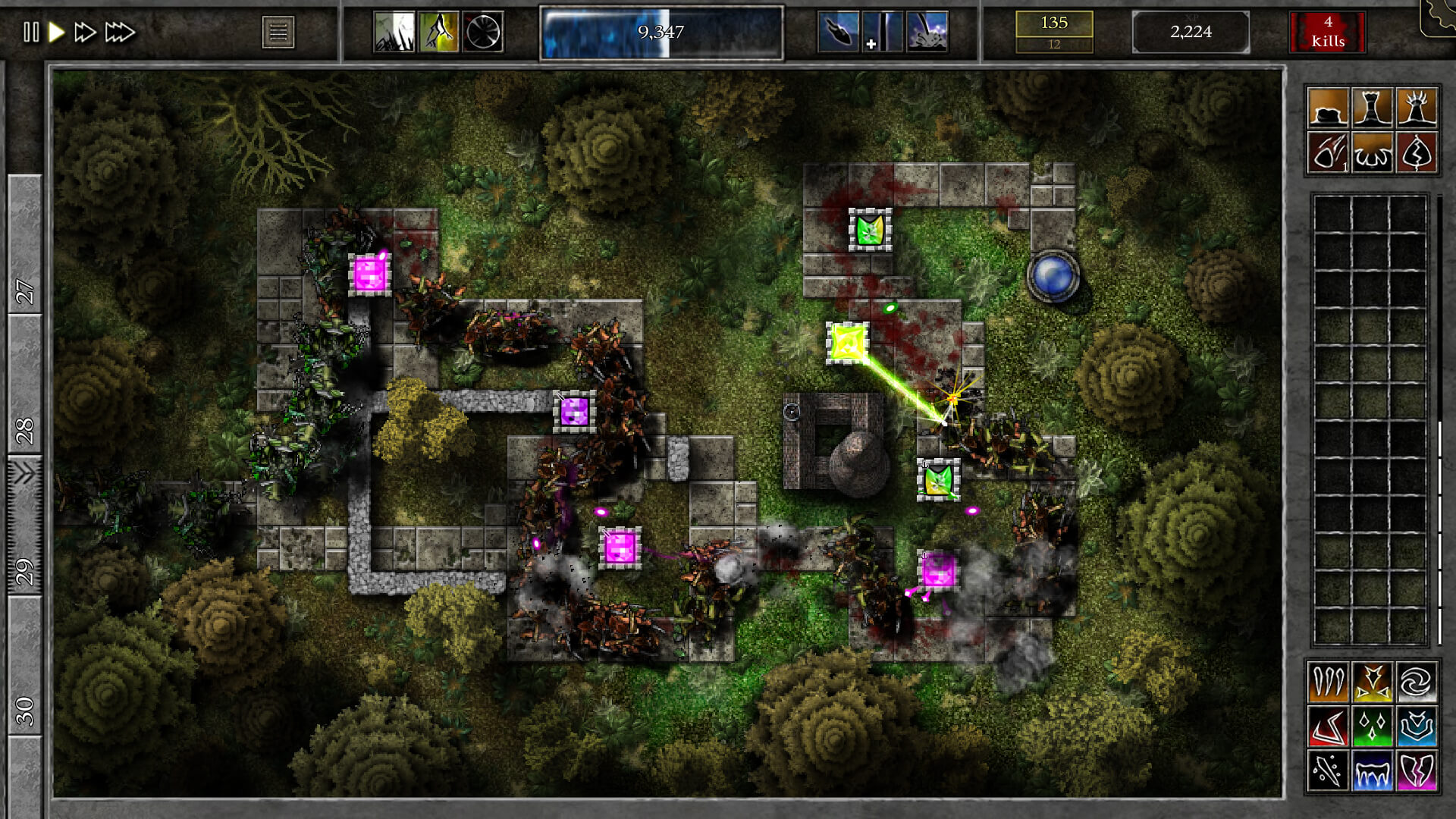
GemCraft: Chasing Shadows is for players who want authored stages with far more system depth. Gem combining, mana economy, and long endurance runs make it less about one perfect tower tile and more about building a defense that scales under sustained pressure.
GemCraft: Chasing ShadowsThe map matters, but the gem economy matters just as much. You are managing tower efficiency, damage concentration, and long-run endurance. The layout gives you the battlefield; your gem decisions decide whether it holds.
It fits well if you like optimization that stretches past the first few waves. It rewards refining the entire defensive curve rather than only the placement.
One warning: readable enemy paths matter less here than in cleaner fixed-level games, and mazing is a real part of the toolkit. If you came specifically for maps you solve through placement alone, this will feel system-heavy. If you want deep endurance defense on authored stages, it has a clear place.
8. Bloons TD 6
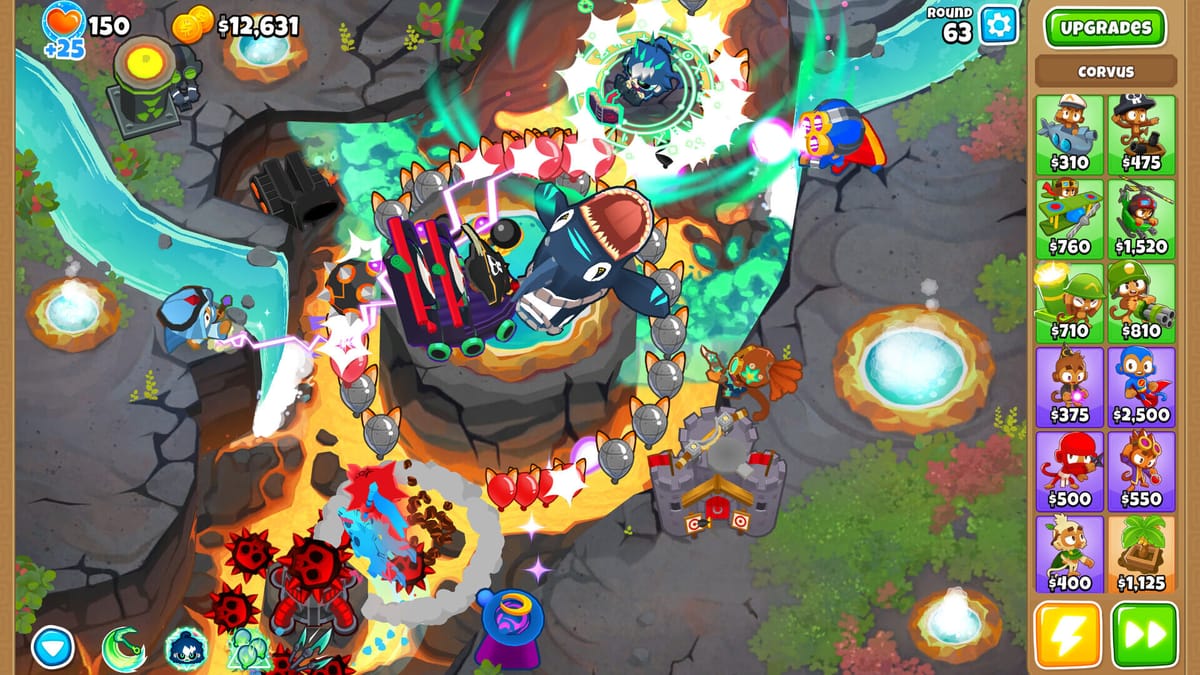
Bloons TD 6 is the biggest name on this list and, for this specific topic, the most conditional recommendation. The maps are fixed and there is real mastery in learning where tower coverage, hero use, and upgrade timing line up. The center of gravity is just not the map.
Bloons TD 6Deep tower upgrades and endless replayability are the main draw. That depth gives you an enormous amount to test, but it can also pull attention away from the stage itself. The question drifts from "what does this map demand?" toward "which upgrade route am I committing to?"
For many players that is not a flaw. It is exactly why Bloons TD 6 lasts. It fits people who want fixed layouts plus a large toolbox and long-term experimentation.
The common mistake is recommending it to everyone who asks for fixed-level tower defense. If you want strict placement discipline and minimal system clutter, start elsewhere. If you want fixed maps that support endless build testing, it is hard to ignore.
9. Radiant Defense
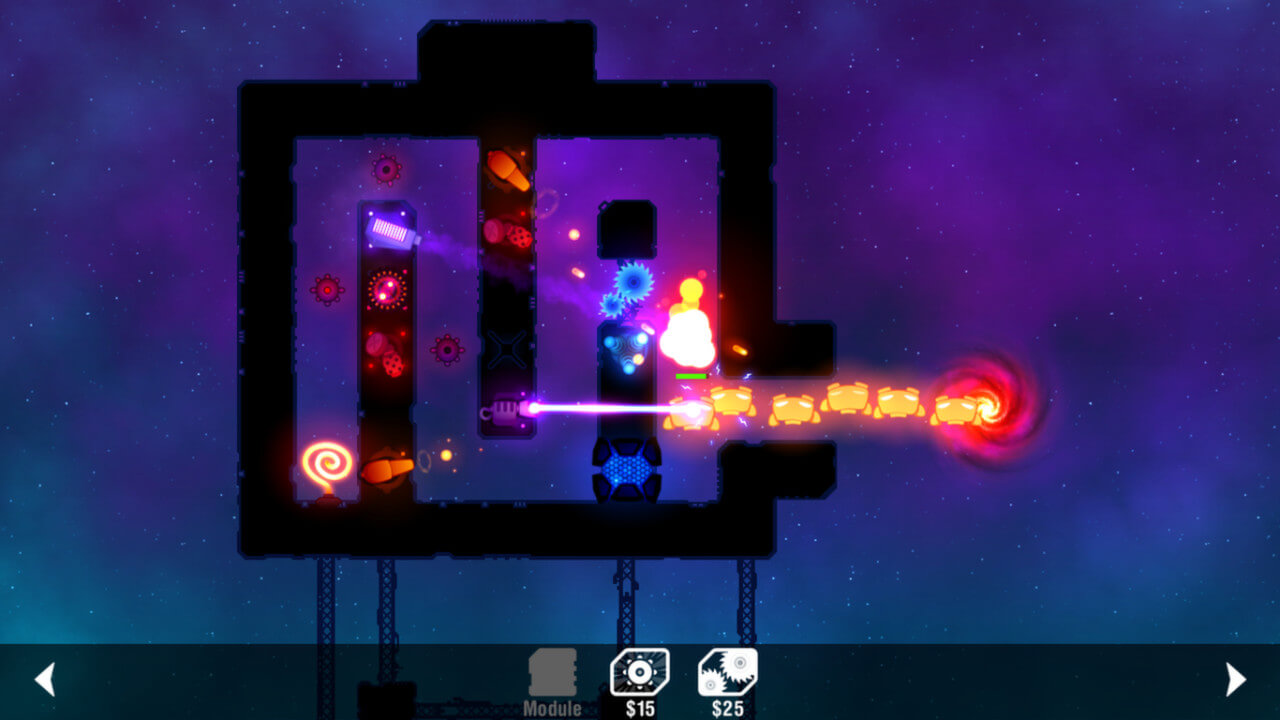
Radiant Defense is the routing pick, and the least "fixed" entry here. Its colorful sci-fi setup has you holding a space fortress against alien hordes, and the appeal is that you lay out the path yourself from prefab segments before shaping the defense around it.
Radiant DefenseThat makes it different from a traditional lane game. The handcrafted value comes from how each stage frames your routing options — how much room you get, where the anchors sit, what the space refuses to let you do. You are not reacting to a designer's path so much as negotiating with the space they built.
It suits players who enjoy maze logic and compact optimization. The defense feels like constructing a controlled kill path rather than reinforcing a prebuilt lane.
If your favorite part of handcrafted maps is studying a designer-made route, this is a narrow fit and you should probably skip it. If you like routing waves inside an authored scenario, it earns the spot.
10. Sanctum 2
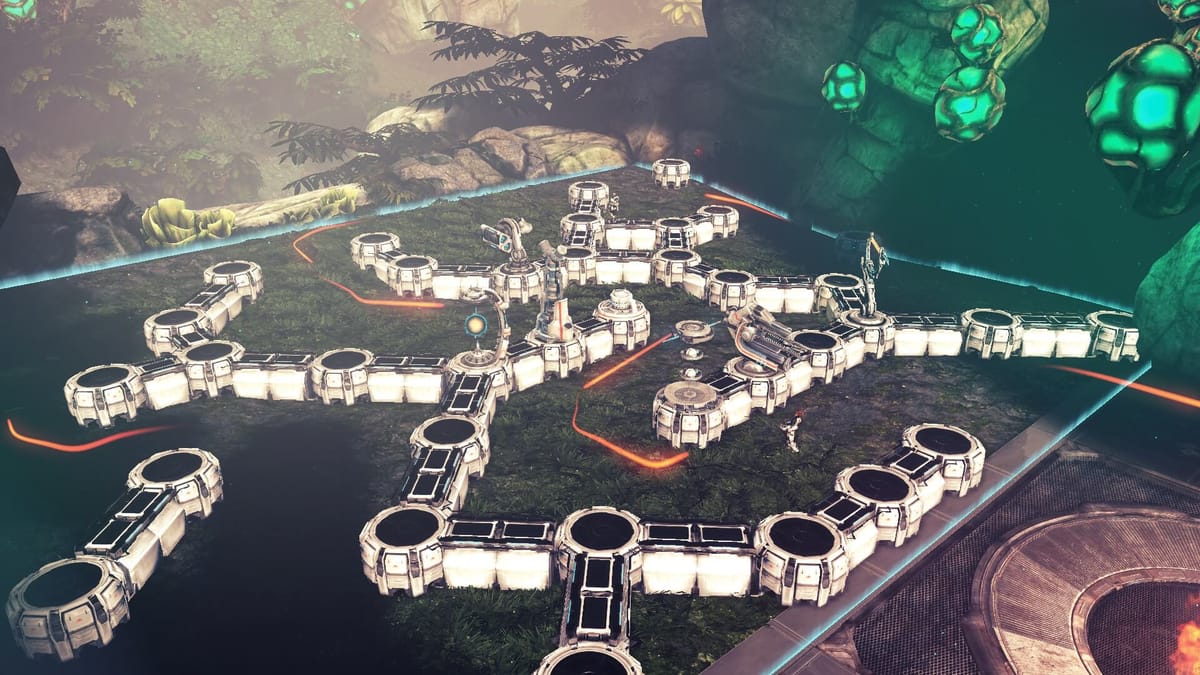
Sanctum 2 is the most hybrid pick here, and you should know that going in. It is a first-person shooter tower defense game with co-op and tower placement in 3D space. The defense loop matters, but you are also expected to fight.
Sanctum 2That changes the nature of map mastery. You are managing tower placement, lane pressure, and your own active intervention at once. A weak setup can sometimes be rescued by good shooting, and a strong setup can still collapse if you fail to respond in the moment.
It is best for players who want defense planning with physical presence. You are not watching a route from above. You are inside the pressure, holding the line while your towers do part of the work.
For pure map mastery it is the weakest fit on this list — the action layer dilutes the clean cause and effect that fixed-map purists want. As an action-heavy defense hybrid with authored spaces and real tower placement, it belongs at the edge of the conversation.
Where to start
If you only take one recommendation: Defense Grid: The Awakening. It has the tightest loop between a mistake, a diagnosis, and a fix, and the core system means every failed run leaves you with something specific to correct.
If that sounds too austere, Kingdom Rush is the classic crowd-pleaser — the most-replayed Ironhide maps, still the cleanest series entry for authored-stage discipline. Frontiers is the follow-up when you want more happening on screen. And if you want to learn the fundamentals before committing to anything deeper, Plants vs. Zombies teaches lane discipline faster than any game here.
Two series notes worth saying out loud: Kingdom Rush Origins is excellent campaign TD, but for this specific ranking the original and Frontiers cover the handcrafted-map case more cleanly. Kingdom Rush 5: Alliance TD stays off the list because its multiplayer and alliance framing pull away from solo map-mastery loops.
Final ranking
| Rank | Game | Defensive identity | Best fit |
|---|---|---|---|
| 1 | Defense Grid: The Awakening | Route control with recoverable cores | Pure handcrafted map mastery |
| 2 | Defense Grid 2 | Route control with broader campaign variety | More fixed-level optimization |
| 3 | Kingdom Rush | Classic fixed-lane campaign defense | The most-replayed authored KR maps |
| 4 | Dungeon Warfare 2 | Trap-heavy dungeon defense | Chokepoint punishment and kill zones |
| 5 | Plants vs. Zombies | Lane-based defense | Clean fixed-level fundamentals |
| 6 | Kingdom Rush Frontiers | Hero-driven lane defense | Active wave handling on readable maps |
| 7 | GemCraft: Chasing Shadows | System-heavy endurance defense | Long-run optimization |
| 8 | Bloons TD 6 | Upgrade-heavy fixed-map defense | Endless build testing |
| 9 | Radiant Defense | Player-routed sci-fi defense | Maze shaping and compact optimization |
| 10 | Sanctum 2 | Action-heavy hybrid defense | Players who want to fight inside the defense |
The short version: if you are tired of procedural layouts, do not start with the game that has the biggest upgrade tree. Start with the game where the map teaches you. The best tower defense games with handcrafted maps make failure legible, make small placement changes matter, and make a perfect clear feel earned.