Boss Battle Tower Defense Tier List: 10 Games Where One Enemy Wrecks a Safe Build
A tier list of the best tower defense games with boss battles, ranked by how well their biggest enemies force new placement, timing, and counterplay decisions.
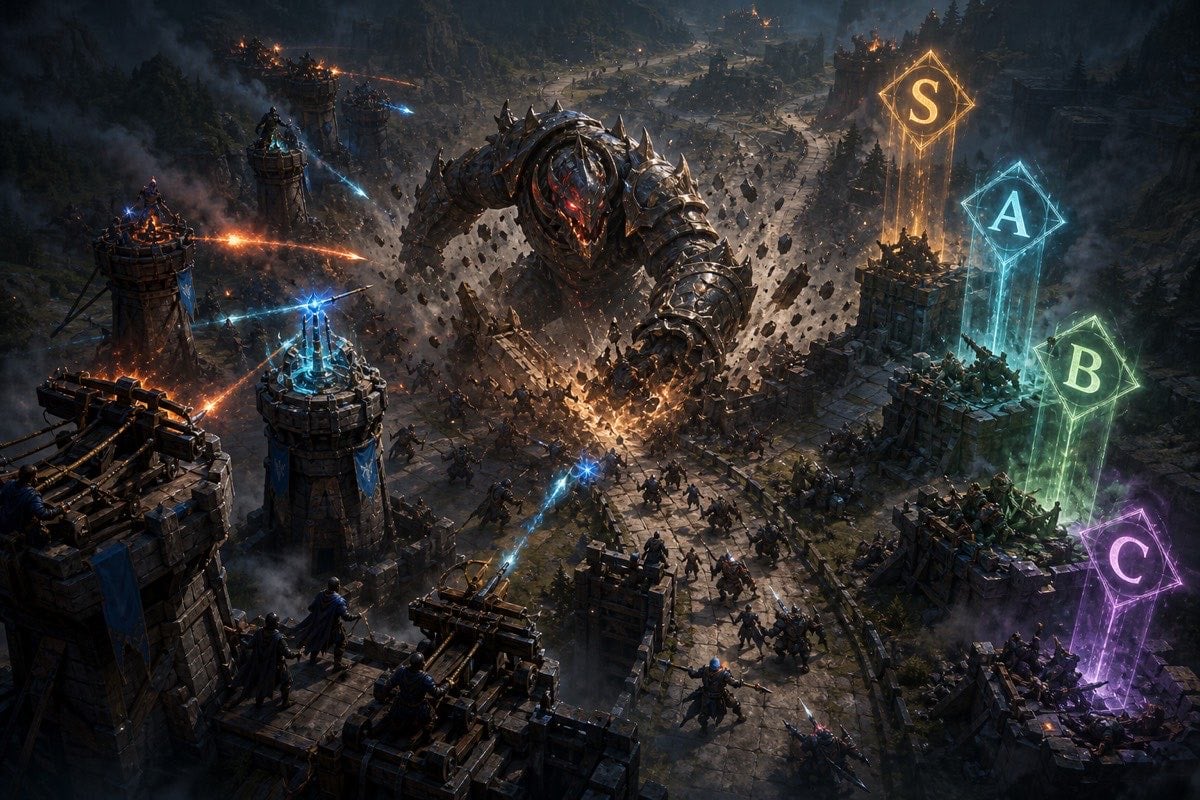
The best tower defense games with boss battles make a safe build feel unsafe. A boss with only a larger health bar is a DPS check; the stronger encounters force you to reconsider placement, upgrade priorities, targeting, or the entire shape of your defense.
This tier list prioritizes games where boss pressure reaches the actual defense loop. That includes classic lane defense, freeform mazing, trap-heavy action defense, and hybrids where commanding units matters as much as building towers. It does not reward a game merely for putting a large enemy at the end of a wave.
How the games were ranked
The standard here is the ugly mid-wave decision: selling a perfectly good damage line because one boss interaction made every carefully measured tile suddenly worthless.
Four factors matter most:
- Layout disruption: Does the boss challenge an established choke, lane, maze, or trap corridor?
- Counterplay: Does the game give enough warning and mechanical clarity to support a meaningful pivot?
- Resource pressure: Can you adapt without having enough money to rebuild everything?
- Defensive identity: Is placement still decisive, or can shooting, hero damage, and raw upgrades erase the mistake?
The ranking favors durable encounter structure rather than whichever build happens to be strongest in one balance patch.
Tier list at a glance
| Rank | Game | Tier | Defensive style |
|---|---|---|---|
| 1 | Bloons TD 6 | S | Upgrade-heavy lane defense |
| 2 | Kingdom Rush Frontiers | S | Hero-driven fixed-lane defense |
| 3 | Kunitsu-Gami: Path of the Goddess | S | Action-heavy command defense |
| 4 | Axon TD: Uprising | A | Mazing and map-expansion defense |
| 5 | Kingdom Rush Origins | A | Readable lane control |
| 6 | Orcs Must Die! 3 | A | Trap-heavy action defense |
| 7 | Kingdom Rush Vengeance | B | Loadout-driven lane defense |
| 8 | Kingdom Rush 5: Alliance TD | B | Multiplayer wave coordination |
| 9 | Dungeon Defenders 2 | B | Hero-led co-op base defense |
| 10 | Sanctum 2 | C | First-person tower defense |
A lower tier does not mean a bad game. It means the boss encounters are less likely to demand a genuine defensive redesign from a veteran player.
S tier: Bosses that challenge the whole plan
1. Bloons TD 6
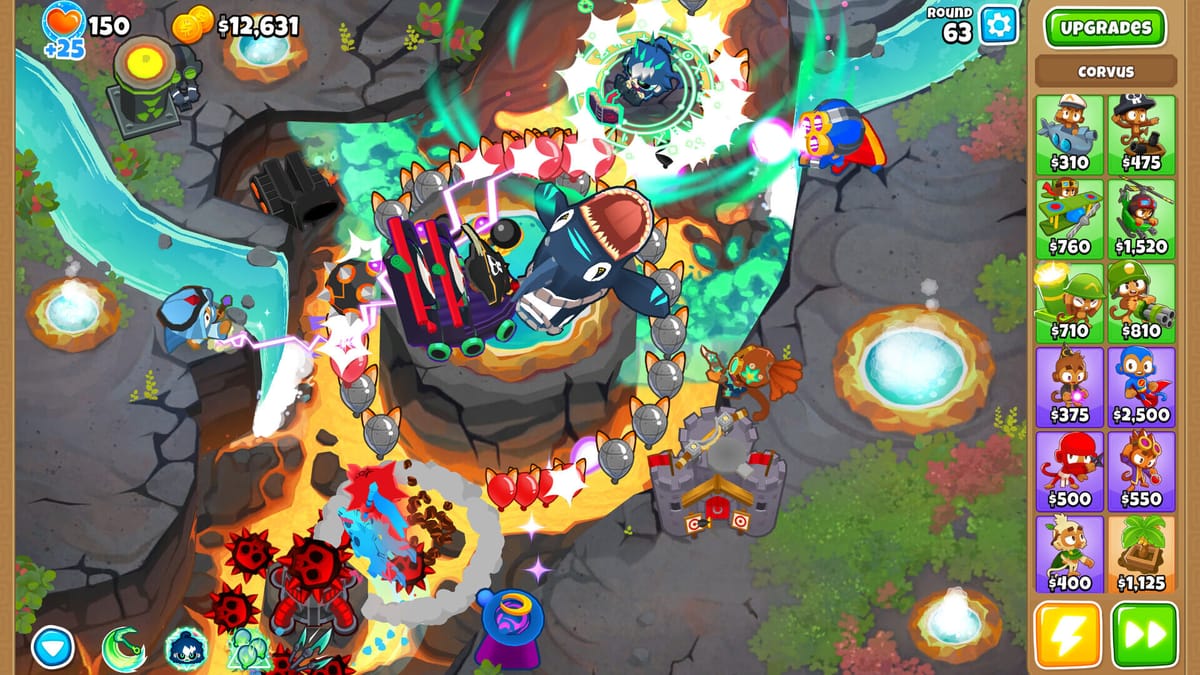
Few games have a better foundation for strategic boss pressure than Bloons TD 6. Deep tower upgrades and heroes create enough competing investments that concentrated boss damage cannot be treated as a simple extension of normal wave clearing.
A defense spread efficiently across multiple lanes can suddenly have too little focused output. A premium upgrade may be powerful but badly positioned. Support coverage, tower footprint, targeting, and hero contribution all become part of the answer. The strongest boss planning starts before the enemy appears, but it still leaves room for painful pivots once weaknesses become obvious.
That is why Bloons TD 6 takes the top spot: it can test both macro planning and exact tower defense placement strategy without abandoning the clean lane-based structure that makes failure readable.
The friction is knowledge density. For many players, a boss attempt can feel like an upgrade-tree exam. Once solutions become highly optimized, the challenge may lean toward build-order execution rather than improvisational placement.
Best for: Players who want deep upgrade planning, tight resource allocation, and boss fights that punish inefficient investment.
2. Kingdom Rush Frontiers
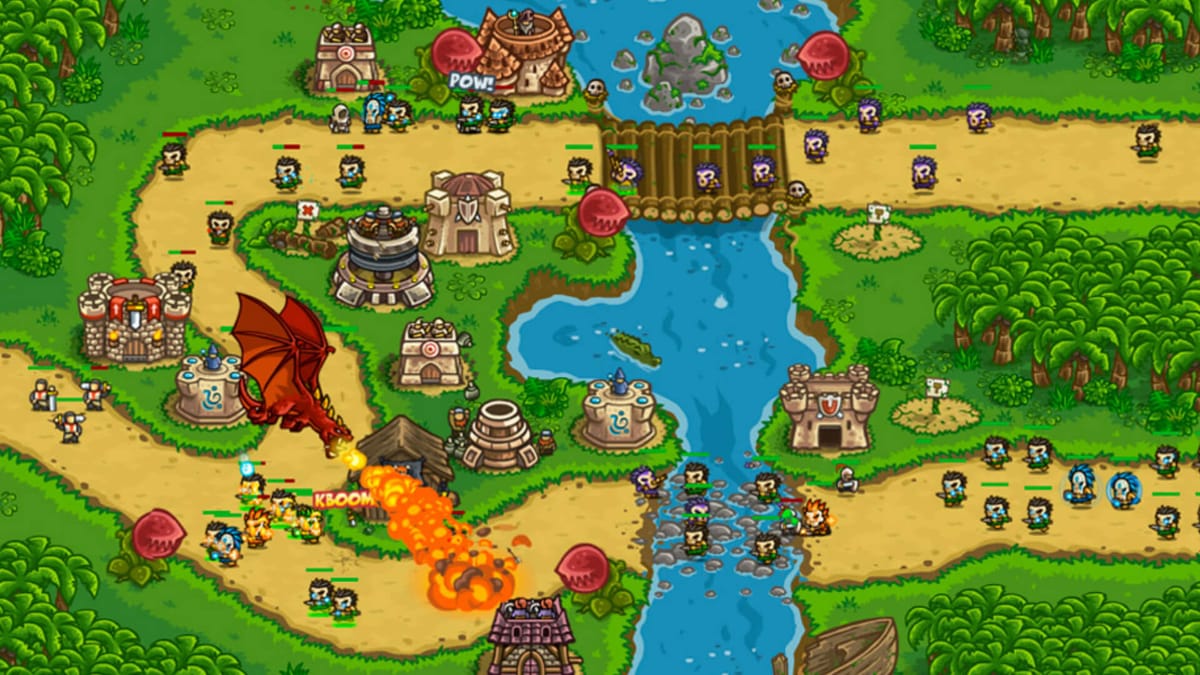
Kingdom Rush Frontiers excels at making a limited patch of road carry several different defensive jobs. Its towers and heroes operate within readable lanes, so the effect of a boss on your choke control is immediate.
What this rewards is disciplined specialization. A formation that handles crowds efficiently may not apply enough pressure to one durable target. Towers placed for broad route coverage can become less useful than a compact damage line near the section where the boss is hardest to contain. Hero positioning also matters because active intervention is part of the defense rather than a separate combat layer.
The game is less freeform than a full mazing title, but that constraint helps its boss encounters. When a setup fails, the reason is usually visible: the wrong tower role, weak concentration, poor timing, or an overvalued choke.
Its main limitation is recovery freedom. Fixed lanes do not give you many ways to redraw the battlefield, so adaptation often means changing upgrade concentration rather than creating an entirely new route.
Best for: Players who want handcrafted lane pressure and clear placement consequences without managing an enormous upgrade system.
3. Kunitsu-Gami: Path of the Goddess
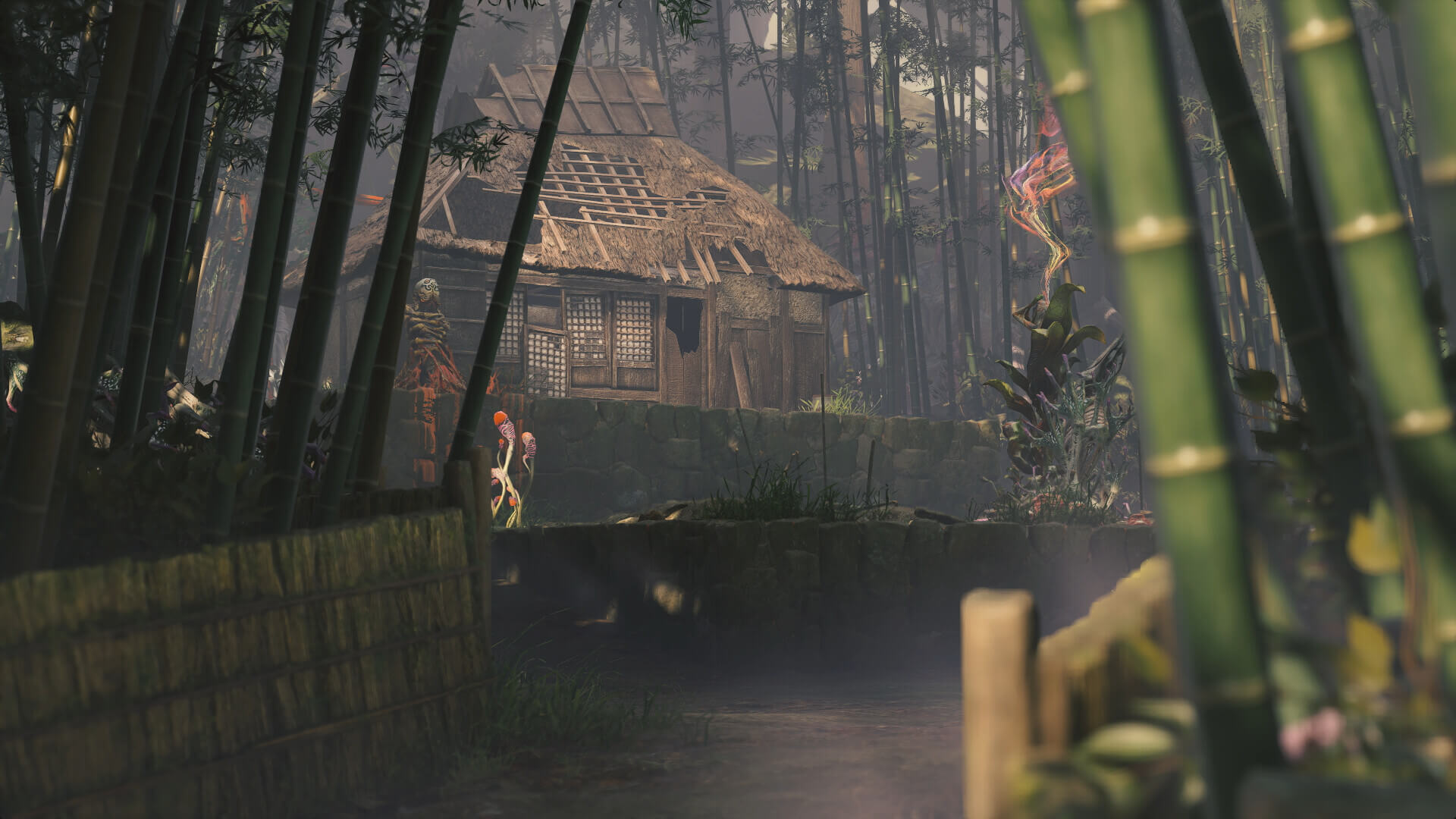
Kunitsu-Gami: Path of the Goddess is the least traditional tower defense game in S tier, but its boss encounters fit the ranking unusually well. The defensive identity comes from combining formation planning, unit command, and direct action inside a Japanese fantasy setting.
Against ordinary pressure, a stable formation can protect the objective while the player handles local threats. A boss changes that balance. Static coverage matters less if the formation cannot respond to concentrated movement, sudden pressure, or a target that demands more direct intervention. Positioning becomes a live command problem rather than a tower grid solved before the wave.
This clicks most if you enjoy defense as battlefield management. You are not only calculating damage per tile; you are deciding where the line should exist, which assets can be exposed, and when to leave the formation to intervene personally.
The tradeoff is equally clear: this is a tower defense and RTS hybrid, not a classic tower-density game. Players who specifically want towers, upgrade branches, and permanent choke construction may find its defensive tools too unit-driven.
Best for: Players who want boss fights to test formation control and active decision-making, not just tower efficiency.
A tier: Strong redesign pressure with one important compromise
4. Axon TD: Uprising
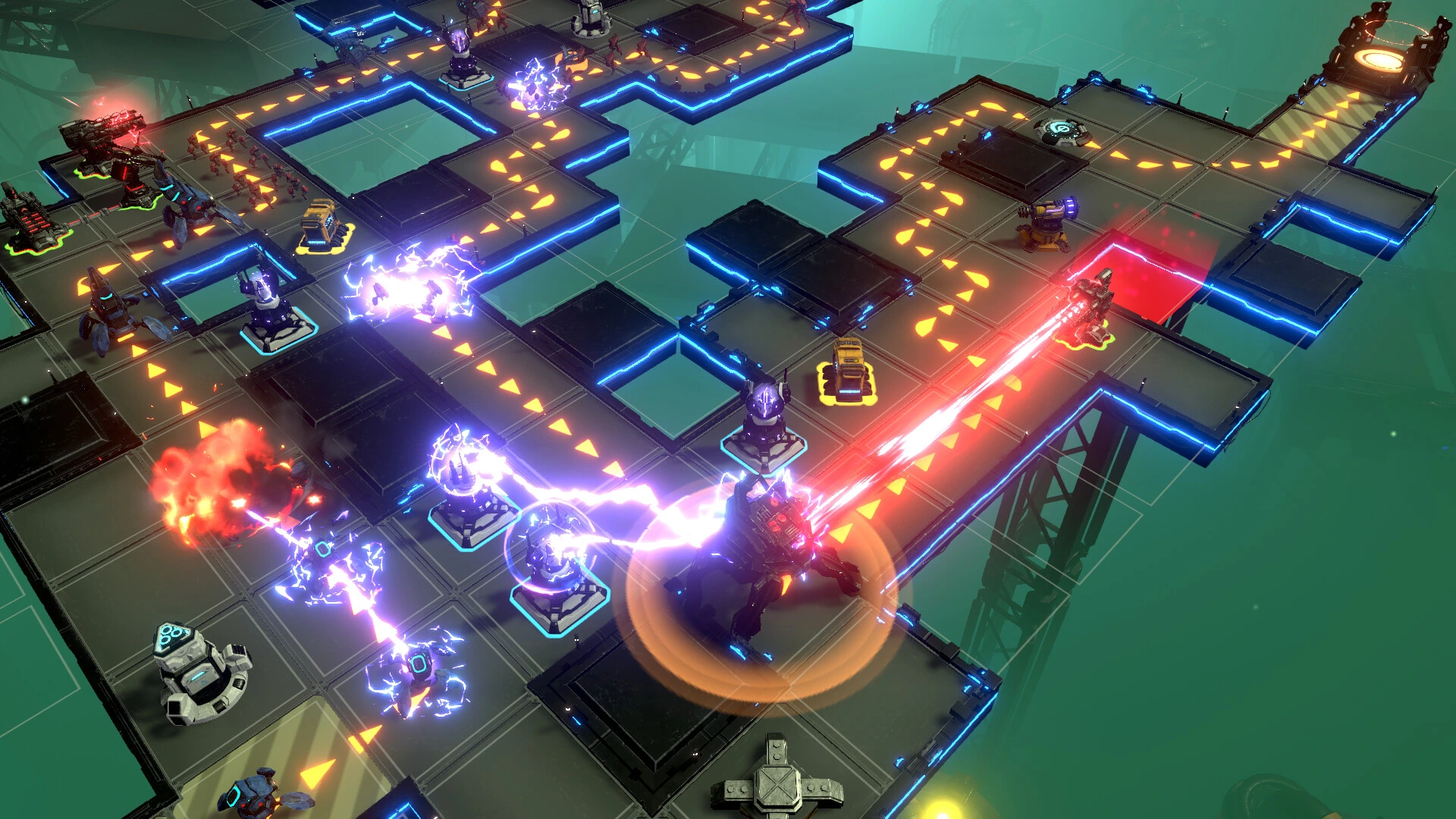
Expandable map boundaries give Axon TD: Uprising a different kind of boss wave strategy. Because mazing is central to the defense, route construction is part of the damage plan rather than a fixed condition.
The common mistake here is assuming that a long path is automatically a good path. A maze optimized for ordinary traffic can devote too much space to travel time while providing too few sections of concentrated fire. Boss pressure tests whether the route actually creates repeated tower contact or merely looks elaborate.
Co-op and roguelite runs add more variables. Adaptation can involve the map itself, the available tower package, or how players divide responsibility. That produces more structural variety than a fixed-lane campaign.
Where this gets tricky is failure analysis. Run state and map development can influence the outcome alongside placement, so a loss may not read as cleanly as it does in a tightly authored stage. Players who want every boss to function as a precise placement puzzle may prefer Kingdom Rush Frontiers.
Best for: Maze builders who want bosses to challenge route geometry and map expansion.
5. Kingdom Rush Origins
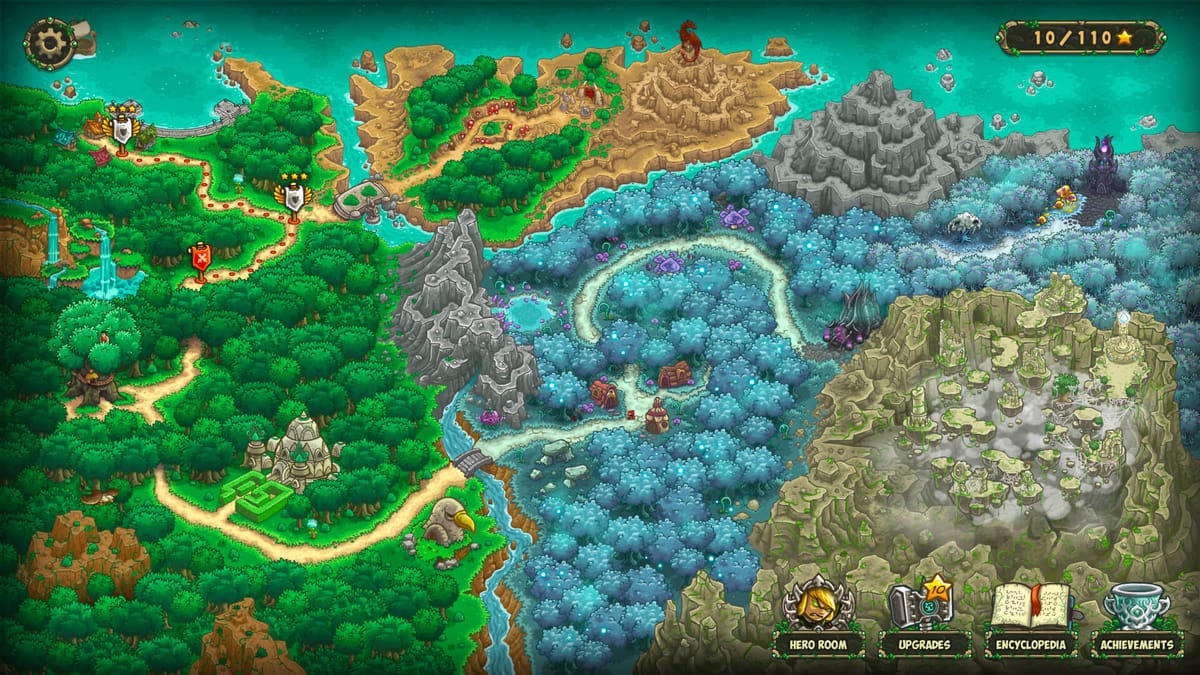
Kingdom Rush Origins offers a refined version of hero-driven lane defense, with elves, mages, towers, and a strong emphasis on controlling readable approach routes.
Its boss pressure works because the maps make positional value easy to judge. You can see which bends provide repeat coverage, where a tower has been assigned the wrong job, and whether the hero is supporting the section under real pressure. A previously excellent crowd-control position can become an expensive passenger when the encounter narrows to one major target.
Origins sits below Kingdom Rush Frontiers because its defensive shifts tend to happen within the established lane structure. You are refining the line more often than rebuilding its logic. That still creates good tower defense boss fights, but it offers less dramatic redesign than freeform mazing or hybrid unit command.
The game is a strong fit for players who want a fair, legible test. It is less suitable for anyone looking for sprawling build freedom or highly systemic boss counterplay.
Best for: Players who prefer compact maps, clear lanes, and hero-supported placement decisions.
6. Orcs Must Die! 3
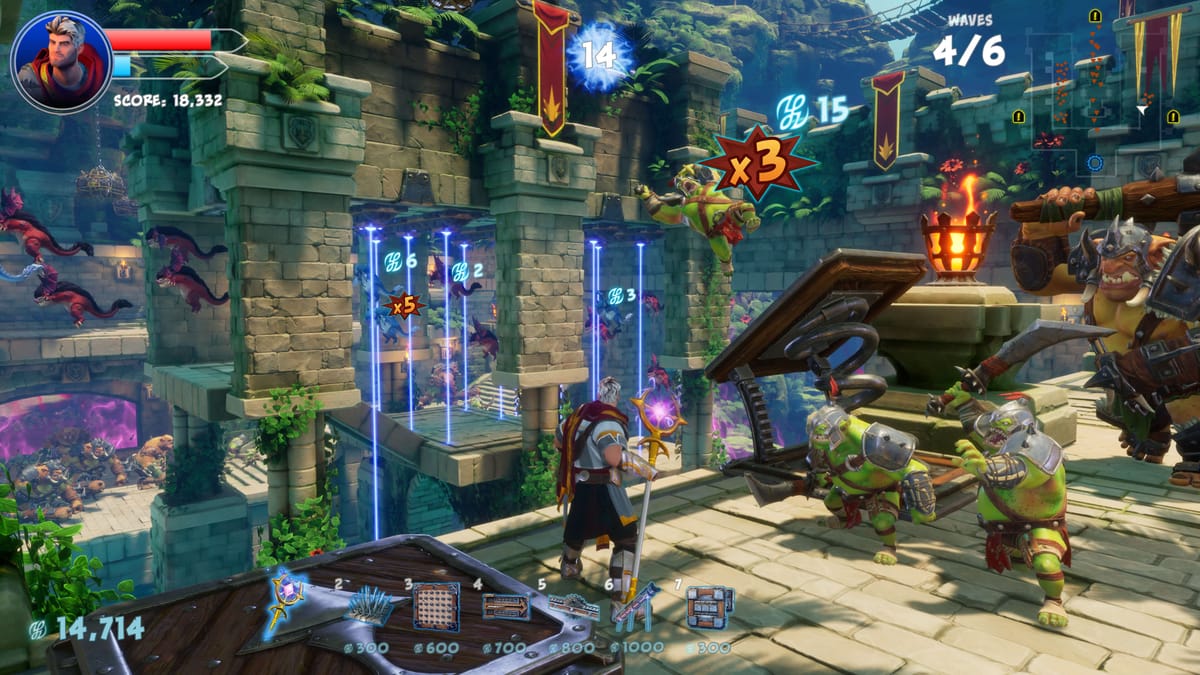
Trap corridors are usually designed around crowds. That is exactly why a major individual target can create an interesting problem in Orcs Must Die! 3.
The game’s trap-and-tower defense rewards combinations, timing, and physical control of a route. Against standard waves, a chain of effects can keep enemies inside the kill zone. Concentrated boss pressure asks a harsher question: does the corridor still work when one target absorbs the attention, survives the opening sequence, or moves beyond the most efficient part of the setup?
Its third-person action layer gives you a recovery tool. You can reinforce a weak corridor directly instead of watching a placement error play out from a distance. This creates exciting pressure handling, especially in co-op, but it also keeps the game out of S tier. Strong active play can sometimes compensate for a defensive plan that deserved to collapse.
For a placement purist, that safety valve may dilute the boss test. For players who want to fight inside their own trap network, it is the point.
Best for: Players who want trap timing, combo corridors, and direct action under boss pressure.
B tier: Good bosses, but placement shares the test
7. Kingdom Rush Vengeance
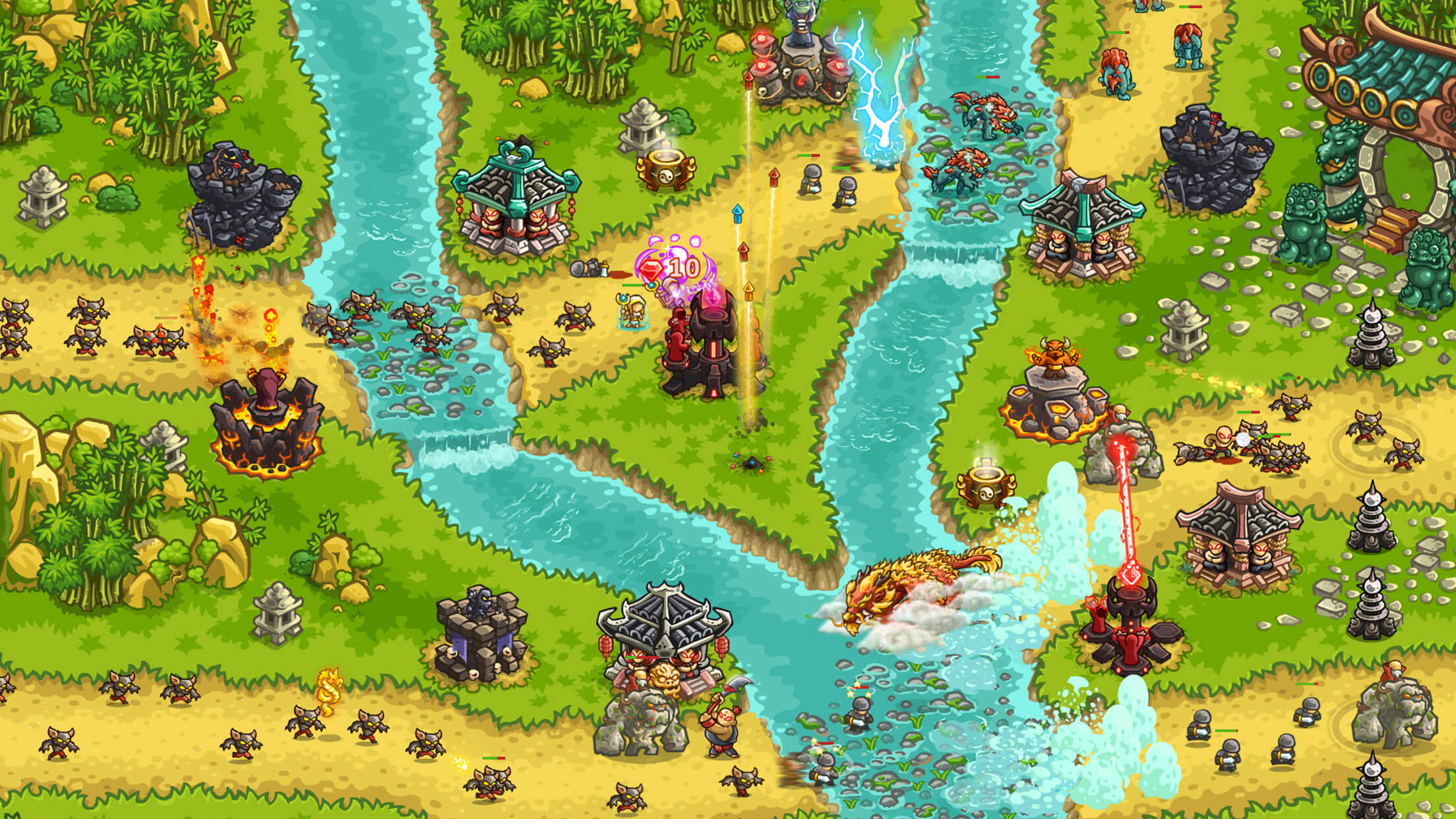
Kingdom Rush Vengeance belongs here because its new towers create meaningful choices about which defensive roles to bring into a stage. Its villain-side campaign and sci-fi flair change the presentation, but the important part for this ranking is the tower mix.
A boss can expose a package that is too focused on ordinary wave efficiency. That creates planning pressure, particularly when several towers appear useful but compete for the same role. The player has to decide which parts of the line deserve concentrated upgrades and which can survive with minimal support.
The limitation is that some of the most important decisions happen through tower selection and upgrade commitment rather than a dramatic mid-stage redesign. When the answer becomes “invest harder in the correct damage role,” the encounter is closer to a strong build check than a full placement puzzle.
Vengeance still offers real lane defense. It simply ranks below Frontiers and Origins for players specifically chasing bosses that invalidate an otherwise safe layout.
Best for: Kingdom Rush players who enjoy choosing a defensive toolkit before optimizing it on fixed lanes.
8. Kingdom Rush 5: Alliance TD
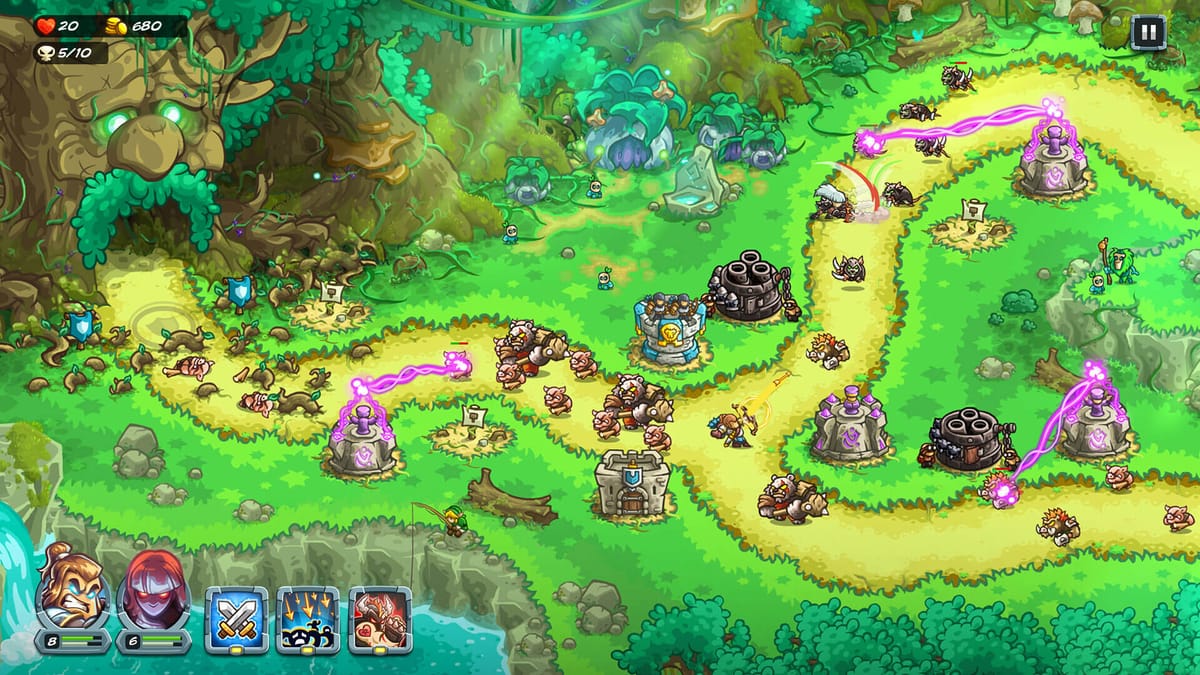
Multiplayer alliances and competitive waves make Kingdom Rush 5: Alliance TD a different proposition from the more solitary Kingdom Rush entries. Boss pressure is not only about where a tower goes; it is also about whether players coordinate upgrades, lane responsibilities, and emergency responses.
That coordination can make a boss more dynamic. One player may preserve wave control while another concentrates resources on the major target. A weak section can be reinforced through teamwork instead of a complete individual rebuild.
For this particular ranking, that is also the drawback. Multiplayer execution can blur whether the boss genuinely broke the placement plan or whether the team simply divided its attention poorly. The defensive challenge is broader, but it is not always the cleanest test of one player’s choke design.
This is the better choice for coordinated groups than for solo placement specialists.
Best for: Players who want boss waves shaped by teamwork and competitive pressure.
9. Dungeon Defenders 2
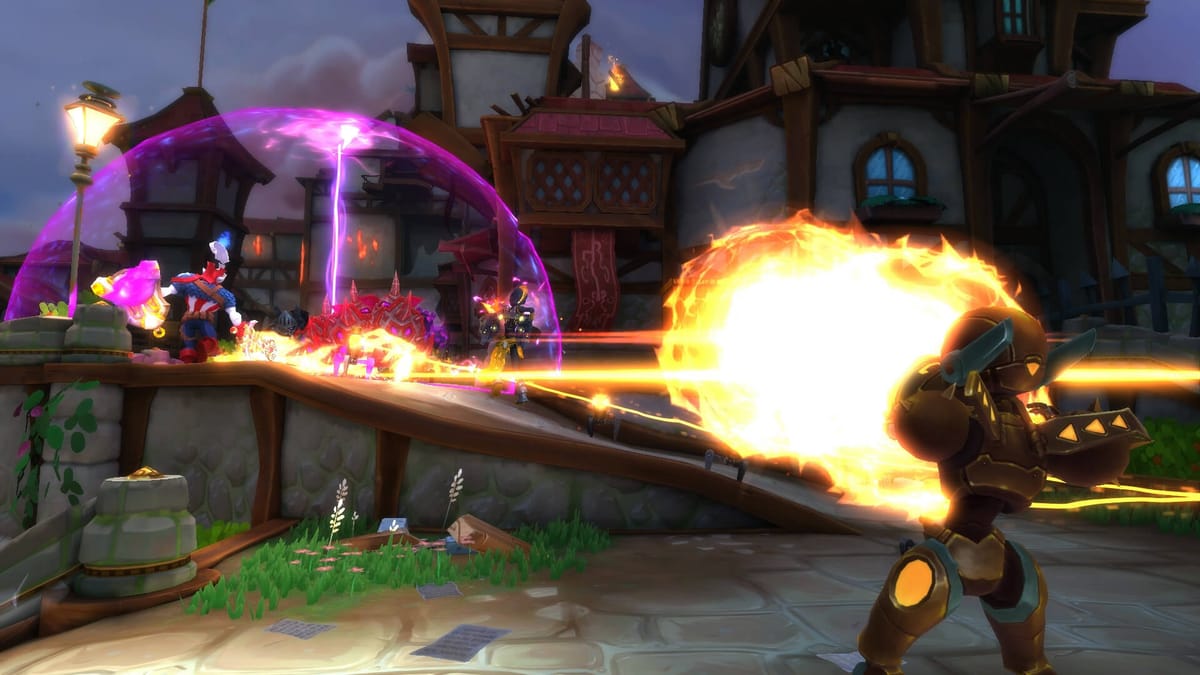
Dungeon Defenders 2 is a base-defense action hybrid with heroes, towers, and co-op play. Bosses fit naturally into that structure because they can pressure both the fortification network and the heroes operating around it.
Its strongest strategic moments come when players must decide whether to reinforce the base, redirect hero attention, or trust an existing tower line to hold ordinary enemies. The defense is managing several layers at once: perimeter stability, tower coverage, active combat, and co-op responsibilities.
The reason it ranks ninth is not a lack of defensive identity. It is that hero power provides another answer when placement is imperfect. A boss can become an action-combat assignment while the towers continue handling the rest of the wave. That makes for lively base survival, but it weakens the “one enemy invalidates the build” standard.
Players who dislike direct combat should look elsewhere. Players who want their character to function as a mobile defensive asset will find a much better fit.
Best for: Co-op groups that want hero combat woven into tower and base management.
C tier: A narrow fit for placement-first boss hunters
10. Sanctum 2
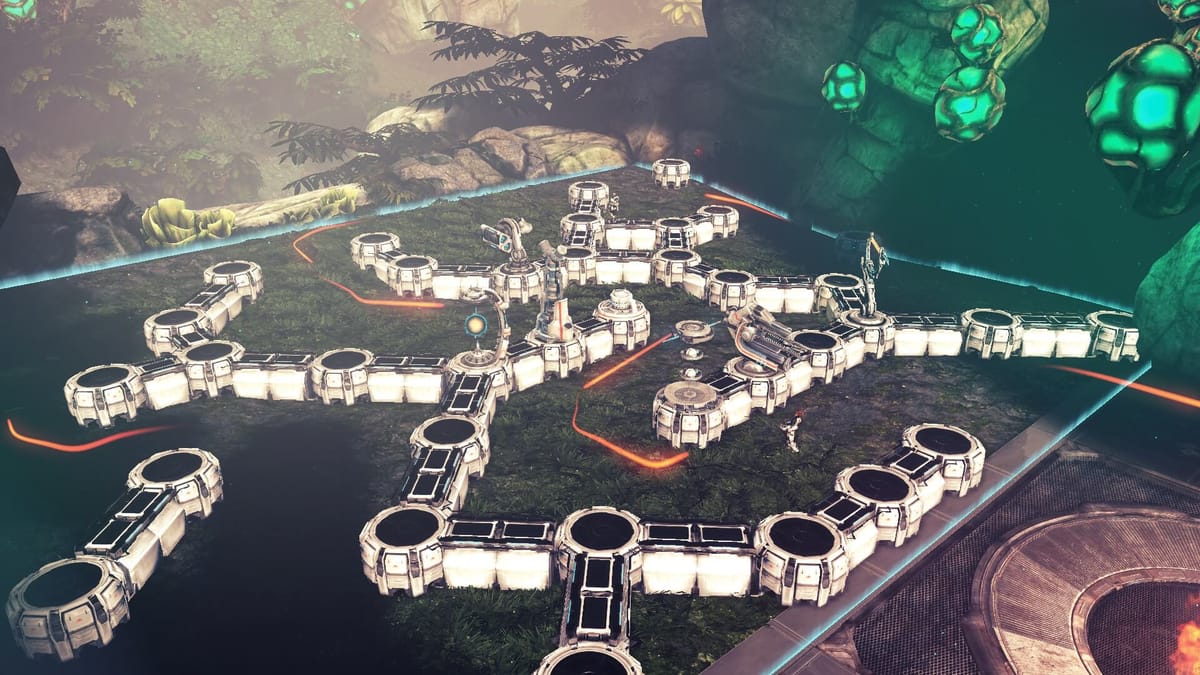
Sanctum 2 combines first-person shooting, co-op, and tower placement in 3D space. It absolutely has a defense loop, but its boss pressure is shared heavily between constructed defenses and player weapon output.
Placement still matters. Firing lanes, route control, and tower coverage determine how long the target remains exposed. A poor structure makes every later response harder. The first-person layer, however, means players can keep applying damage after a tower formation has lost efficiency.
That makes Sanctum 2 a narrow fit for this list rather than a weak game. Its bosses can test a combined combat plan, but they are less likely to force the kind of total defensive redesign that defines the higher tiers. The build and the shooter are interdependent.
Choose it if you want to stand inside the defense and personally cover its weaknesses. Skip it if you want tower placement to carry nearly all of the strategic weight.
Best for: FPS players who enjoy co-op route construction and active defense.
Which boss-defense game should you pick?
Start with Bloons TD 6 if you want the deepest interaction between upgrade commitment, placement efficiency, and concentrated boss damage.
Choose Kingdom Rush Frontiers for the cleanest lane-defense test. Origins stays close behind for compact, legible maps; Vengeance is the better pick if tower loadout selection is the fun part.
Axon TD: Uprising is the maze-builder’s choice when the route itself should be challenged.
For action-heavy defense:
- Kunitsu-Gami: Path of the Goddess for command, formation, and active battlefield response.
- Orcs Must Die! 3 for traps, combos, and fighting inside the kill zone.
- Dungeon Defenders 2 for hero builds, towers, and co-op base survival.
- Kingdom Rush 5: Alliance TD when coordination with other players matters as much as placement.
- Sanctum 2 if you want first-person combat covering the defense’s weak spots.
The strongest boss encounters create a specific kind of panic: the build still looks good, but it is no longer solving the problem in front of it. That is the line separating a real strategy test from an oversized health bar.