Why the Best Tower Defense Strategies Plan for Failure
A case for fallback lines, controlled retreats, and recoverable mistakes in tower defense games that reward adaptation instead of flawless opening builds.
The best tower defense strategies assume that something will eventually break.
The first wall may fail. A supply line may get cut. An enemy may reach the objective. The useful question is not whether the original plan survives untouched. It is whether that failure creates a new decision or just forces a restart.
Some of the most memorable wins start after the carefully optimized defense stops working. You give up ground, reroute resources, move units, or turn an inner position into a new choke. That is what makes failure strategically useful. The game is no longer testing whether you found the correct opening build. It is testing whether you can read a collapsing position and decide what is still worth saving.
Failure should change the problem
For defensive failure to be interesting, it needs to be readable, costly, and recoverable.
A readable failure tells you why the line broke. Maybe one damage type was missing, a wall had no support, or the supply network depended on a single connection. You should be able to see the collapse and learn from it.
A costly failure takes something away. You might lose structures, territory, resources, score, or time. Falling back should not be a free reset that erases a weak plan.
A recoverable failure leaves room for another decision. You may not restore the original position, but you can still protect the objective, defend a shorter approach, or sacrifice one area to keep another.
Those qualities are what separate a real fallback from several identical walls stacked behind each other. A second line should change the geometry or the economics of the fight. It might compress the enemy route, protect a critical supply connection, or concentrate limited damage into a smaller area.
A game does not need to forgive every mistake. It only needs a useful space between perfect defense and total defeat.
Cataclismo gives fallback defense a physical shape
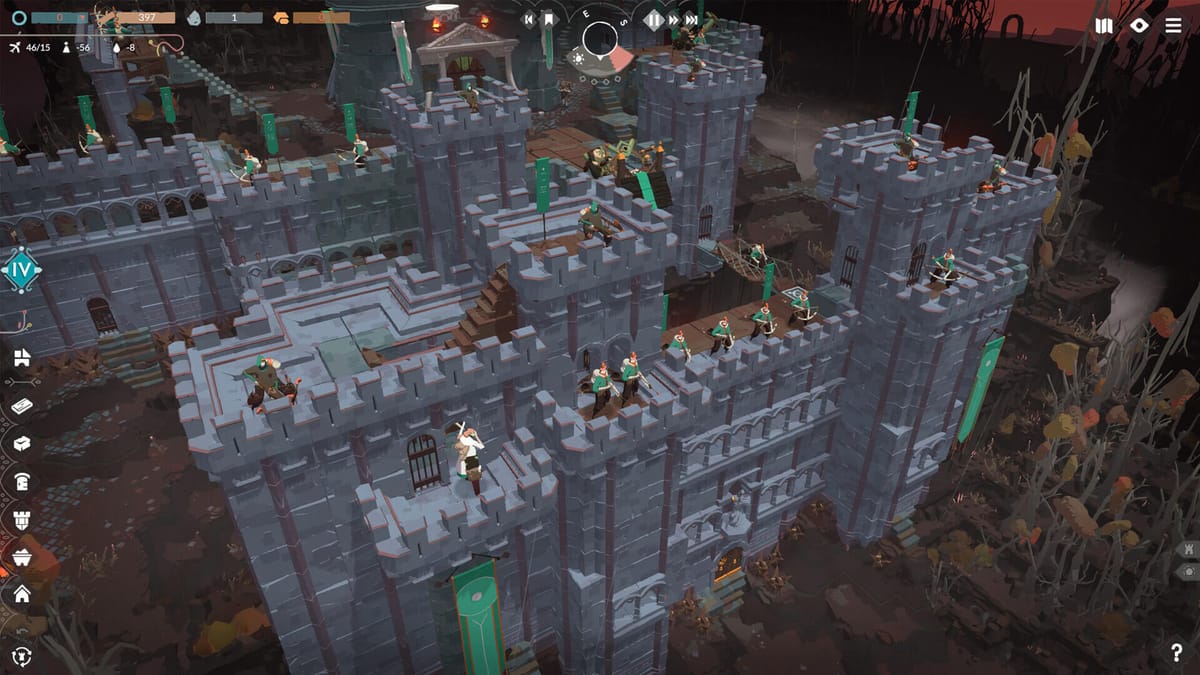
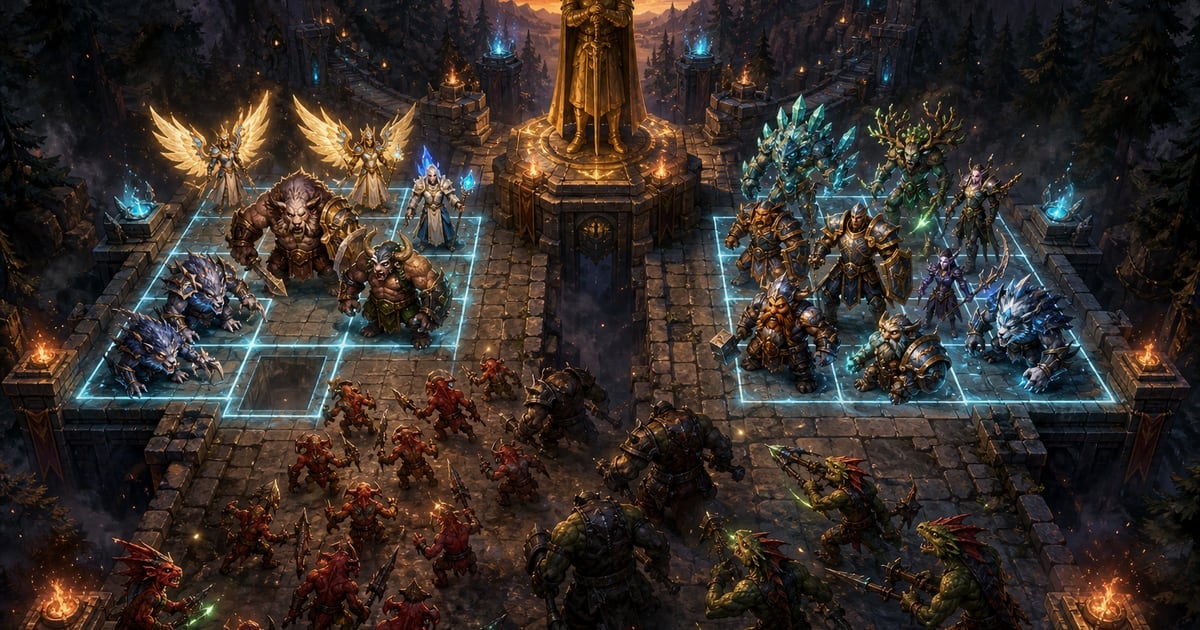
Cataclismo is the clearest example of layered defense because its fortifications are built piece by piece.
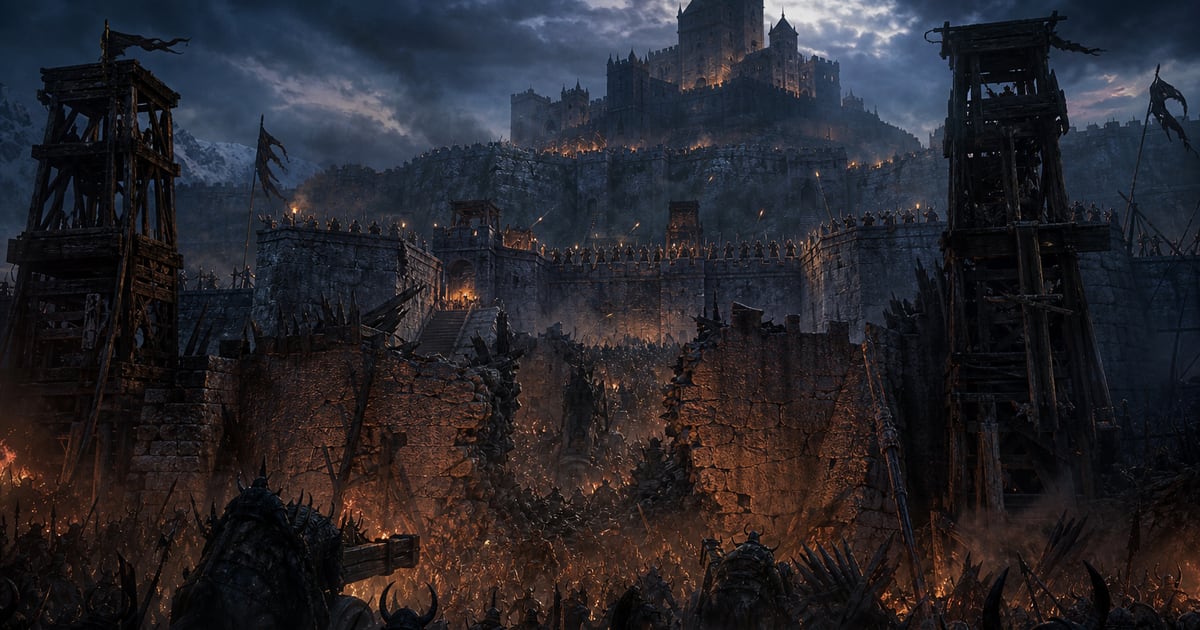
Walls, stairs, platforms, towers, and firing positions form structures that can be damaged and rebuilt. When an outer section fails, the consequences are visible. The battlefield now has a hole, a shorter route, and fewer safe positions for your troops.
That gives defensive depth a physical purpose. An outer wall can buy time without being expected to last forever. A tighter inner position can protect the keep after the perimeter becomes too expensive to hold. Units can be pulled off a collapsing section while the remaining structure still slows the horde.
Cataclismo also has a rebuild tool that restores damaged construction to its previous form if you have the resources. Recovery is possible, but not free. Rebuilding a damaged position spends materials that could have gone into expanding or reinforcing another part of the fortress.
That cost creates the real decision: restore the outer wall, or accept the lost ground and invest in the defense behind it?
The game's modes change how this plays out. Campaign missions are authored scenarios. Survival mode, which replaced Endless at 1.0, uses procedural terrain, scarce starting tools, and roguelite unlocks. Survival is the stronger fit for long-term adaptation because limited resources and an uncertain battlefield make it harder to rely on one perfect design.
The building freedom can also become friction. Detailed defenses take time, and repairing every damaged section can feel like work. Players who want a faster, more traditional tower defense loop may find the castle-building systems too demanding.
Still, Cataclismo expresses the central idea better than most games: a defense is not one line. It is a structure that changes shape while being attacked.
Creeper World 4 turns retreat into a network decision
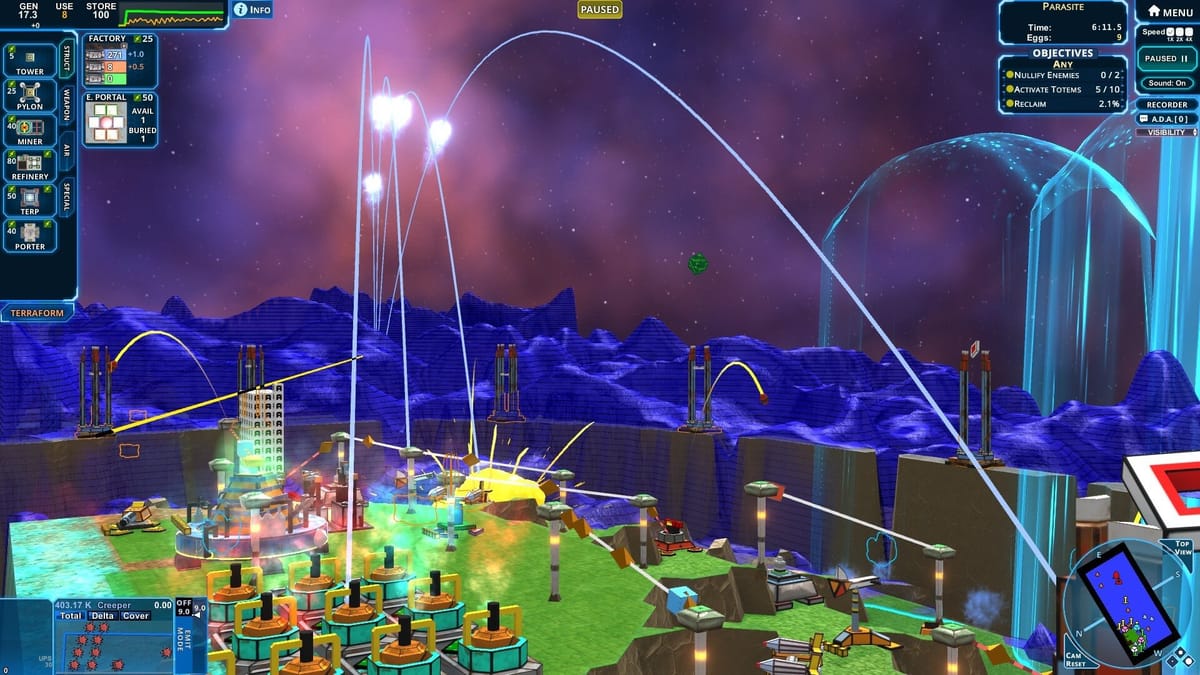
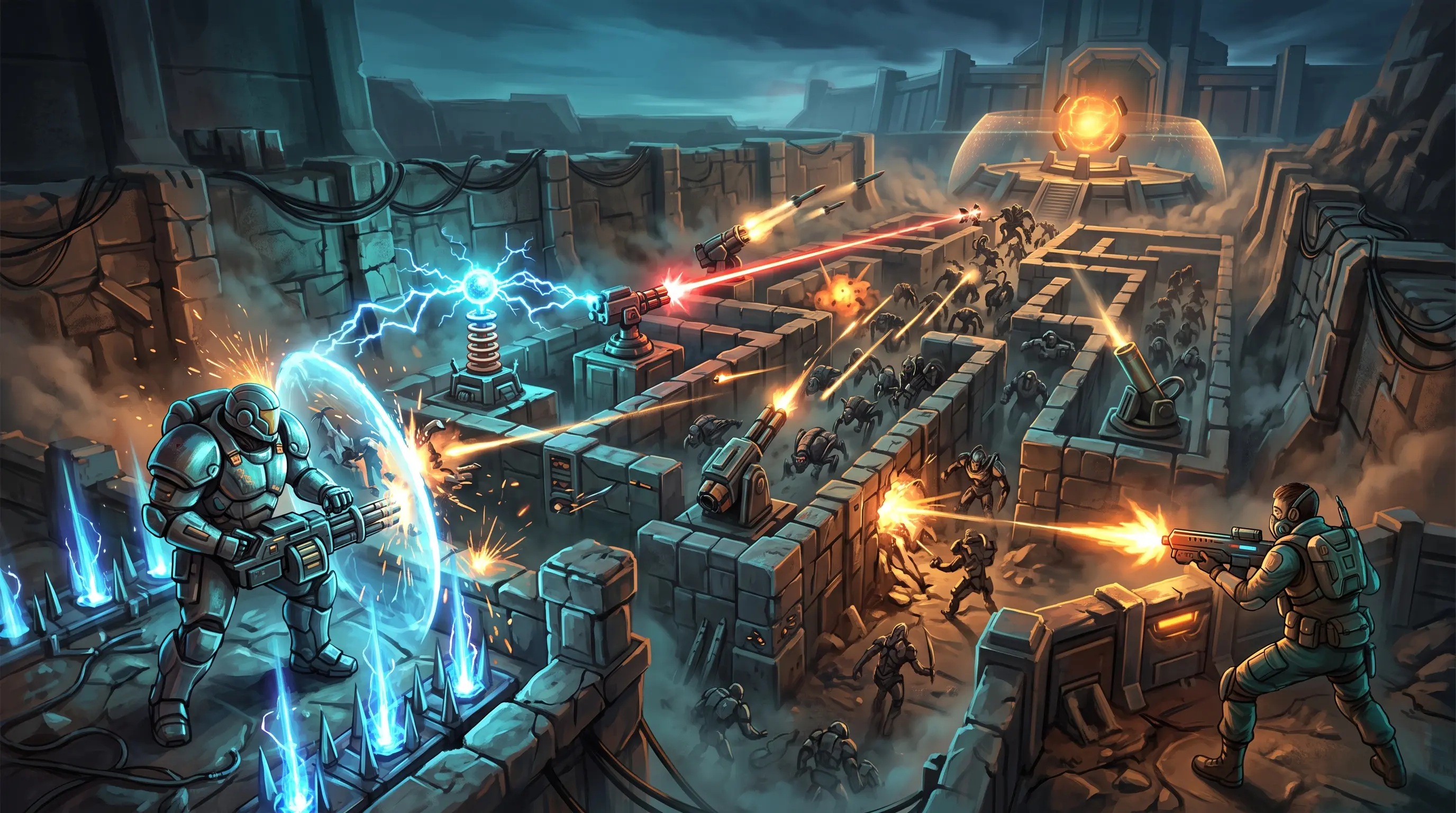
Creeper World 4 approaches fallback strategy differently. Its enemy is a fluid that spreads across three-dimensional terrain, filling low ground and applying pressure across a changing front.
Your weapons depend on an energy network. Packets travel from the Rift Lab through towers and pylons to keep guns firing. Lose one connection and several weapons can starve, turning a local breach into a wider collapse.
Because many combat units can be packed up and moved, falling back is an active part of the game. You can pull weapons off a position that can no longer be supplied, move them to higher ground, or reinforce the section that protects the rest of the network.
Territory therefore has two values. It gives you space and resources, but holding it may cost more energy than it is worth. Sometimes the correct move is to abandon a forward position before the Creeper surrounds it and destroys the units placed there.
That makes redundancy important. A network with only one critical connection may look efficient, but it has no tolerance for failure. A slightly less efficient layout with alternate routes can keep functioning after one path is cut.
Creeper World 4 is not a conventional tower defense game with fixed lanes and rows of permanent towers. It plays more like a mix of real-time strategy, logistics, and pressure management. Many missions also feel like puzzles, with specific terrain and starting positions that strongly shape the solution.
That makes it a strong fit for players who want fallback strategy to involve moving pressure and network survival. It is a weaker fit for anyone specifically looking for castle walls and visible defensive layers.
Its lesson is simple: a retreat does not always mean moving backward. Sometimes it means disconnecting one part of the system so the rest can survive.
Defense Grid 2 makes a breach recoverable
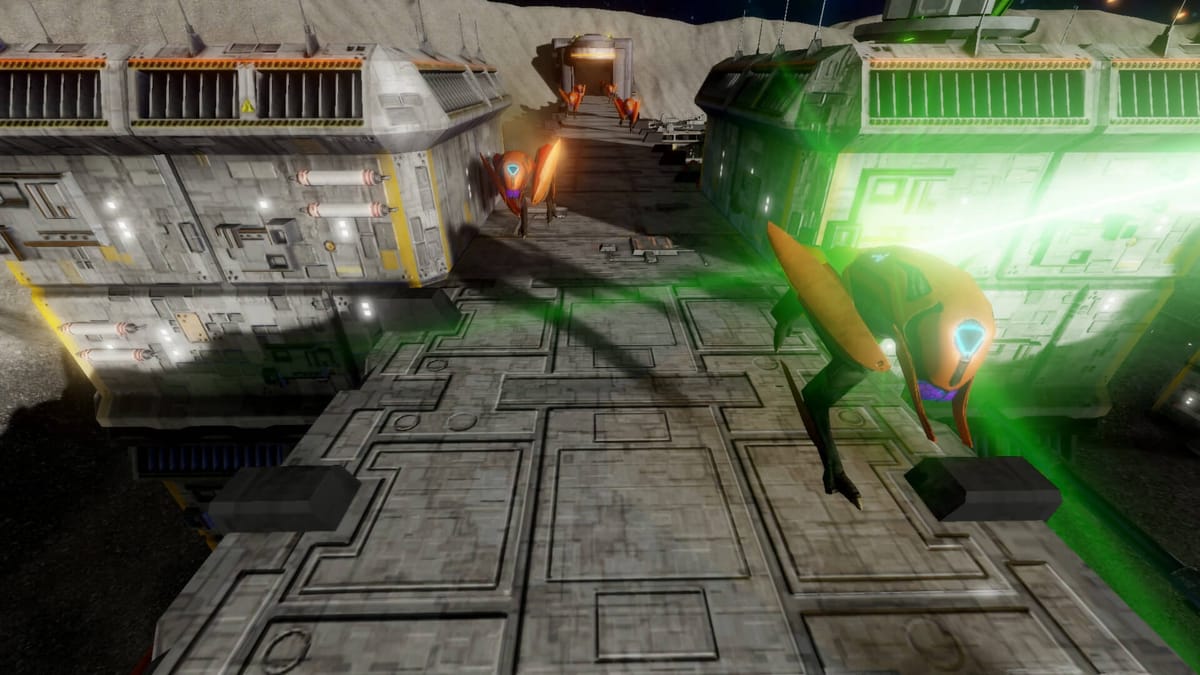
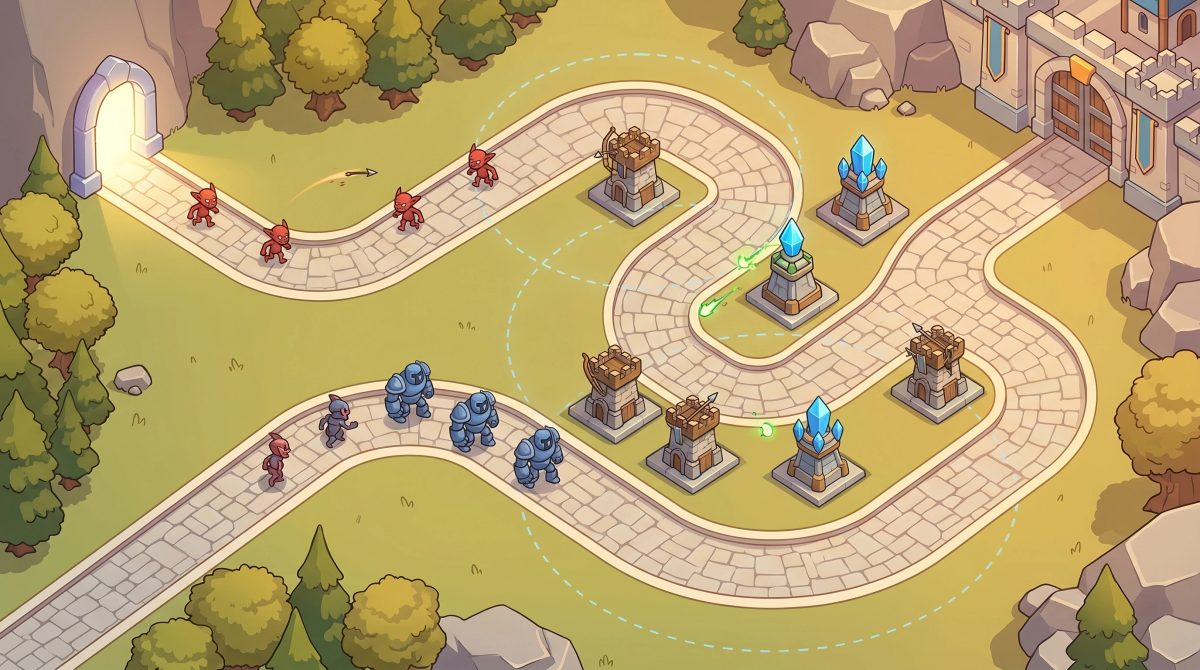
Defense Grid 2 is the most traditional tower defense game here, but it has an important approach to recoverable failure.
Aliens do not immediately destroy your objective when they reach it. They steal power cores and try to carry them back to the exit. Kill the carrier and the core drops, then slowly floats home. Another alien can still pick it up before it returns.
That creates a second defensive problem after the first one fails. Your towers did not prevent the breach, but they may still kill the carrier on the return trip. Damage near the objective or along the exit path can recover a core that the opening defense allowed through.
That is a genuine fallback mechanic. The original line failed, but the mission is not necessarily over.
Defense Grid 2 also lets you manipulate enemy routes on many maps by using towers, including cheap Boost Towers, as maze pieces. Boost Towers occupy a square, raise the tower built on them, and help shape the path. A successful defense is therefore about more than placing damage near the entrance. Route length, overlapping coverage, and the return path of core carriers all matter.
The checkpoint system offers another kind of recovery. Reloading a checkpoint rewinds to the previous wave, refunds the money spent after that point, and removes the towers built since. That lowers frustration, but it is different from adapting to a damaged position. Rewinding erases the mistake. Recovering a stolen core asks you to survive its consequences.
That distinction is why Defense Grid 2 belongs in this argument. It supports recoverable mistakes, but it is still more about refining placement and finding efficient routes than controlling a physical retreat.
It is the best choice of the three for players who want a classic map-and-tower structure. Cataclismo offers more physical defensive depth. Creeper World 4 offers more freedom to abandon territory and move the front line.
How to prepare for failure
A fallback defense is much stronger when you plan it before the breach happens.
Leave a second useful position
Do not spend every valuable tile on the opening defense. Empty space can become a future choke, an emergency firing position, or somewhere to move units after the outer line becomes unsafe.
This does not mean building a complete second fortress immediately. It means recognizing which parts of the map remain defensible if the first plan fails.
Keep resources flexible
One extra upgrade may improve the current line, but unspent resources can answer the threat that actually appears.
Resources held in reserve can rebuild a Cataclismo wall, reconnect a Creeper World network, or add emergency damage to a core's return path in Defense Grid 2.
The goal is not to hoard everything. It is to avoid spending so aggressively that only one version of the plan can work.
Decide when a position is lost
Players often keep investing in a failing section because abandoning it makes the earlier spending feel wasted.
A retreat trigger helps prevent this. The trigger might be a wall that cannot survive another wave, a network connection that can no longer be supplied safely, or a tower cluster that costs more to protect than the ground is worth.
Once that condition is reached, further investment should need a clear reason.
Make the fallback different
A second line should solve the battle differently.
The outer defense may exist to delay enemies across a wide area. The fallback may compress them into a narrow route. A forward network may produce more energy, while an inner network may be shorter and easier to protect.
Repeating the same failed design with fewer resources rarely creates a better result.
Protect the objective after the breach
Not every enemy has to be stopped at the earliest possible point.
Defense Grid 2 makes this obvious: an alien can reach the cores without permanently escaping with one. Damage covering the return route can still save the objective.
The same thinking applies more broadly. Early defenses can weaken or delay the threat. Later positions finish the job.
A breach is dangerous. It is not always the same as defeat.
Perfect defense and resilient defense test different skills
A perfect defense tests optimization. It asks whether you can calculate the correct placement, upgrade timing, and damage mix before the enemy arrives.
A resilient defense tests judgment. It asks whether you can identify what failed, stop defending sunk costs, and create a smaller plan from what remains.
Cataclismo is the strongest game here for physical fallback lines and rebuilding under pressure. Creeper World 4 is better for movable defenses, network redundancy, and controlled loss of territory. Defense Grid 2 offers the classic tower defense version, where stolen objectives can still be recovered and checkpoint rewinds reduce the cost of experimentation.
The best tower defense strategy is not always the one that prevents every breach. Sometimes it is the one that understands which breach can be survived.