Why Legion TD 2 Is the Best Tower Defense Teacher
Legion TD 2 turns tower defense into a live lesson in scouting, greed, mercenary sends, and placement. Human opponents teach stronger habits than scripted waves because they can punish a plan the moment it stops matching the fight.
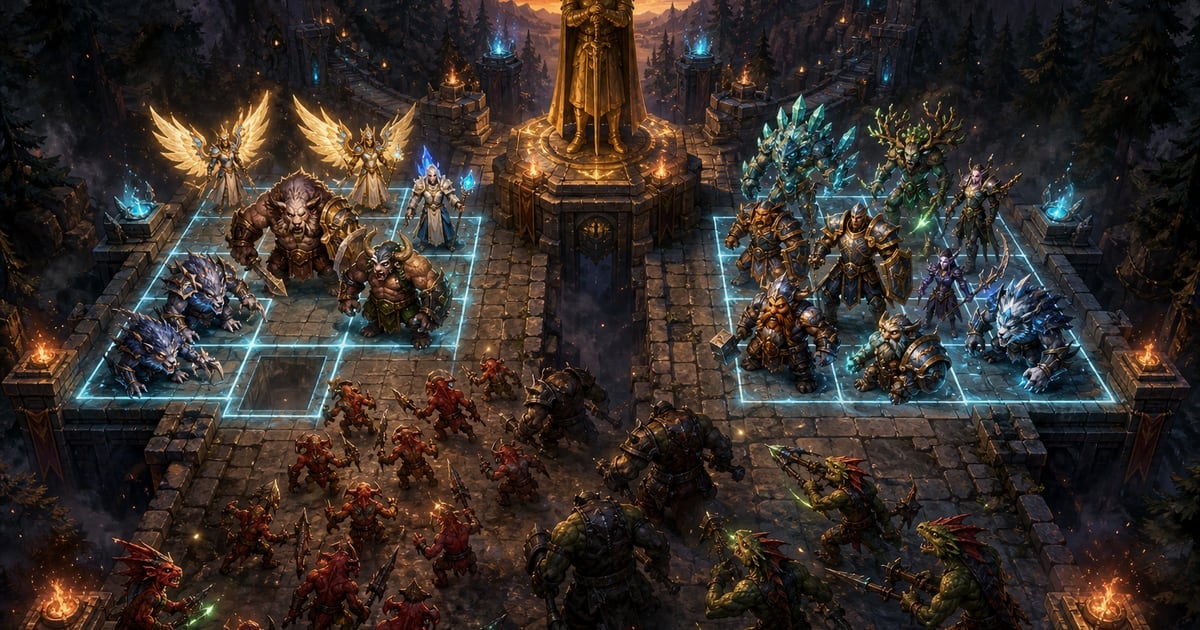
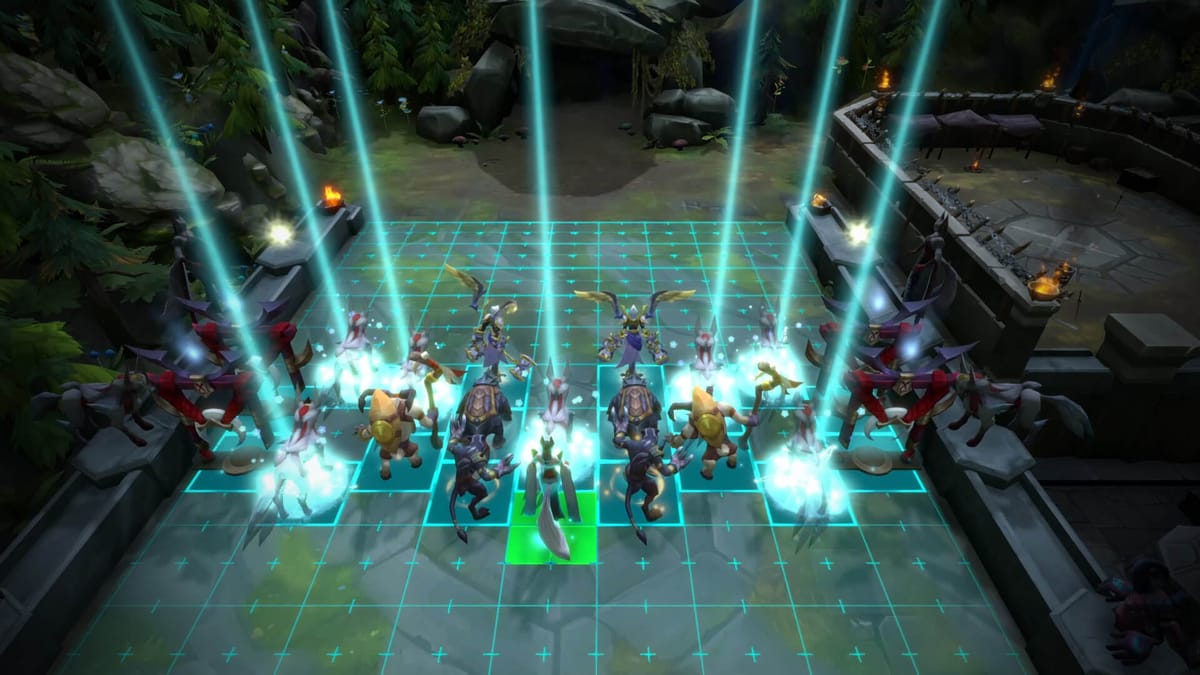
Legion TD 2 teaches a lesson that scripted campaigns usually avoid: a strong build can still be wrong for the fight in front of you. You place fighters on a lane, they defend automatically, and the real test is whether your economy, scouting, and mercenary reads survive a human opponent.
This is not an argument that every player needs PvP, or that campaign tower defense stops being valuable once you understand the basics. It is an argument about training. For players who already know how to solve predictable waves, Legion TD 2 is a better teacher because another player can punish a habit before you realize it is a habit.
Campaign mastery can hide weak defensive habits
Scripted campaigns reward recognition. You learn the wave pattern, identify the damage type or route that matters, build the right answer, and refine the execution. That is satisfying, and it teaches plenty about tower efficiency and defensive pacing.
The problem is that a known challenge lets you prepare around a fixed question. You are solving the level the designer gave you.
Legion TD 2 keeps changing the question. Each round, a standard wave still comes down your lane, but the opponent can hire mercenaries that join that wave. Your formation has to hold the creeps you expected plus the send you did not. A build is no longer correct simply because it cleared the same wave last match.
That difference exposes weak decision-making quickly. You may know how to fill a lane efficiently and still leak because your damage is stacked against the wrong mercenary type. You may understand value and still spend gold on another worker while the next send is already going to crack the current fighter count.
The lesson is uncomfortable because the game often shows that the problem was not execution. Fighters auto-attack. The problem was the decision made in the build phase.
Greed becomes a timing decision
The most useful economy lesson in Legion TD 2 is that greed is not automatically good. Gold spent on workers generates mythium. Spending that mythium on mercenaries or king upgrades raises your income. Gold spent on fighters is what actually holds the lane. Workers only pay off if the current defense can survive the send that is about to arrive.
That sounds obvious until a winning position creates room for overconfidence. I have repeatedly thrown away winning rounds by training another worker, or upgrading a back-line carry, instead of buying the fighter value that would have held the next wave. The build looked better on paper. Its long-term income was higher. Then the mercenaries arrived, the leak started, and the extra worker never had time to matter.
A campaign may let you bank resources because you know the next threat and its timing. Against a human opponent, that same choice is a statement: you are telling them your current fighter value can survive without help. If they can send into that assumption, your economy plan was not efficient. It was exposed.
The common mistake is treating greed as a personality trait. Some players call themselves aggressive; others play safely. In practice, greed is situational. Another worker is defensible when the lane is stable. It is reckless when one obvious leak path is already under-defended.
Scouting makes every build provisional
Scouting in Legion TD 2 is not a formality before the real strategy begins. It is how you choose both your defense and your attack.
You look at the opponent's fighters to decide which mercenaries to send, and you look at their mythium spending to guess whether they are holding for a bigger send or committing now. The information only matters if it changes a decision: add fighter value, save mythium, send a counter, or stop training workers for a wave.
Watching the opponent and then building the same way is not adaptation. It is observation without follow-through.
In a scripted game, the threat is stable enough to memorize. Here, a formation that looks perfect on your plot can still leak if its damage type, positioning, or tank line is wrong for the mercenaries that actually show up. The warning is often visible before the battle phase starts. You just have to act on it.
That is a useful habit even outside competitive play: do not ask only whether your build is strong. Ask what it is strong against, what it leaks to, and whether the opponent has a reason to send into that weakness.
Placement is about holding, not just damage
The strongest placements in Legion TD 2 are often defensive compromises rather than maximum-DPS clusters. Fighters auto-battle once the wave starts, so the job of placement is to control where the fight happens and how long tanks keep the send in range.
A stacked high-damage formation can look impressive and still fail. It may leave the front too thin, clump splash-vulnerable units, or put the carry so far back that leaked mercenaries walk past before it gets a full attack cycle. The numbers on the fighter-value bar may be fine. The lane still leaks.
The useful question is not where each fighter should go in the abstract. It is where this placement keeps the wave in contact long enough for the rest of the army to work.
Sometimes that means accepting less damage to keep a tank in front. Sometimes it means spreading units so an area-of-effect send cannot delete the whole board. Sometimes it means a shape that looks awkward until the mercenaries spawn on the line you actually protected.
A fighter is not valuable only because of its output. It is valuable because of the job its position lets it perform before anything reaches the king.
Losing teaches more than another clean clear
A clean campaign clear can confirm that your solution works. A lost Legion TD 2 round can explain why your solution was fragile.
The useful review is the earliest decision, not the leak itself. Did you train workers when fighter value was already short? Did you scout the send and still refuse to spend? Did you stack for raw damage when the lane needed a tank line? Did the first units to take aggro collapse before the expensive carry started attacking?
Losing after scouting correctly can teach more than clearing another predictable campaign wave. Information does not hold a lane. You also need the judgment to spend, the discipline to abandon a pretty opener, and the timing to add defense before the leak starts.
That is what makes the game such a good teacher. It connects the build-phase decision to a visible leak with very little room for self-deception.
The limitation: pressure is part of the curriculum
Legion TD 2 is not the right teacher for every tower defense player.
Its lessons come through competitive pressure. If you want a calm environment for experimenting with placement, or if you prefer solving handcrafted waves without another player trying to expose your plan, the same qualities that make the game educational may make it frustrating. A mistake does not simply produce a lower score. It can leak, feed the other team gold, and damage your king.
The game also demands a willingness to revise your identity as a player. You cannot cling to "safe" play if safety means leaving too much gold unspent on workers, and you cannot call every ambitious worker count skillful just because it would have produced a stronger late game. The useful question is always whether the risk matches the send on the lane.
That friction is real. This is not a relaxed substitute for a campaign tower defense game. It is a competitive laboratory for decision-making under uncertainty.
Why it deserves the teacher label
The opponent is not valuable only because they make the game harder. They force you to explain every build-phase choice: why that worker, why that mercenary send, why that tank line, why the front can hold.
For players who have mastered scripted waves and want a harder test of adaptation, Legion TD 2 is the better classroom. It will not teach by giving you another pattern to memorize. It teaches by showing you exactly what happens when your pattern stops being enough.