Tower Defense Economy Pressure Tier List: 10 Games That Punish Bad Spending
A tiered ranking of tower defense games by how brutally they test income timing, upgrade restraint, sell discipline, and greed under pressure.
This tower defense economy tier list is for players who can build a clean choke point and still lose because the real mistake happened five waves earlier.
Sometimes the losing move is not the final leak. It is the early panic tower. The greedy farm timing. The upgrade that looked safe but delayed the actual breakpoint. The extra defense that solved one wave while making the next three worse.
This ranking is not about raw difficulty. It is about how hard each game punishes bad spending, weak income timing, poor upgrade restraint, and greedy resource decisions under pressure.
How the tiers work
A game ranks higher when money mistakes create real defensive debt. In these games, a strong layout can still collapse if the economy curve falls behind.
I weighted four things:
- Income timing: how much the game rewards saving, farming, mining, waiting, or delaying a purchase.
- Upgrade restraint: how badly early over-upgrading damages the midgame.
- Recovery cost: how expensive it is to fix a bad tower, trap, route, or logistics line.
- Pressure clarity: how clearly the game shows that money, not placement, caused the failure.
This is a tower defense tier list for players who already understand chokepoints, targeting priorities, and lane control. The focus is economy pressure.
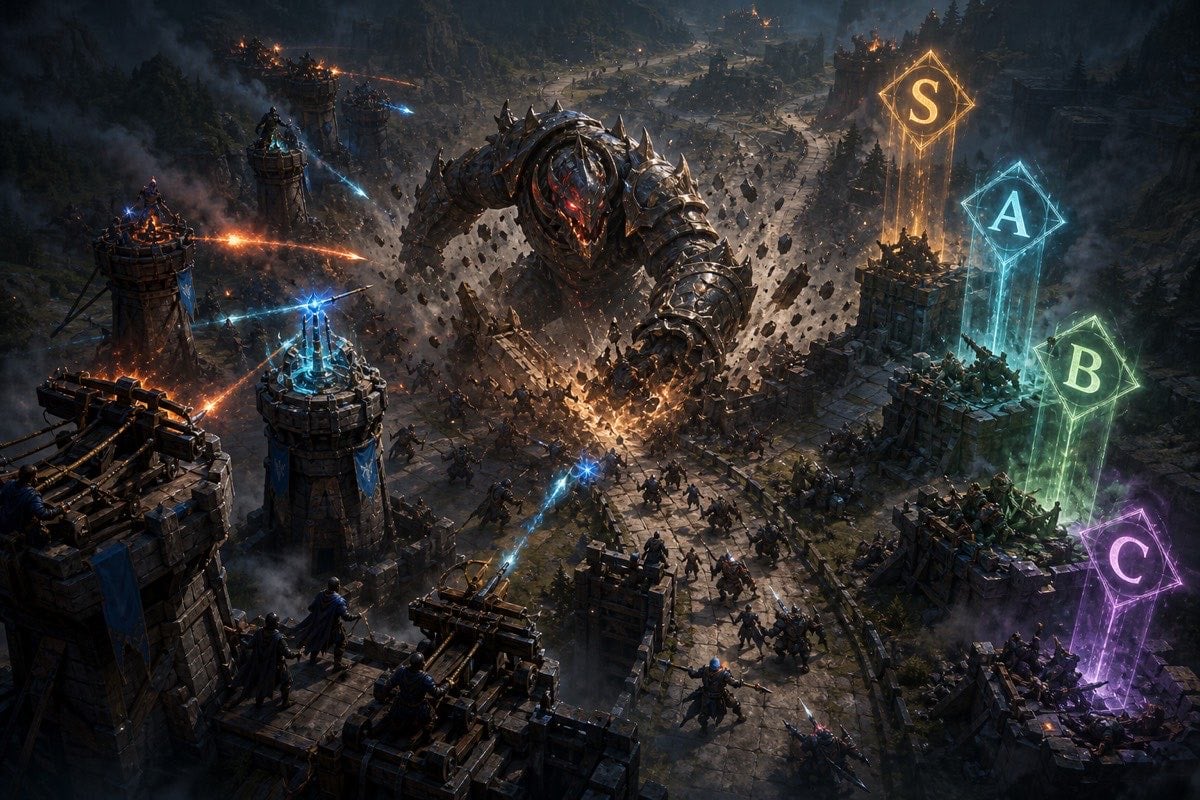
Tier list at a glance
| Rank | Tier | Game | Economy pressure |
|---|---|---|---|
| 1 | S | GemCraft: Frostborn Wrath | Brutal scaling economy where early gem decisions echo across the whole run |
| 2 | S | Mindustry | Factory logistics turn every turret into a supply-chain commitment |
| 3 | S | Bloons TD 6 | Greed, upgrade timing, heroes, and banana income constantly fight for cash |
| 4 | A | Creeper World 4 | Overbuilding drains the network and can collapse the entire front |
| 5 | A | Infinitode 2 | Long-run efficiency and research pressure punish unfocused spending |
| 6 | A | Rogue Tower | Procedural paths make every upgrade and expansion a risk calculation |
| 7 | B | Dungeon Warfare 2 | Trap economy rewards dense killboxes but is more combo-driven than financial |
| 8 | B | Defense Grid 2 | Clean classic economy pressure with readable upgrade mistakes |
| 9 | C | Kingdom Rush Frontiers | Good upgrade timing matters, but hero-driven recovery softens mistakes |
| 10 | C | Plants vs. Zombies | Excellent basic income timing, lighter long-term punishment |
S tier: the economy is the defense
1. GemCraft: Frostborn Wrath
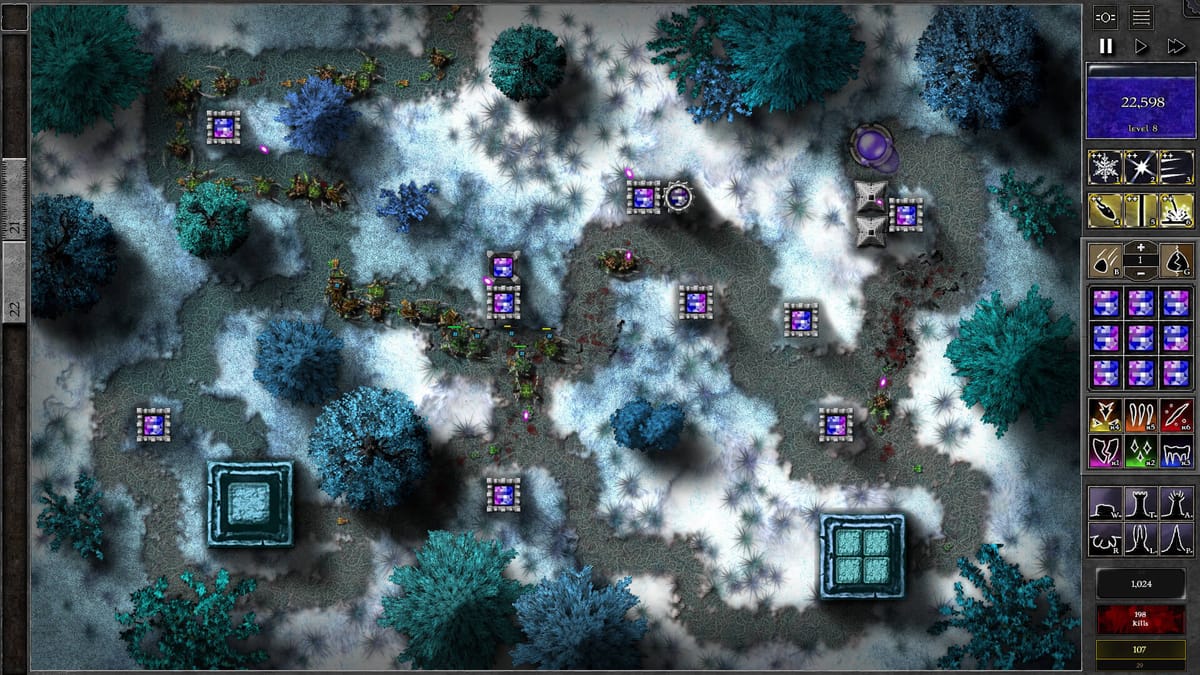
GemCraft: Frostborn Wrath is the harshest economy test here because defensive power is tied directly to scaling. You are not just buying another tower. You are deciding when mana should become a stronger gem, when combining is worth the cost, and when a short-term fix will delay the damage curve you actually need.
That matters because the pressure is not only about lane control. It is about compounding efficiency. A slightly weak setup can survive for a while, which tempts you into patchwork spending. Then the next wave exposes the real problem: your defense was strong enough to live, but your economy was not strong enough to stay ahead.
This is where GemCraft is brutal. The losing decision may not look wrong when you make it. It only becomes obvious later, when the gem curve is behind and every new wave asks for power you cannot afford.
GemCraft: Frostborn Wrath is best for players who want deep tower defense economy management, long-term scaling, and painful optimization. It is less friendly if you want a clean tower menu with obvious answers.
Pick it if you want the strongest lesson in delayed spending consequences.
2. Mindustry
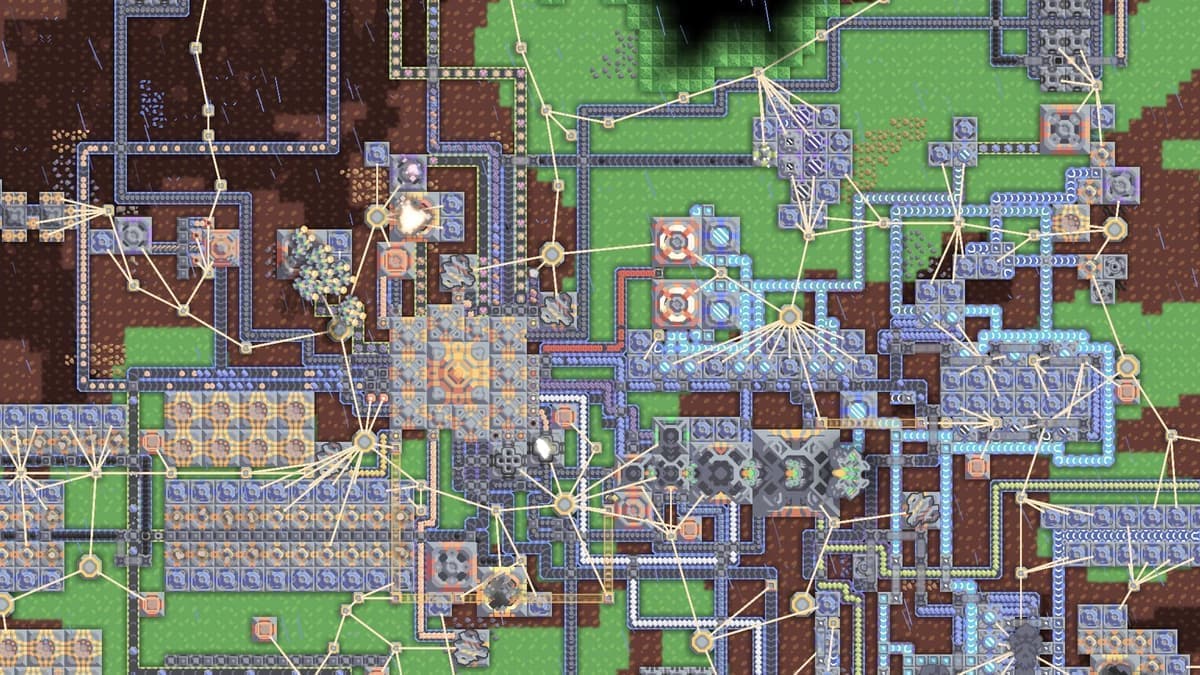
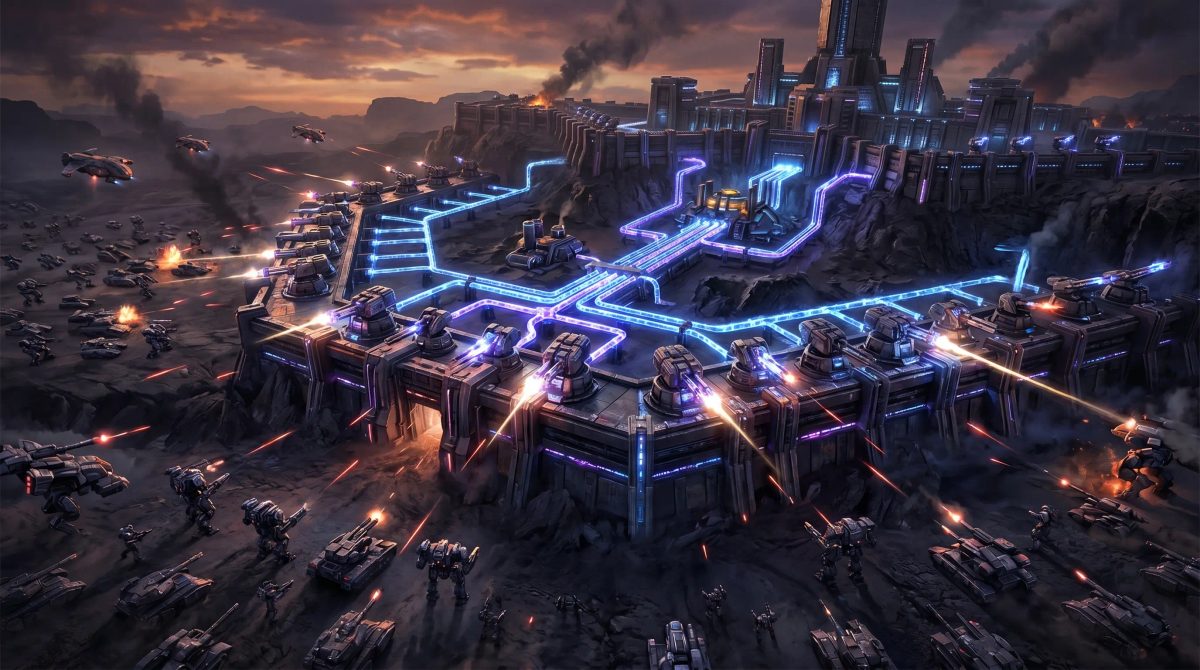
Mindustry is not a pure lane-based tower defense game, and that is exactly why its economy pressure belongs near the top. A turret is not just a turret. It needs resources, conveyors, production, power, and a supply chain stable enough to keep firing when the attack gets serious.
The common mistake is building the visible defense first. More guns look safe. But if the factory behind them cannot feed them, you have only built a more expensive way to fail.
In Mindustry, the correct defensive move is often not another weapon. It is more infrastructure. Better routing. More reliable production. Stronger power. A safer factory floor. The perimeter only works if the economy behind it works.
That makes every defensive commitment heavier. A bad turret line is not just wasted money. It is wasted mining, wasted logistics, wasted power, and wasted space.
Mindustry is one of the best tower defense games for resource management, but only if you want logistics pressure as part of the combat loop. If you came for classic tower placement and simple wave defense, it may feel like a factory game that keeps interrupting you with attacks.
Pick it if you want your economy mistakes to break the whole machine.
3. Bloons TD 6
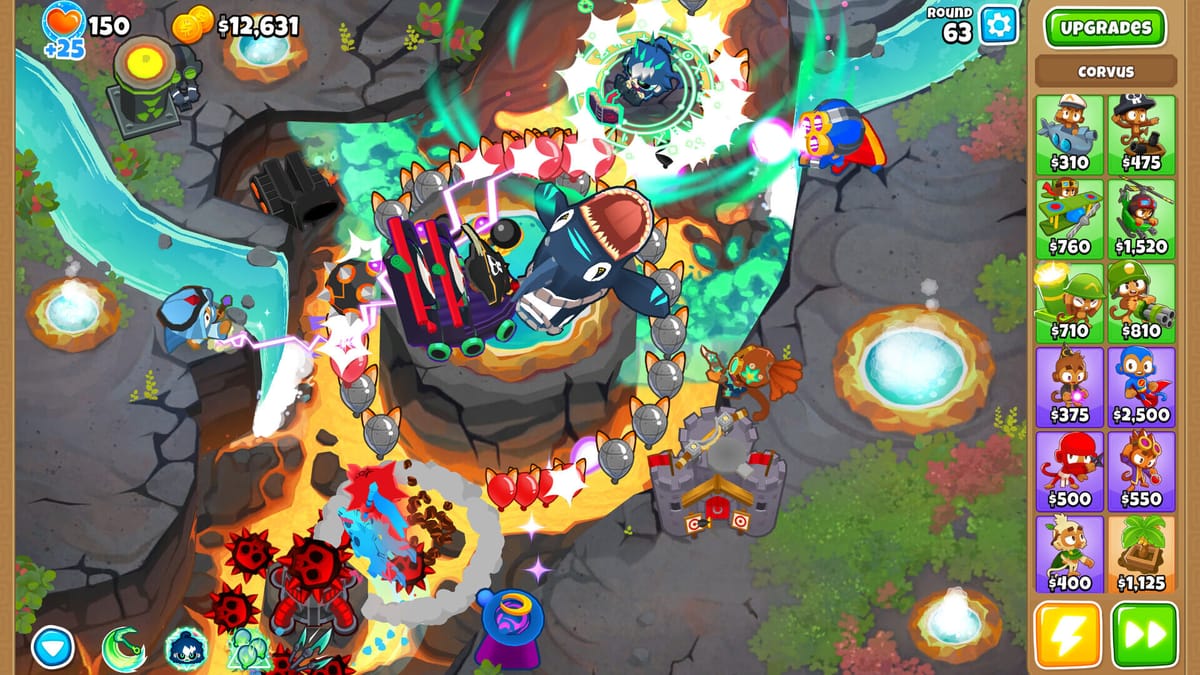
Bloons TD 6 turns greed into a defensive mechanic. Banana farms, heroes, layered tower upgrades, crosspaths, and map-specific pressure all compete for the same cash. The strongest players are not just better at popping bloons. They are better at knowing when not to spend.
Most mid-level players lose money twice: first by buying the wrong thing, then again by upgrading it out of panic. That panic upgrade may save the current wave, but it can delay the farm, hero level, or major tower breakpoint that would have stabilized the next ten waves.
The economy pressure is sharp because so many purchases look reasonable. A safety tower, a farm, a hero, a crosspath, a cheap upgrade, a midgame carry, a late-game setup piece — all of them can be correct. The hard part is timing.
Bloons TD 6 is the best fit here for players who want clean tower defense upgrade timing with lots of repeatable optimization. It can be forgiving if you play casually, but if you chase efficient lines, it becomes a cash-timing exam.
Pick it if you want greed, farming, and upgrade discipline in a polished tower defense package.
A tier: bad economy creates visible collapse
4. Creeper World 4
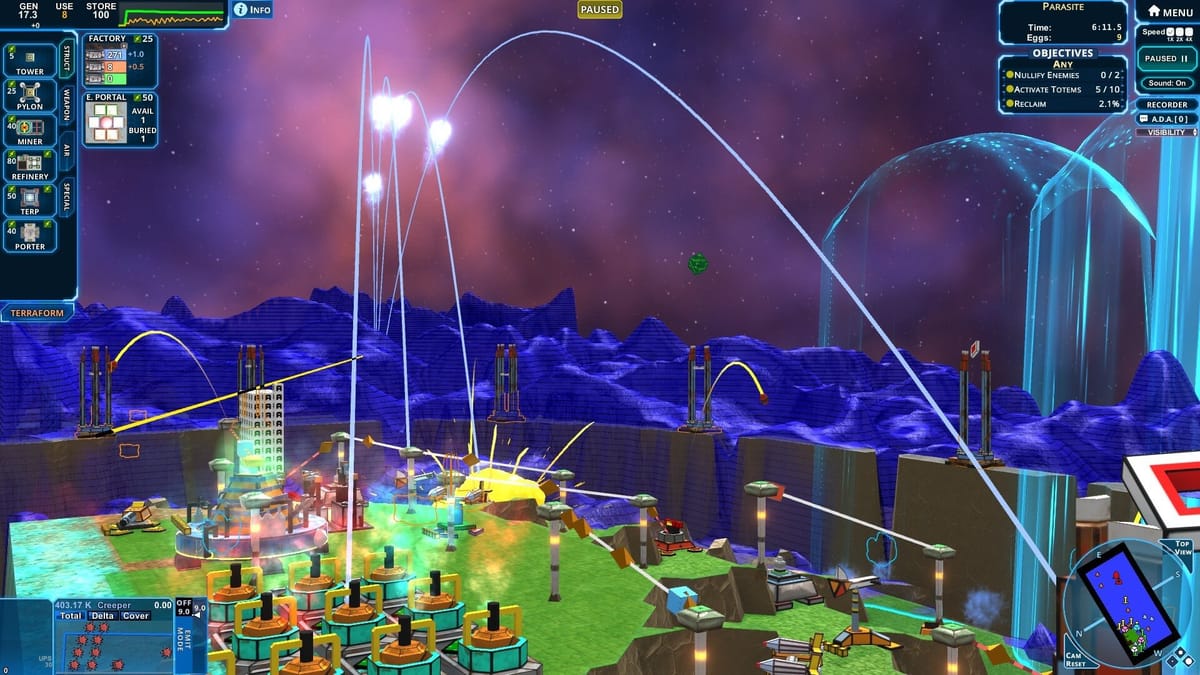
Creeper World 4 does not punish spending with a single leak down a lane. It punishes spending with energy debt.
The creeper spreads like a fluid threat, and your network has to keep the defense supplied. Build too many weapons too early and the front does not get stronger. It starves. Fire rate drops, pressure builds, and the map starts taking back ground.
That makes the economy feel different from most tower defense games. You are managing a connected war machine. The question is not only, “Can I afford this cannon?” It is, “Can my network support this cannon while I expand?”
Bad spending creates a slow, ugly collapse. You can feel the whole line weaken. The defense does not fail because one tower was wrong. It fails because the system behind the towers could not carry the load.
Creeper World 4 is excellent if you want economy pressure that visibly changes the battlefield. It is less ideal if you want discrete waves, obvious chokepoints, and classic tower density.
Pick it if you want infrastructure pressure, network stability, and defensive expansion to matter as much as firepower.
5. Infinitode 2
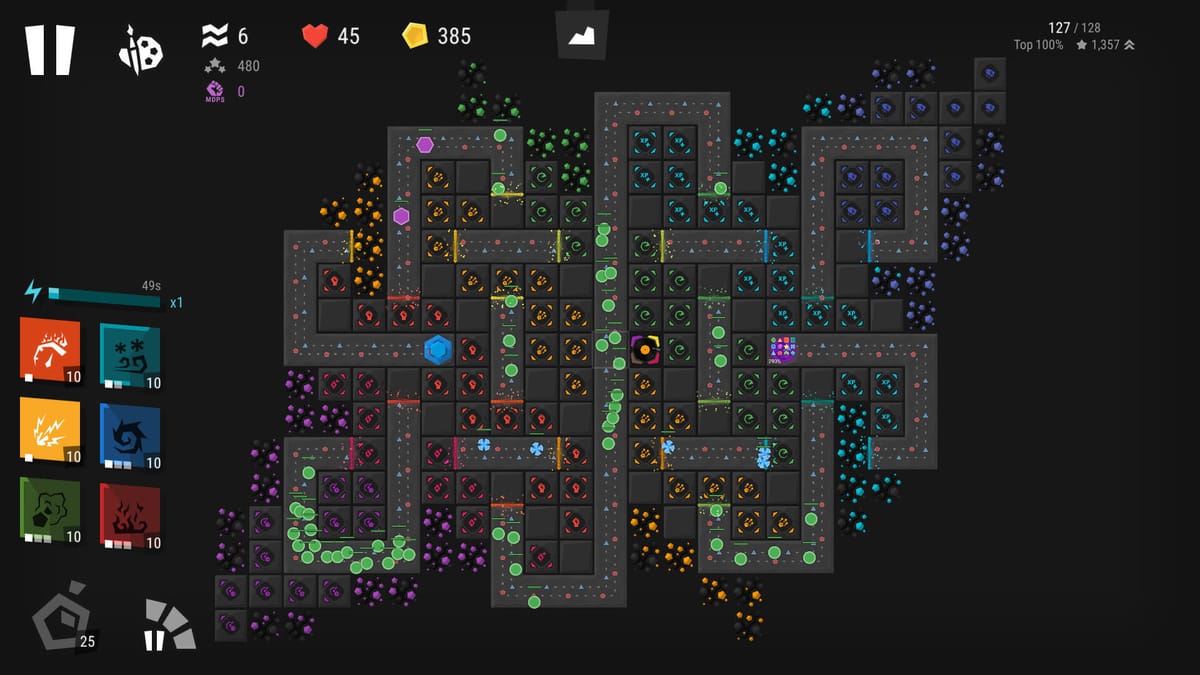
Infinitode 2 applies economy pressure over a longer horizon. It is an endless tower defense game with research trees, custom maps, and a structure that rewards efficiency more than improvisation.
The punishment for bad spending is not always dramatic in the moment. It often shows up as a run that simply stops scaling. You survive plenty of waves, but the defense quietly becomes less efficient until the enemies outgrow your plan.
That is what makes Infinitode 2 interesting. If your tower choices are unfocused, if upgrades arrive in the wrong order, or if your map economy does not support the defense curve, the loss can feel slow and inevitable. You did not fail one wave. You built a weak long-term machine.
This is a strong pick for players who like optimization, incremental improvement, research planning, and long-tail resource management. It asks you to think beyond a single choke point.
The limitation is clarity. Some losses feel like research or setup problems rather than one obvious bad purchase. If you want every failed wave to clearly say “you spent wrong,” Infinitode 2 can feel more diffuse than the S-tier games.
Pick it if you enjoy long-run efficiency and slow economy punishment.
6. Rogue Tower
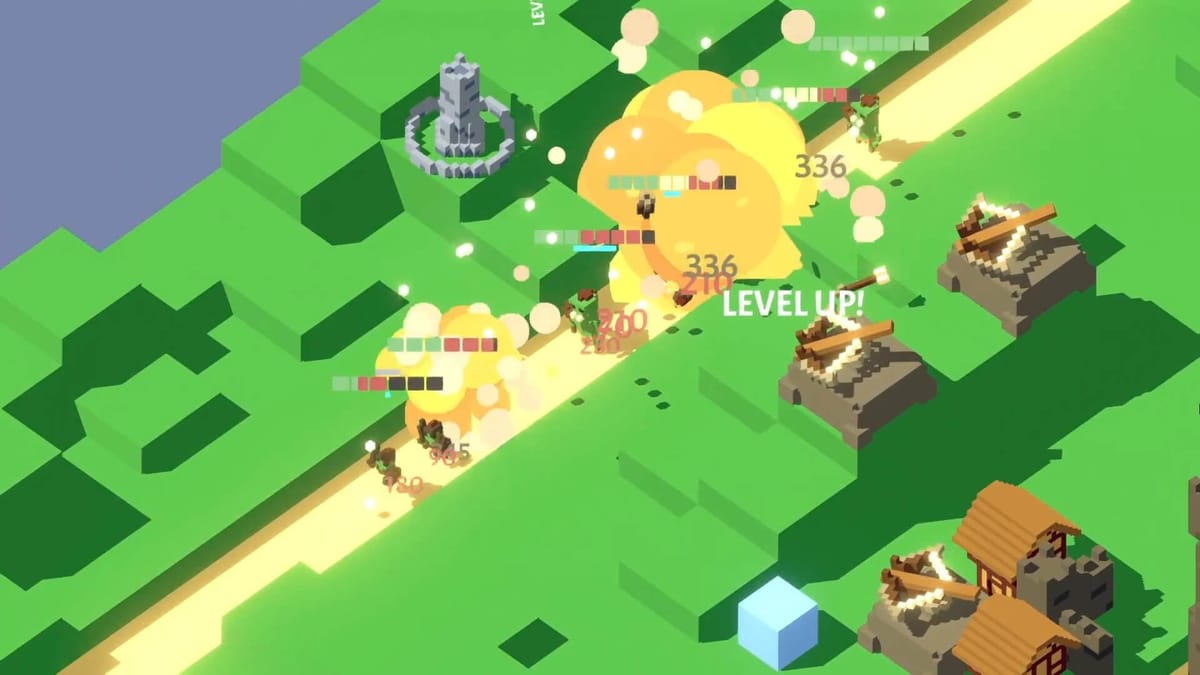
Rogue Tower gets tricky because the map does not sit still. Procedural paths and roguelite progression make economy pressure less about memorizing a perfect build and more about adapting your spending to an ugly board.
Expansion itself is an economic decision. More path can mean more opportunity, but it also creates more area to cover. Upgrades can solve one problem, but they can also split your damage plan across too many tower types. You are constantly deciding whether to strengthen the current kill zone or prepare for the next route the game gives you.
That makes Rogue Tower a strong spending-discipline test. A greedy expansion can stretch the defense too thin. A defensive upgrade can delay broader coverage. A new tower type can help now while weakening your scaling later.
This is best for players who like defensive improvisation. The economy is tied to risk management, not just clean income math.
The friction is variance. Sometimes a bad run feels like a bad path, a bad reward sequence, or a rough strategic fork rather than pure spending failure. Rogue Tower still punishes waste, but it is not as clean an economy laboratory as GemCraft: Frostborn Wrath or Bloons TD 6.
Pick it if you want economy pressure mixed with roguelite adaptation.
B tier: strong spending lessons, less brutal compounding
7. Dungeon Warfare 2
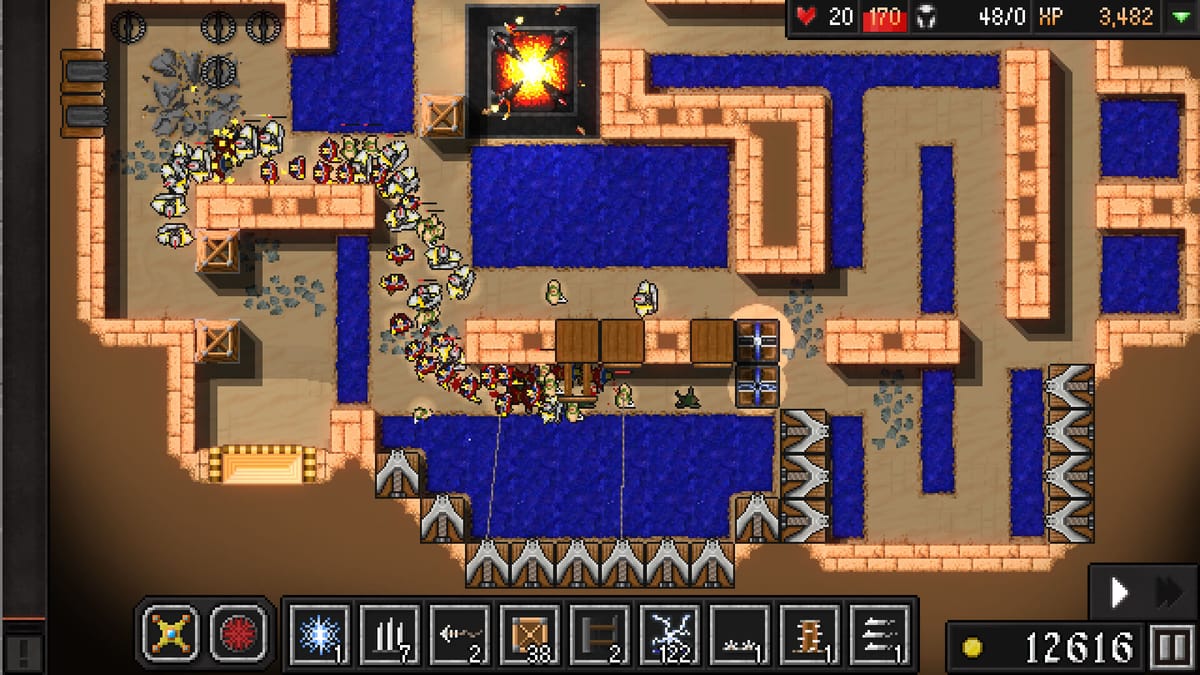
Dungeon Warfare 2 is trap-heavy economy pressure. Your money becomes floor traps, wall traps, upgrades, and dungeon control. The key decision is not only what stops enemies, but what creates the densest punishment per tile and per coin.
This belongs on the list because trap defense is full of seductive bad purchases. A trap can look useful while weakening the actual killbox. A panic placement can interrupt a better combo. An upgrade can improve one lane while leaving the real collapse point underfunded.
The defensive identity here is chokepoint cruelty. Dungeon Warfare 2 rewards players who like tight lanes, layered control, trap timing, and compact kill zones more than broad tower coverage.
The limitation is that the economy pressure is less about compounding income and more about trap synergy. If you want interest, farming, or heavy greed decisions, this is not the sharpest test. It punishes bad spending, but it often punishes bad trap logic first.
Pick it if you want spending discipline inside brutal trap layouts.
8. Defense Grid 2
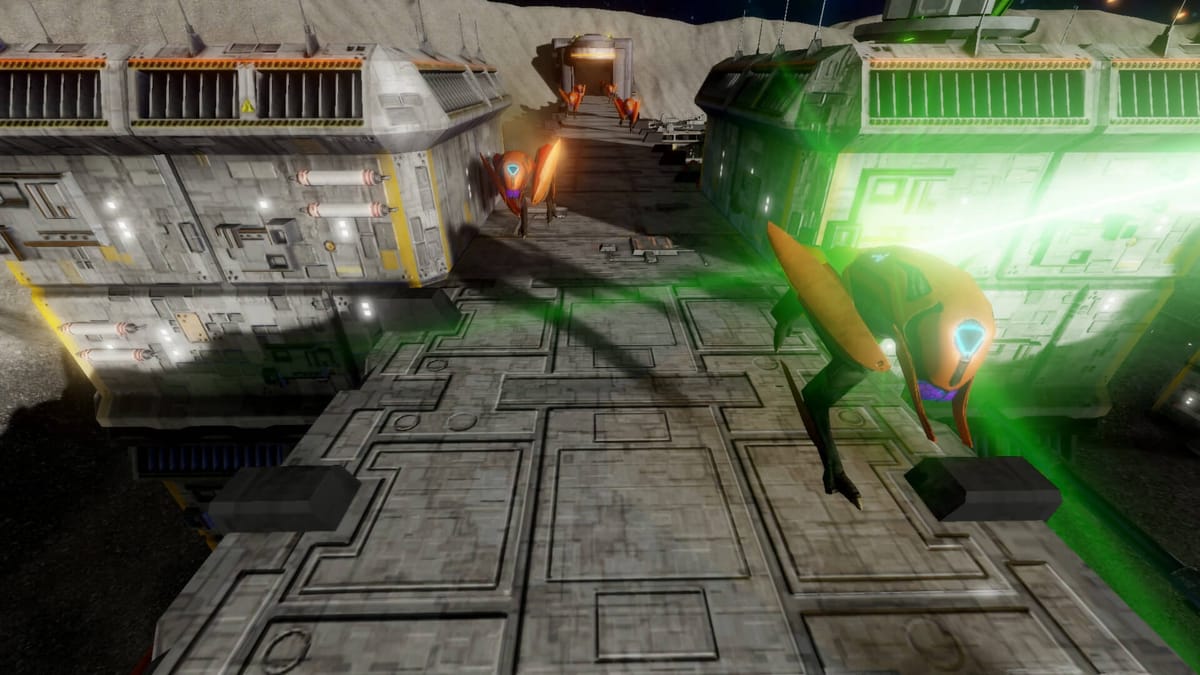
Defense Grid 2 is the cleanest classic pick in the middle of this list. It has maps, towers, waves, and a campaign structure that make spending mistakes easy to read.
If the defense fails, you can usually trace the problem back to an inefficient tower, an over-upgrade, or a delayed answer to a lane. That clarity is valuable. Defense Grid 2 teaches a practical lesson many players skip: the best tower is not always the next tower.
Sometimes the right move is to wait for the upgrade that actually changes the wave math. Sometimes the right move is to stop spreading money across the map and strengthen the one choke that matters.
It is a strong fit for players who want disciplined tower placement and upgrade restraint without a huge meta layer.
The reason it sits below the harsher games is that the economy is cleaner and less layered. You are not usually juggling factory throughput, banana income, or deep gem scaling. Defense Grid 2 tests spending discipline, but it rarely makes the entire game revolve around economy pressure.
Pick it if you want a readable classic tower defense economy lesson.
C tier: useful economy lessons, softer punishment
9. Kingdom Rush Frontiers
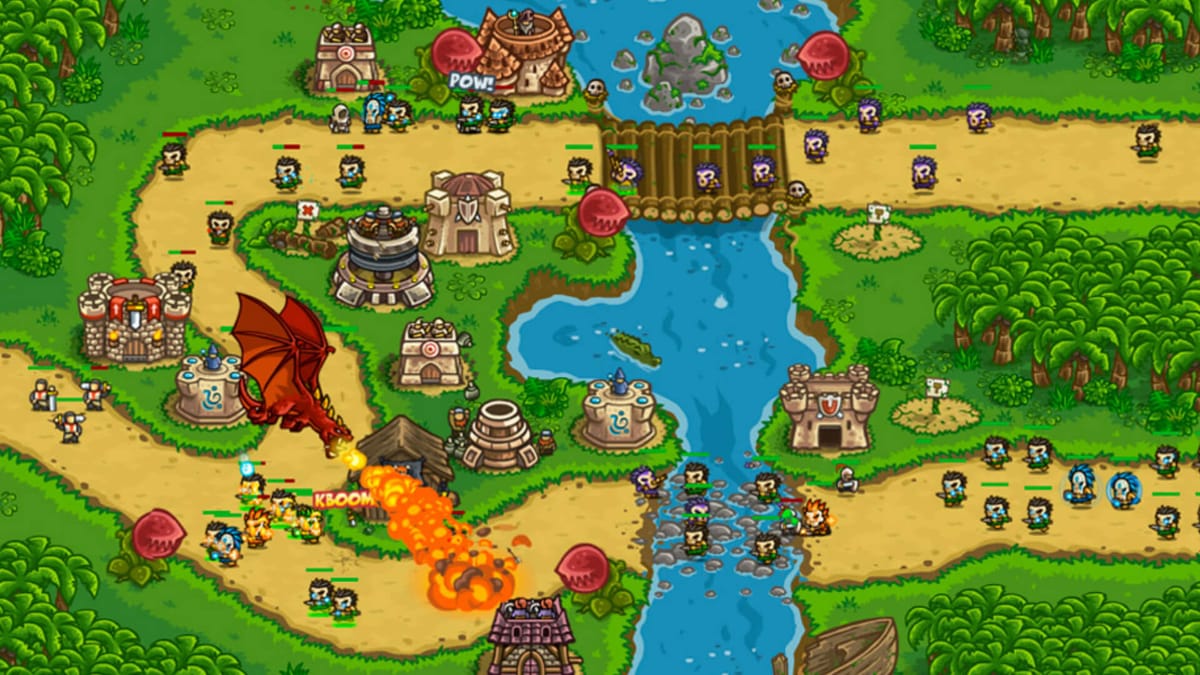
Kingdom Rush Frontiers has real economy pressure, but it is not the main reason the game works. Gold from combat, tower upgrades, heroes, and changing enemy pressure all force spending decisions. Early over-upgrading can absolutely leave a lane underbuilt.
Still, this is a hero-driven and campaign-friendly defense game. Tactical response matters a lot. A good hero move or active ability can cover an economic mistake that would be fatal in a stricter game.
That makes Kingdom Rush Frontiers easier to recommend as a polished tower defense campaign than as a brutal economy trainer. You still need to respect tower roles, lane coverage, and upgrade timing. You just get more room to recover.
The main limitation for this list is that bad spending is not always punished hard enough. If you are specifically trying to fix greed, over-upgrading, or cash timing, Kingdom Rush Frontiers teaches the basics but does not press as hard as the games above it.
Pick it if you want lighter economy pressure inside one of the best campaign-style tower defense games.
10. Plants vs. Zombies
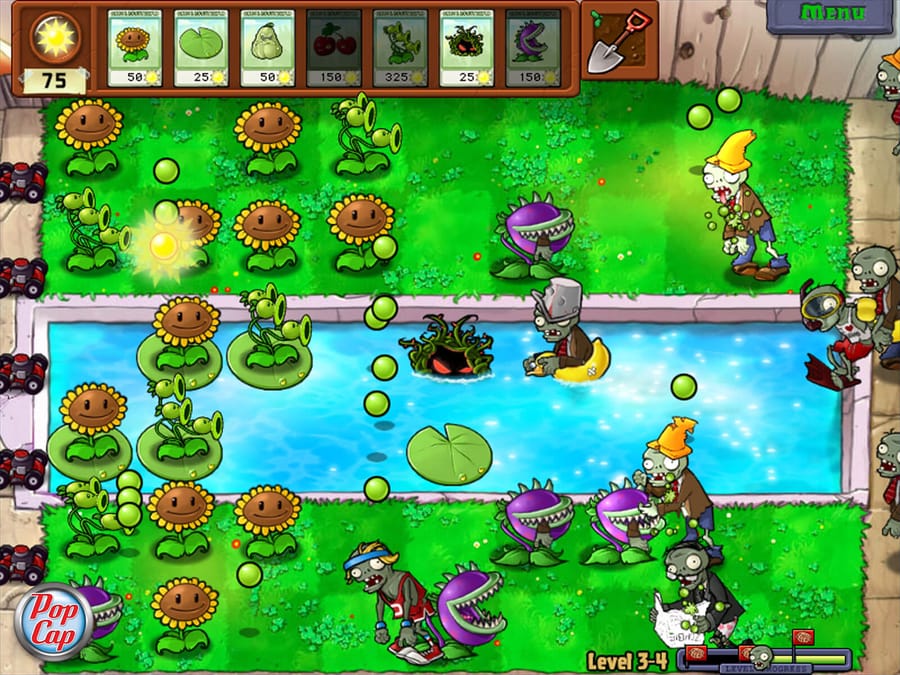
Plants vs. Zombies is the lightest economy-pressure game here, but it deserves the final slot because its lesson is pure: sun timing is defense timing.
Spend too early and you slow down the lane setup. Wait too long and the zombies force a worse emergency answer. Every plant purchase is a small timing decision between safety now and stability later.
The defensive loop is lane-based and readable. Each lane asks whether you can stabilize now without ruining the next purchase. That makes Plants vs. Zombies excellent for learning the emotional side of economy play: do not buy just because you are nervous.
For newer tower defense players, this is still one of the clearest introductions to resource timing. For experienced players, the pressure is mild. The campaign structure, readable lanes, and slower punishment mean it will not satisfy someone looking for the harshest tower defense economy test.
Its value is foundational. It teaches that money is not separate from defense. Money is the defense, delayed by a few seconds.
Pick it if you want the cleanest beginner lesson in income timing.
What to play based on your economy problem
If you keep over-upgrading early, start with Bloons TD 6 or Defense Grid 2. They make upgrade timing readable without burying the lesson.
If your runs die because your long-term curve falls behind, choose GemCraft: Frostborn Wrath or Infinitode 2. Those games punish weak scaling better than most.
If you want economy pressure tied to base survival, play Mindustry or Creeper World 4. Both make infrastructure part of the hold.
If your spending mistakes come from messy lanes and improvisation, Rogue Tower is the better fit.
If you want trap-based punishment, Dungeon Warfare 2 is the pick. If you want lighter campaign pressure, Kingdom Rush Frontiers and Plants vs. Zombies teach useful habits without being as punishing.
FAQ
What tower defense game has the harshest economy pressure?
GemCraft: Frostborn Wrath is the harshest pick here. Its gem scaling and mana economy make early spending mistakes matter far beyond the wave where they happen.
Which tower defense game is best for learning upgrade timing?
Bloons TD 6 and Defense Grid 2 are the best starting points. Bloons TD 6 teaches greed, farming, and upgrade breakpoints. Defense Grid 2 teaches cleaner classic tower placement and upgrade restraint.
Which game is best if I like resource management?
Mindustry is the strongest resource-management pick because defense depends on mining, routing, production, power, and supply stability. Creeper World 4 is also excellent if you want network pressure and energy management.
Which game is best for trap-based economy pressure?
Dungeon Warfare 2 is the best trap-based pick. It rewards dense killboxes, trap synergy, and careful spending inside tight lanes.
Is Plants vs. Zombies still useful for economy lessons?
Yes, but as a beginner-friendly example. It teaches sun timing, patience, and lane stabilization clearly, but it does not punish bad long-term spending as hard as the higher-ranked games.
Takeaway
The strongest lesson across this whole tier list is simple: cash timing is a defensive mechanic.
The best tower defense players know when a leak is cheaper than a tower, when an upgrade is worse than waiting, and when the economy behind the defense matters more than the defense itself.
Play GemCraft: Frostborn Wrath if you want the harshest scaling punishment, Mindustry if you want logistics pressure, Bloons TD 6 if you want greed and upgrade timing, and Creeper World 4 if you want economy collapse to visibly reshape the battlefield.