10 Best Tower Defense Games With Upgrade Trees That Change Your Strategy
The best tower defense games where upgrade paths, research, skills, and roster progression create new builds instead of merely increasing damage.
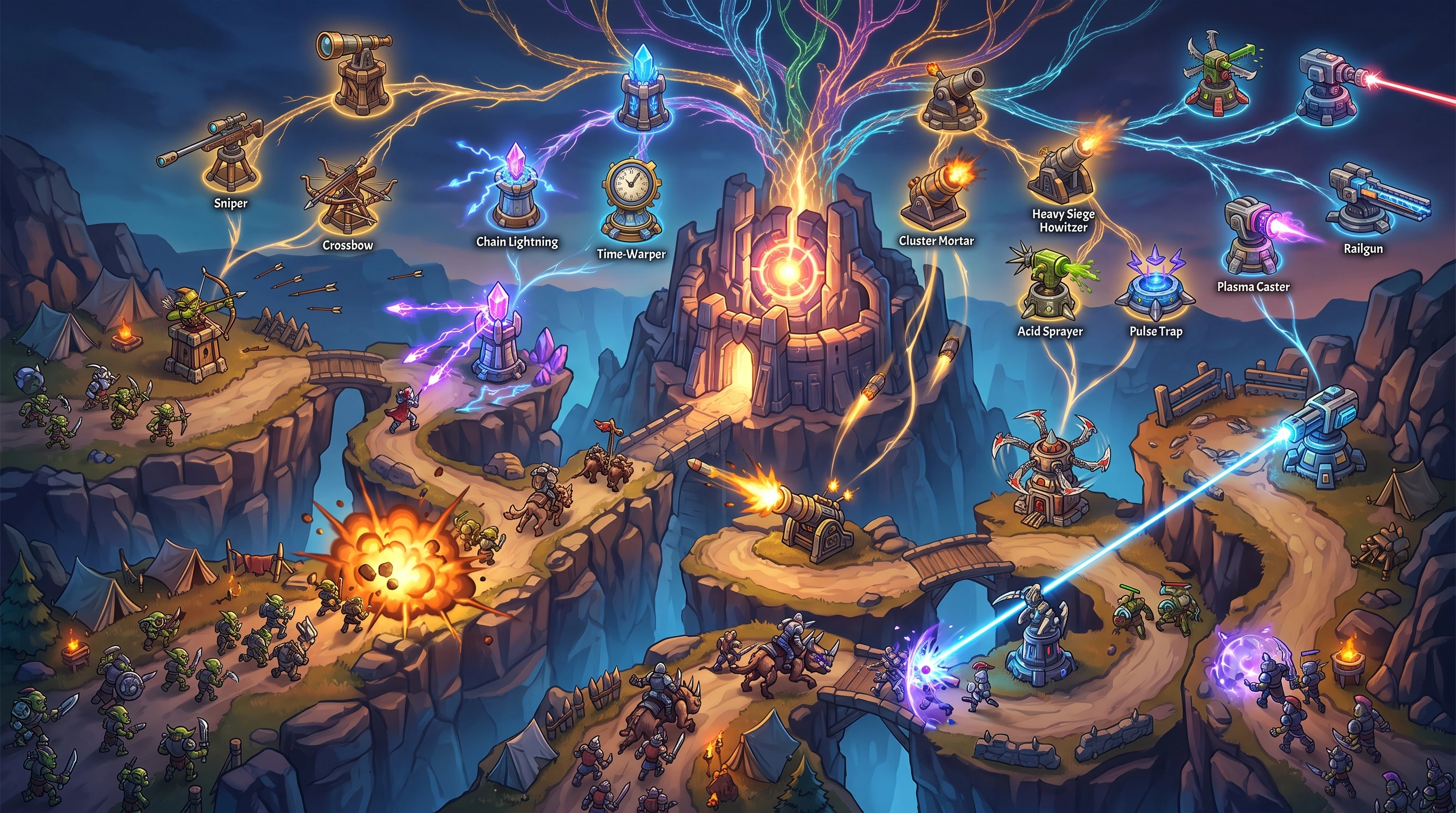
Most tower defense upgrades are accounting. Spend currency, gain ten percent damage, and continue building in exactly the same places.
The best upgrade systems change the map instead. They turn a short-range tower into a choke-point anchor, make an ignored trap central to a new build, or unlock a support effect that lets two cheap defenses replace one expensive carry. The number still rises, but the important result is a new decision.
This ranking includes more than literal branching tower trees. Research grids, character skills, trap traits, card upgrades, equipment, and roster development all qualify when they change placement, targeting, lane coverage, or the way a defense survives pressure. Games were ranked by how strongly progression creates new strategies without replacing the need to read the map.
The ranking at a glance
| Rank | Game | Progression style | What it changes |
|---|---|---|---|
| 1 | Bloons TD 6 | Three tower paths, heroes, and meta upgrades | Tower roles, timing, and coverage |
| 2 | Infinitode 2 | Large research tree | Long-term tower specialization and economy |
| 3 | GemCraft: Frostborn Wrath | Gem combining, skills, and talismans | Power concentration and endurance planning |
| 4 | Mindustry | Campaign technology and production unlocks | The entire supply chain behind the defense |
| 5 | Dungeon Warfare 2 | Trap traits, equipment, and skill trees | Choke design and environmental kills |
| 6 | Defender's Quest | Character levels, skills, and equipment | Roster roles and lane assignments |
| 7 | Dungeon Defenders 2 | Heroes, defenses, gear, and active abilities | How much each lane can hold without you |
| 8 | Heretic's Fork | Card-driven run upgrades | Improvised builds and combo direction |
| 9 | Kingdom Rush Vengeance | Tower loadouts and ability upgrades | Which five tools define the map plan |
| 10 | The Battle Cats | Unit levels, forms, talents, and roster growth | Deployment timing and counter-picks |
For the safest overall recommendation, choose Bloons TD 6. Pick Infinitode 2 if the research tree itself is the attraction, GemCraft: Frostborn Wrath for dense endurance optimization, or Dungeon Warfare 2 when you want to engineer lethal trap corridors. Mindustry is the strongest hybrid, but only if building the factory behind the guns sounds as interesting as placing the guns.
1. Bloons TD 6 — best overall
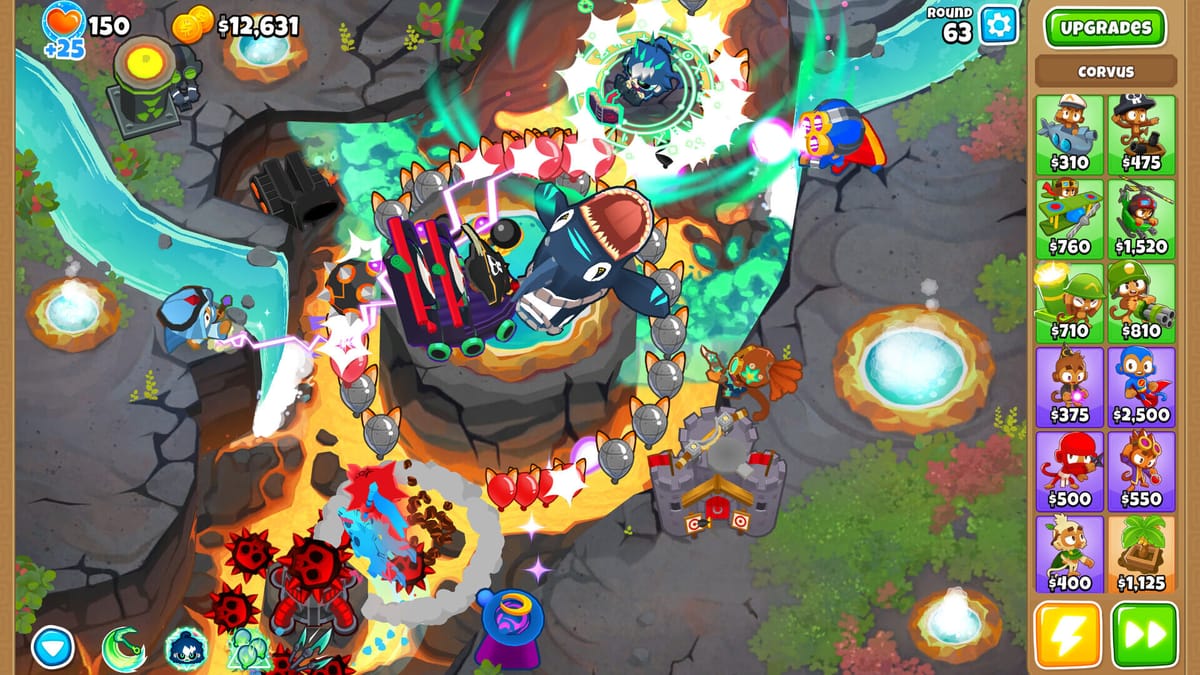
Bloons TD 6 earns the top spot because upgrading a tower usually changes its job. Each monkey has three paths, and committing to one can turn the same base unit into crowd control, single-target damage, global support, income, or cleanup. Cross-path choices then decide which weakness you are willing to keep.
That role change feeds directly back into placement. Range upgrades can open positions that were previously useless. Pierce and splash favor bends where targets overlap. Support effects reward compact clusters, while global attacks loosen the map's usual coverage rules. A tower built to carry the midgame may occupy the same piece of ground as a late-game support build but demand completely different neighbors and timing.
Heroes add another growth curve. They level during a match, so placing one early can be an economic decision as much as a tactical one. Monkey Knowledge creates long-term progression outside individual maps, while modes such as CHIMPS remove those bonuses and force the underlying tower choices to stand on their own.
Best for: Players who want the widest mix of approachable maps, serious challenge modes, heroes, co-op, and tower builds that remain readable despite enormous variety.
The drawback: There is enough content for experimentation to turn into homework. Looking up solved strategies can erase much of the fun, and some modes or systems include optional in-game purchases.
2. Infinitode 2 — deepest long-term research
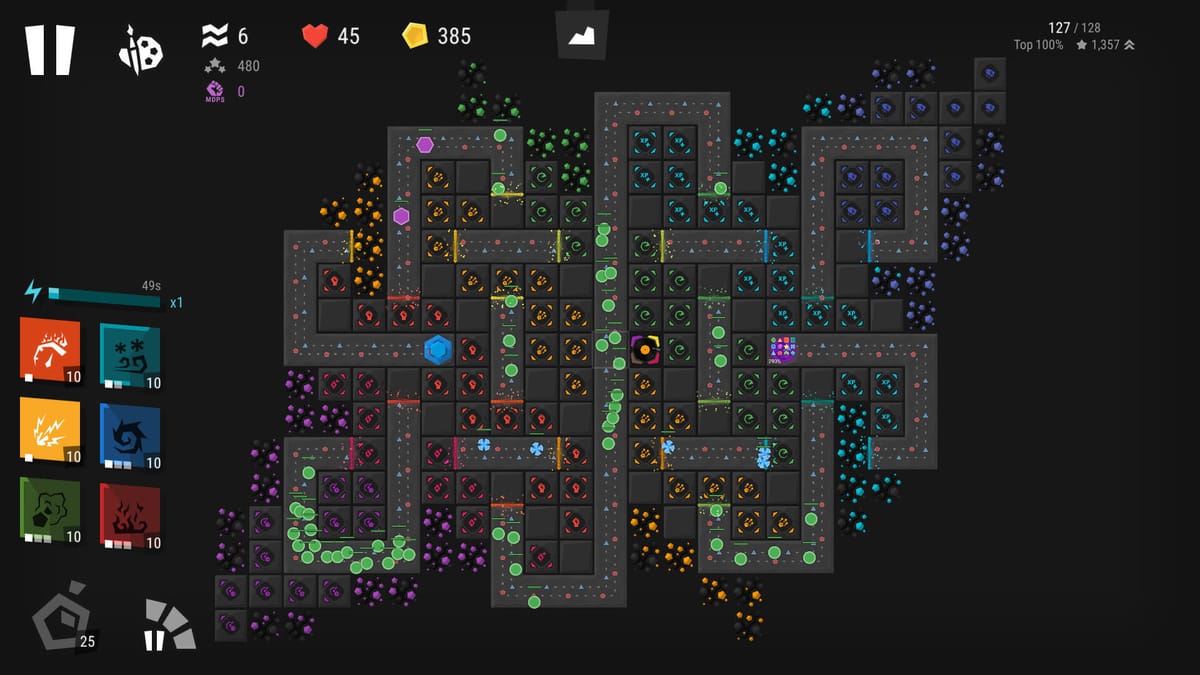
Infinitode 2 makes permanent research part of the main identity rather than a small layer of bonuses. Towers, miners, abilities, starting resources, and broader systems all develop across a large research grid. Clearing a stage is therefore only half the loop; the other half is deciding what kind of defense your account is becoming capable of building.
The best upgrades do more than smooth the next run. They change whether a tower is worth centering a strategy around, how quickly an economy comes online, or how long a kill zone can scale before its efficiency collapses. Research priorities become a build: specializing heavily creates clear strengths but can leave other maps awkward, while spreading resources produces flexibility at the cost of a slower power spike.
Miners, huge maps, endless waves, and a map editor make that long-form optimization useful. You have room to test whether a research investment genuinely improved the engine rather than merely helping with one scripted level.
Best for: Players who want a minimalist, systems-heavy tower defense game where research efficiency and endless optimization can support hundreds of hours.
The drawback: The permanent progression can feel grindy, and the abstract presentation offers less personality than a hand-authored campaign such as Kingdom Rush.
3. GemCraft: Frostborn Wrath — best for concentrated power
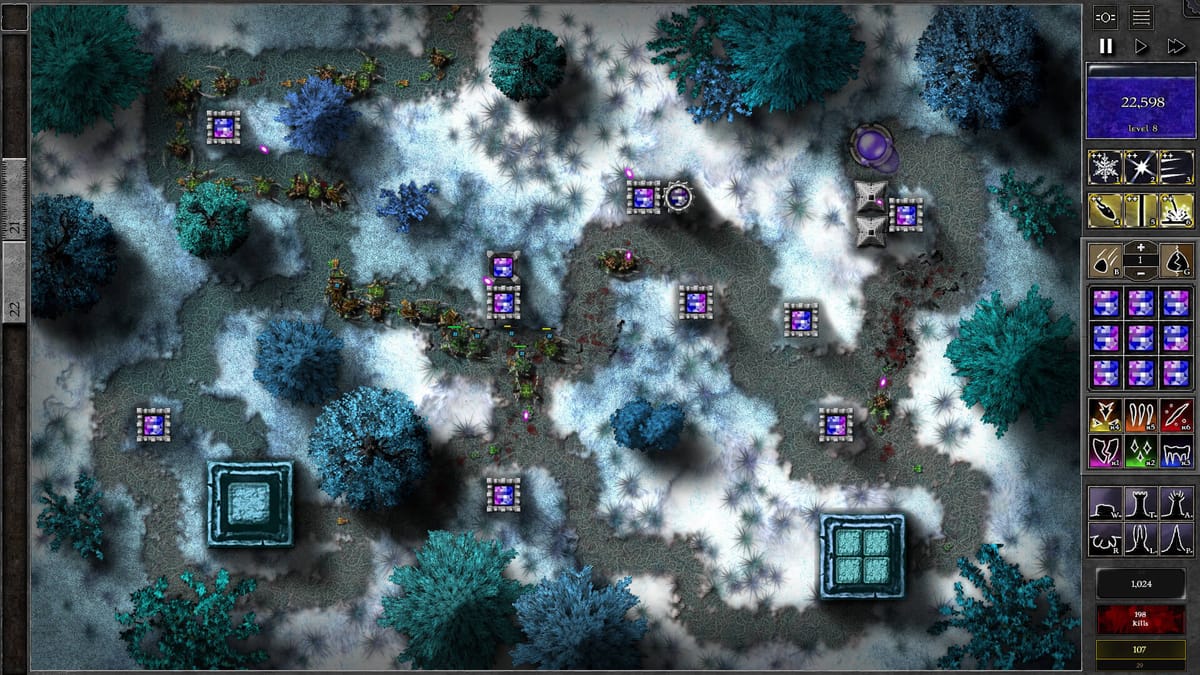
GemCraft: Frostborn Wrath does not ask you to select a finished tower from a menu. Its power lives in gems that can be combined, upgraded, moved, and socketed into towers, traps, and other structures. The defense is therefore built around deciding where concentrated power produces the most value.
A high-grade gem in a badly positioned tower is an expensive mistake. The same investment in a trap along a dense path can exploit repeated contact, while a tower with broad coverage may trade peak damage for more time on target. Skills, talisman fragments, gem types, and field modifiers keep changing which of those uses is strongest.
Endurance pressure makes the progression especially meaningful. A setup that clears ordinary waves may fail once armor, health, or numbers outscale it. Strong builds need a plan for mana generation and compounding power, not just enough damage for the immediate wave.
Best for: Players who enjoy dense arithmetic, endurance runs, mana economies, and squeezing more value from a small number of extremely important positions.
The drawback: It is visually and mechanically dense. Players who prefer clearly separated tower identities may find gems, skills, traits, and scaling harder to read at a glance.
4. Mindustry — best factory-defense hybrid
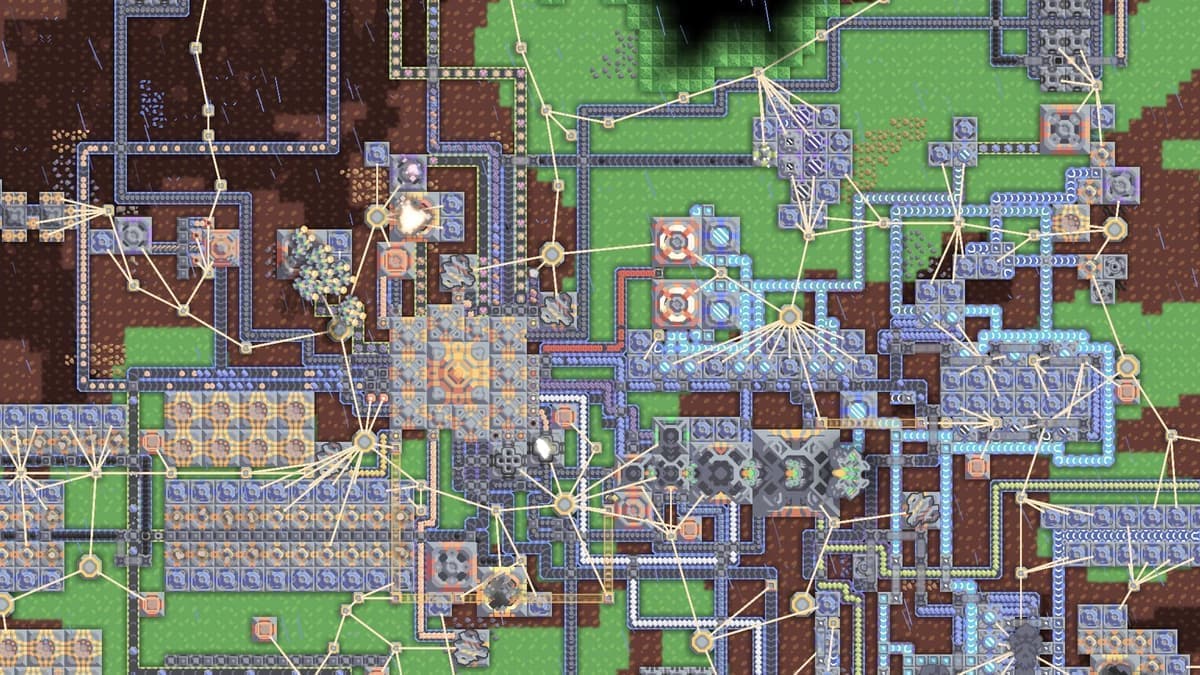
Mindustry's technology does not stop at turrets. It unlocks drills, factories, conveyors, power systems, units, walls, ammunition processing, and the infrastructure needed to keep a defensive line alive. An upgrade can therefore reshape everything behind the choke before it changes the weapon at the choke.
That makes logistics part of combat. A powerful turret without a stable ammunition line is temporary scenery. A strong wall can still fail if repair, power, or production sits in the blast zone. Later technology enables stronger defenses, but it also creates longer chains with more points of failure.
The campaign adds persistent research and sector control, while individual maps ask you to turn local resources into a functioning war economy. The best layouts are not simply compact factories or dense gun lines; they are systems that continue feeding the front when enemies begin destroying their edges.
Best for: Players who want tower defense fused with automation, base building, resource transport, and large-scale siege problems.
The drawback: This is a genuine hybrid. If conveyors and production ratios sound like chores between waves, Mindustry will feel more like a factory game interrupting your tower defense.
5. Dungeon Warfare 2 — best trap progression
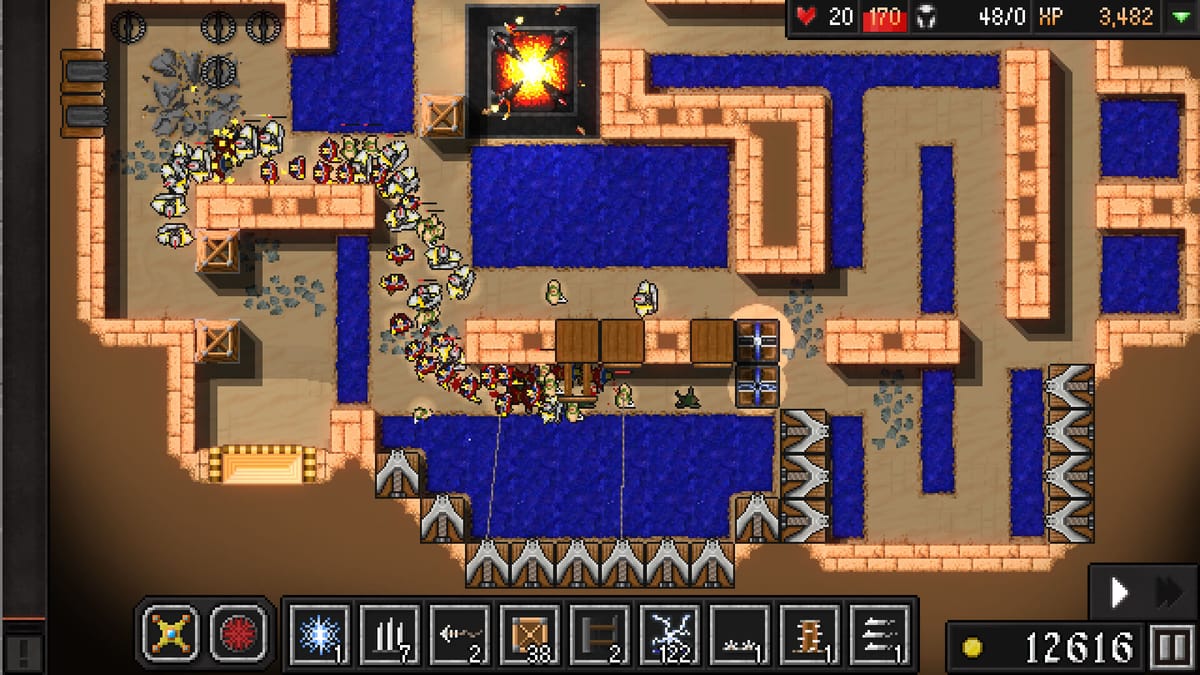
Dungeon Warfare 2 turns a map into a machine for abusing intruders. Its traps push, pull, crush, burn, launch, and redirect enemies, while environmental hazards make the surrounding dungeon part of the build. Damage is useful; arranging for a hero to fall into a pit is better.
Progression deepens that physical design. Traps gain passive upgrades and traits, three skill trees support different priorities, and equipment can reinforce a particular style. Improving a spring trap is meaningful because it may make a previously unreliable environmental kill consistent. Strengthening slowing or grouping tools can turn scattered hazards into one connected kill zone.
Difficulty runes also let you combine modifiers for greater challenge and reward. That matters because a build that crushes normal enemies may need a different balance of control, damage, and redundancy once new rules change the wave.
Best for: Players who want compact maps, elaborate trap interactions, physics, and the satisfaction of making one corridor catastrophically unfair.
The drawback: The action can become chaotic, and the physics-driven results are less perfectly predictable than the clean firing arcs of a traditional TD.
6. Defender's Quest: Valley of the Forgotten — best TD/RPG skill trees
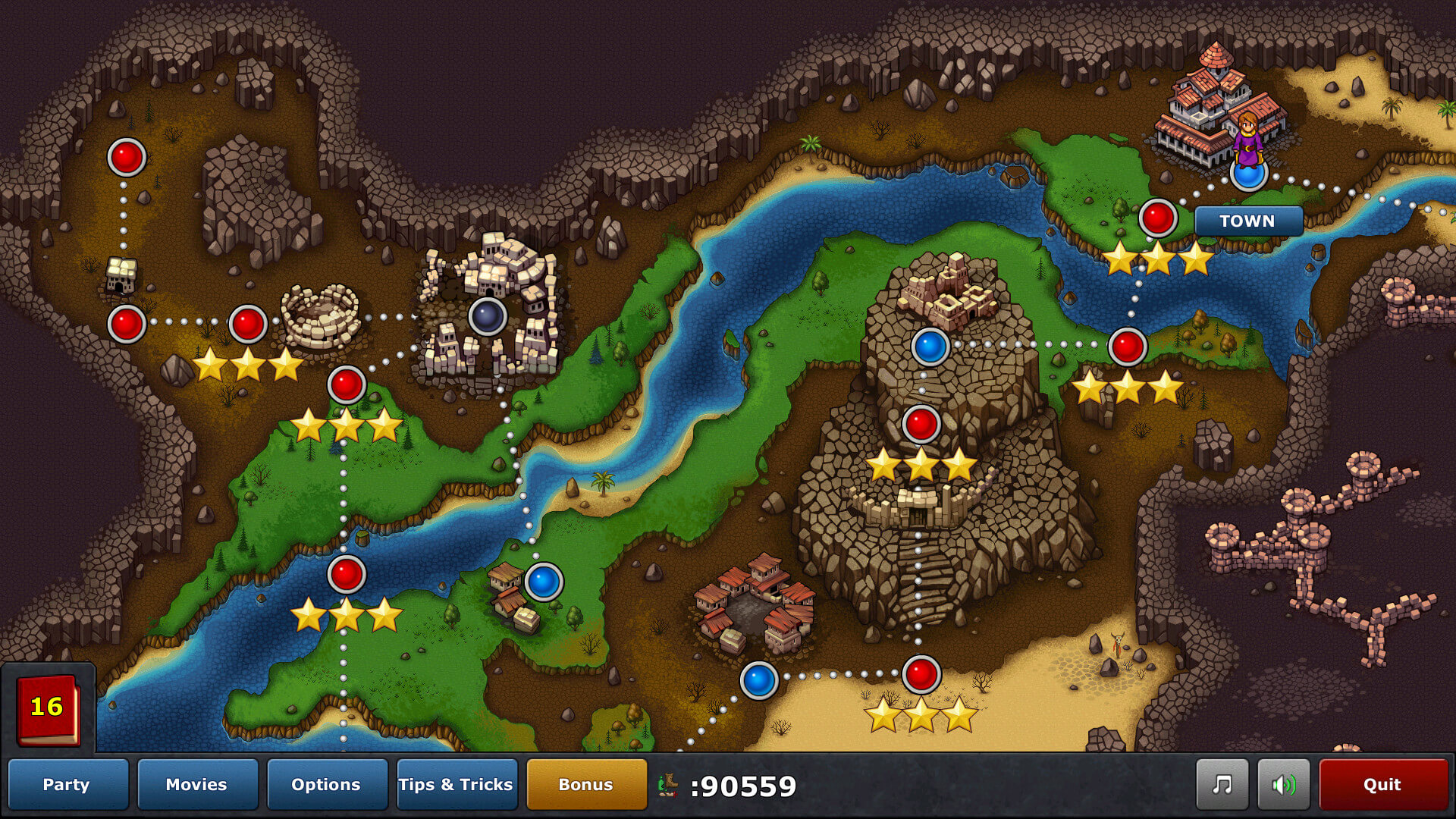
Defender's Quest replaces anonymous towers with individual characters. Each one levels independently, learns skills, and equips gear, so the progression system builds a roster rather than a catalog of structures.
That distinction gives upgrades tactical weight. A character developed for control may stabilize a crowded bend but struggle against a durable target. A high-damage unit may need support and a protected position to justify its investment. Because characters persist, choosing who receives experience and equipment affects which lane plans remain available in later maps.
The real-time-with-pause battle system keeps that RPG growth attached to tower defense. You still deploy units into fixed positions, manage resources, adjust speed, and reinforce lanes under pressure. The story provides continuity, but the stronger reason to play is watching a collection of basic defenders develop into specialized tools.
Best for: Players who want skill trees, equipment, named characters, and a campaign with more narrative structure than most tower defense games.
The drawback: Story scenes and RPG management interrupt the pure map-solving rhythm. Its age also shows more in presentation than in the underlying design.
7. Dungeon Defenders 2 — best action and co-op progression
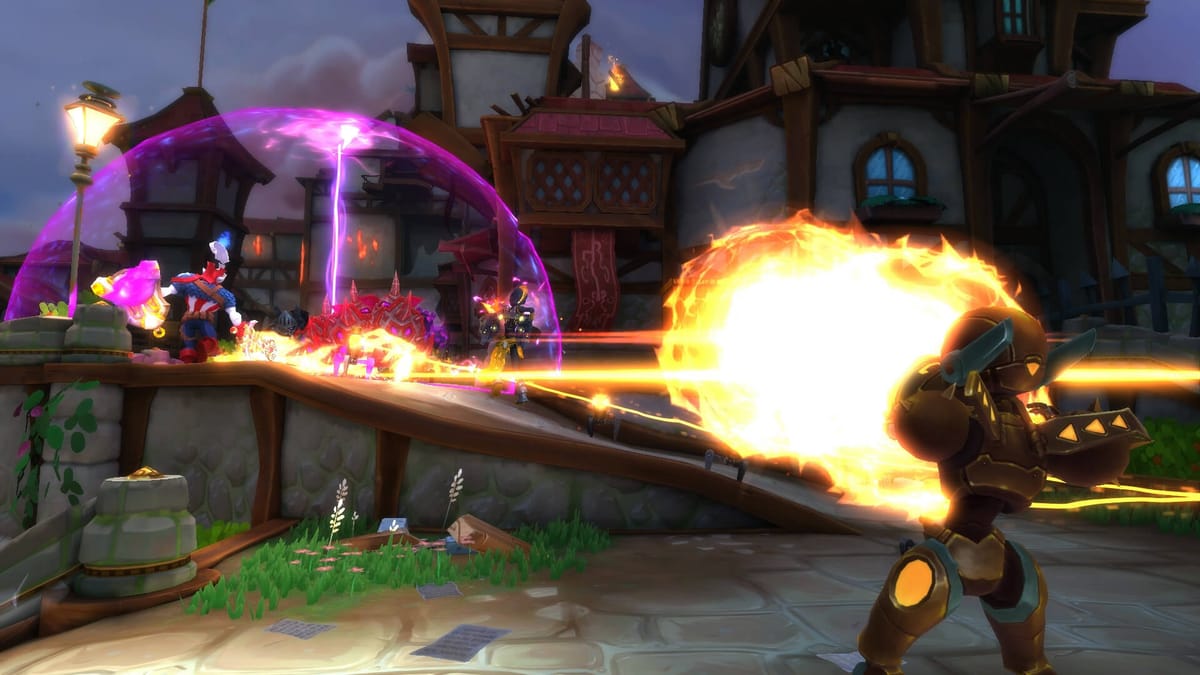
Dungeon Defenders 2 divides the work between constructed defenses and the hero you control directly. Towers, blockades, traps, auras, gear, and active abilities all contribute, but the important strategic question is how much attention each lane will need once the wave begins.
A strong defense build buys freedom. If one lane can function without supervision, you can spend the wave repairing a weaker choke, fighting a boss, or helping a co-op partner. A poor build may look acceptable during preparation and then demand constant hero intervention, turning every leak into a scramble.
Hero selection also changes the available defense kit, so roster development and equipment influence the map before the first structure is placed. In co-op, players can divide roles or combine defenses whose effects work better together.
Best for: Players who want loot, heroes, active combat, and cooperative defense rather than watching the entire wave from above.
The drawback: It is free-to-play and progression-heavy, with loot and live-service structure surrounding the TD. Players seeking a self-contained placement puzzle should look higher on the list.
8. Heretic's Fork — best for improvised card builds
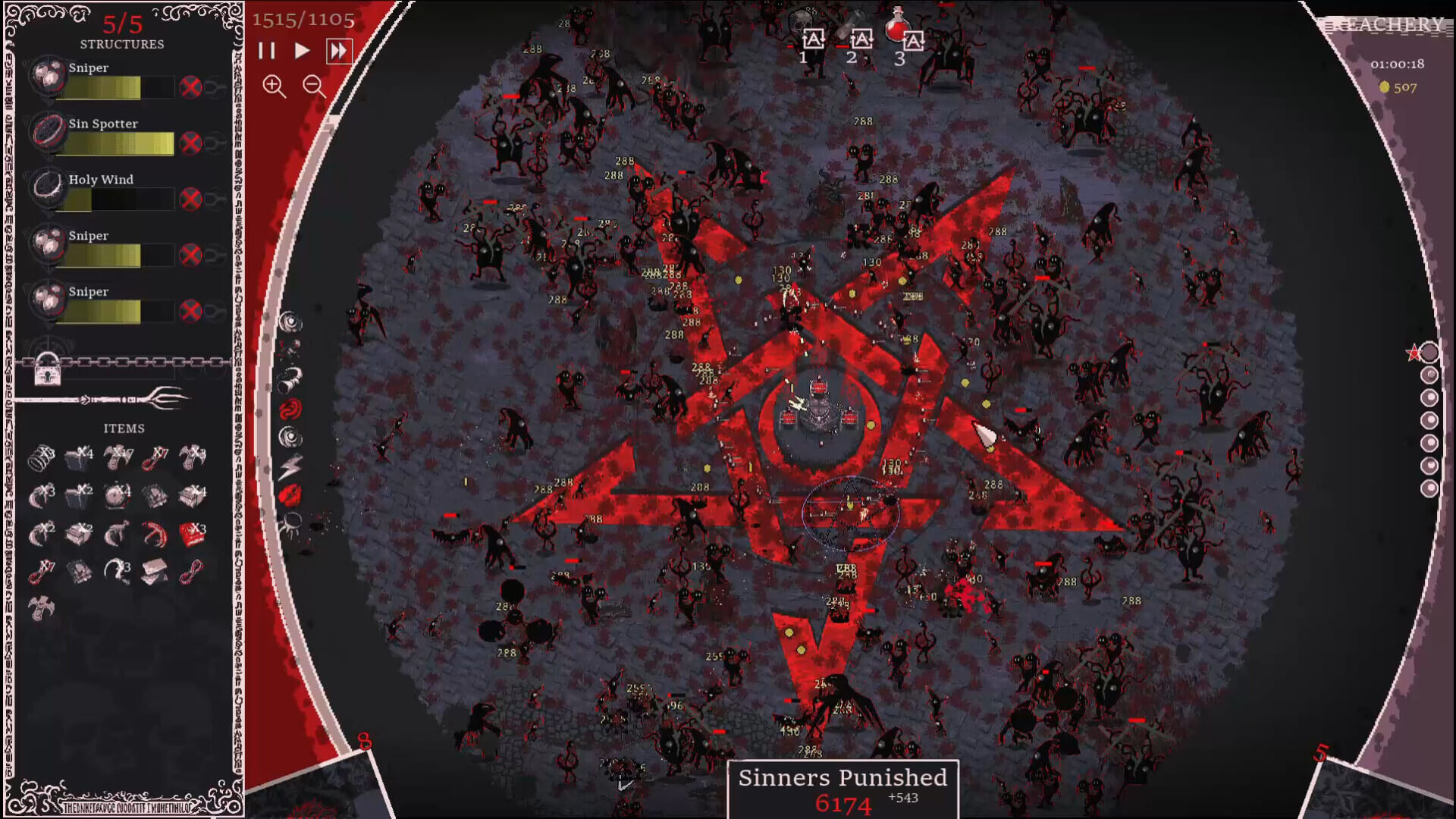
Heretic's Fork replaces a permanent tower tree with cards offered during a run. Those cards add or improve towers, modify their behavior, and steer the defense toward interactions that may not have been available at the start.
The result is buildcrafting under imperfect information. You cannot always follow a preferred route, so the skill lies in recognizing what the current cards can support. An early effect may become the center of the run after later upgrades reinforce it, while a generally powerful card can still be wrong if it pulls the defense in a second direction.
This structure preserves tower defense pressure while adding the improvisation of a roguelite deckbuilder. Your layout still has to hold, but the tools used to create it change from run to run.
Best for: Players who enjoy drafting, short runs, and discovering combinations instead of unlocking one permanent ideal build.
The drawback: Random card offers limit planning. If the pleasure of an upgrade tree is choosing a precise destination in advance, Heretic's Fork provides the opposite experience.
9. Kingdom Rush Vengeance — best approachable tower loadouts
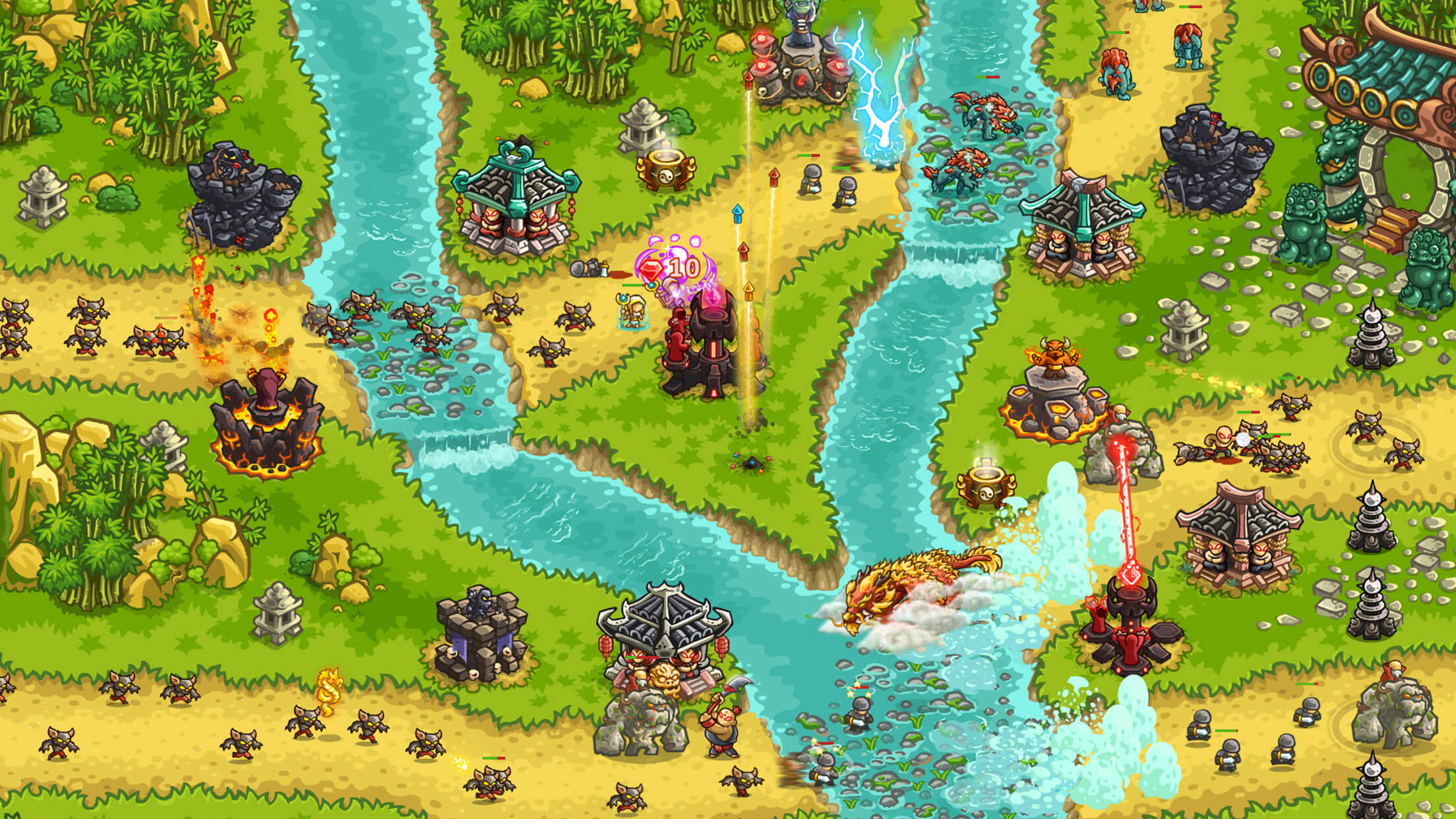
Kingdom Rush Vengeance is less open-ended than the games above it, but its tower roster creates an important pre-map decision: which five tower types are coming with you? That limitation turns progression into loadout design rather than access to every possible answer.
On the map, tower abilities determine how each position develops. One option may add control, another may provide burst damage, and a barracks upgrade may change how long a choke can physically hold enemies in range. Heroes and global upgrades add support without burying the readable lane structure under too many systems.
Its strength is curation. Maps are built around visible paths and compact defensive positions, so new players can understand why a choice worked. The build space is smaller than Bloons TD 6, but the decisions arrive with less noise.
Best for: Players who want polished campaign maps, clear lanes, mobile-friendly pacing, and meaningful upgrades without a giant research spreadsheet.
The drawback: Some towers and heroes are premium purchases depending on the platform, and the strategic ceiling is lower than the most simulation-heavy picks.
10. The Battle Cats — best roster progression
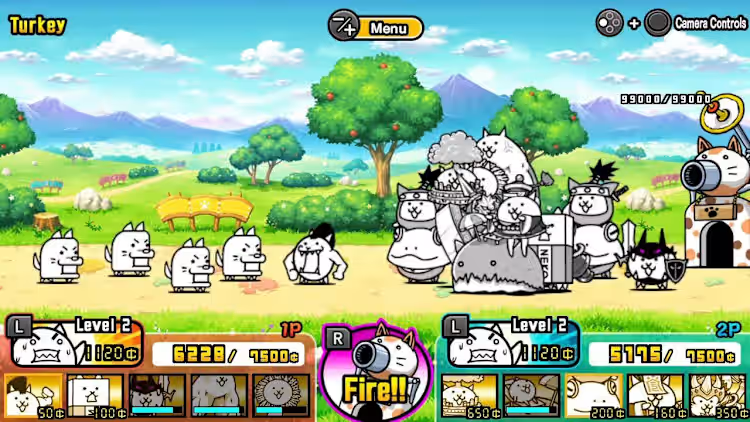
The Battle Cats stretches the tower defense label. You are not placing structures around bends; you are assembling a team, deploying units into a single lane, defending your base, and building enough momentum to destroy the enemy base.
Its progression still changes strategy in meaningful ways. Units level up, evolve into new forms, and can gain talents that alter their role or improve specific matchups. A lineup built for red enemies, floating enemies, armored targets, or disposable frontline bodies behaves differently even when the battlefield itself remains simple.
The placement puzzle becomes a timing puzzle. Cheap units can stall the lane, ranged attackers need protection, and expensive specialists must enter at a moment when the economy and frontline can support them. Roster depth supplies the long-term optimization that the map geometry does not.
Best for: Players who want a huge collectible roster, counter-picks, deployment timing, and years of progression on mobile.
The drawback: It uses free-to-play and gacha systems, and it is only adjacent to classic tower placement. If choke design is the main attraction, stop at the games above it.
Which upgrade system fits you?
Choose by the kind of decision you want progression to create:
- Tower roles and branching paths: Bloons TD 6
- Permanent research and long-term optimization: Infinitode 2
- Gem scaling and endurance: GemCraft: Frostborn Wrath
- Production chains behind the defense: Mindustry
- Traps, physics, and environmental kills: Dungeon Warfare 2
- Character skills and equipment: Defender's Quest
- Heroes, loot, action, and co-op: Dungeon Defenders 2
- Drafted upgrades and run variety: Heretic's Fork
- Curated tower loadouts: Kingdom Rush Vengeance
- Collectible units and deployment timing: The Battle Cats
The key distinction is permanent progression versus in-match commitment. Infinitode 2 and The Battle Cats reward investment across many sessions. Bloons TD 6, GemCraft, and Kingdom Rush ask you to choose how a defense develops during the map. Heretic's Fork makes you adapt to a run-specific draft, while Mindustry expands progression across an entire production network.
FAQ
Which tower defense game has the deepest upgrade tree?
Infinitode 2 has the most prominent permanent research system on this list. If you mean the deepest in-match tower paths and interactions, Bloons TD 6 is the better answer.
Which is best for beginners?
Bloons TD 6 is the strongest starting point because its basic tower roles are easy to understand while higher difficulties leave plenty of room to learn. Kingdom Rush Vengeance is even more curated if you want a shorter campaign structure and fewer simultaneous systems.
Which game has the best trap upgrades?
Dungeon Warfare 2. Its traps have traits and passive progression, while skill trees and equipment let you build around control, environmental kills, or direct damage.
Are all ten traditional tower defense games?
No. Mindustry mixes tower defense with factory automation, Dungeon Defenders 2 adds third-person action and loot, Heretic's Fork uses roguelite card drafting, and The Battle Cats is a roster-based lane battler. They are included because their progression systems meaningfully reshape how the defense works.
The real test: does the upgrade change the map?
A useful upgrade creates a new plan. It changes which choke can hold, how early you must invest, what support a carry tower needs, or how the defense recovers after a leak. A percentage increase may be part of that plan, but it should not be the entire plan.
That is why Bloons TD 6, Infinitode 2, GemCraft: Frostborn Wrath, and Mindustry lead the ranking. Their progression does not simply reward time spent. It changes what a viable defense looks like.