Games Like Bloons TD 6
The best games like Bloons TD 6 if you want polished lane defense, satisfying upgrades, and easy-to-read wave-based strategy.
Games Like Bloons TD 6
Games like Bloons TD 6 work when they nail the same core loop: readable lanes, meaningful tower placement, strong upgrade paths, and waves that pressure your plan without turning into noise. That is the lens for this list.
These picks stay close to classic tower defense. Some lean more tactical, some more arcade, and a few push into trap-heavy or highly technical territory. All of them give you clear routes to defend, a base or endpoint to protect, and enough structure that defensive planning matters more than random chaos.
Quick take
- Kingdom Rush is the safest first pick if you want polished lane defense with hero support and easy map reads.
- Kingdom Rush Frontiers keeps the same lane-first structure but adds more aggressive tower identity and slightly spicier wave pressure.
- Plants vs. Zombies is simpler and lighter, but still one of the cleanest examples of readable lane defense ever made.
- Defense Grid: The Awakening and Defense Grid 2 are the best fits for players who care most about route control and exact tower placement.
- Rogue Tower, Dungeon Warfare 2, GemCraft: Frostborn Wrath, and Infinitode 2 are more niche picks for players who want denser planning, harsher pressure, or longer-term optimization.
The 10 picks
Kingdom Rush
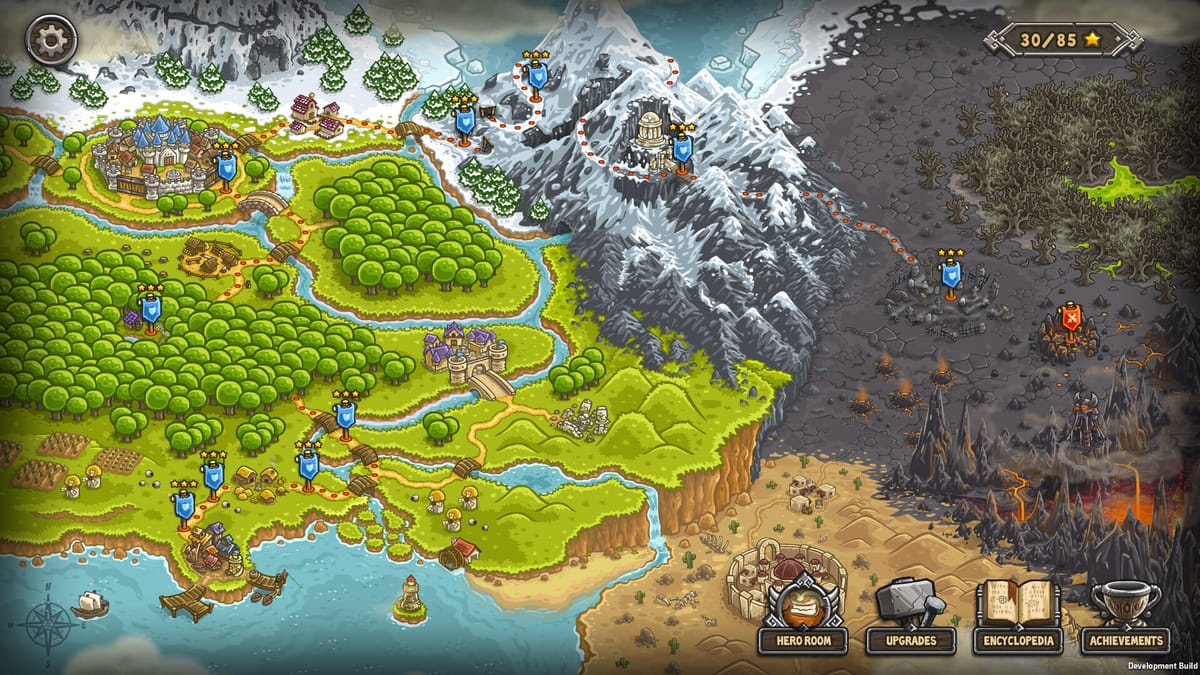
This is the closest all-around match for most players searching for games like Bloons TD 6. The lane defense is clean, the maps are easy to parse, and every stage asks the same useful question: where do you anchor your core towers, and where do you spend on emergency control?
What makes it fit so well is its balance of clarity and activity. You still build around lanes and chokepoints first, but barracks, reinforcements, and hero skills let you actively patch weak spots during waves. That creates the same satisfying rhythm Bloons players know: build a stable defense, react to pressure, then refine for the next run.
Best for players who want classic tower defense with personality and strong map readability. It leans arcade-tactical rather than deeply technical. The tradeoff is that hero abilities and active tools matter more than in stricter, placement-only TDs, so players who want pure tower optimization may prefer Defense Grid instead.
Kingdom Rush Frontiers
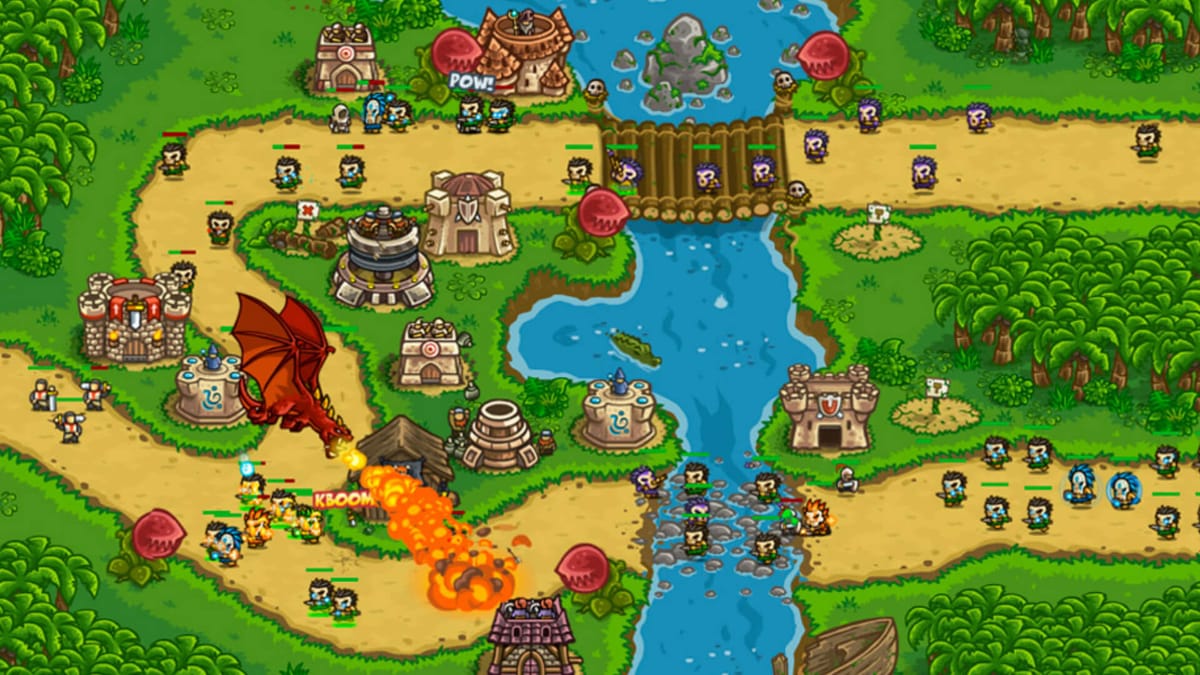
Frontiers is the recommendation for players who liked the sound of Kingdom Rush but want a little more bite in the tower roster and enemy pressure. The defensive loop is still lane-based and highly readable, but the towers feel more specialized and the maps push harder on your ability to cover multiple approaches.
This fits the Bloons TD 6 crowd because upgrades feel impactful without making the battlefield unreadable. You can still look at a lane, identify where the armor is coming from, where the fast units will leak, and which tower branch solves that problem. It respects defensive planning instead of hiding the answer in clutter.
It suits players who want a polished, replayable classic TD that is a touch more aggressive than the original Kingdom Rush. The main reason it may not click is tone and pacing: it is busier, more ability-driven, and less relaxed than Bloons at its most comfortable.
Plants vs. Zombies
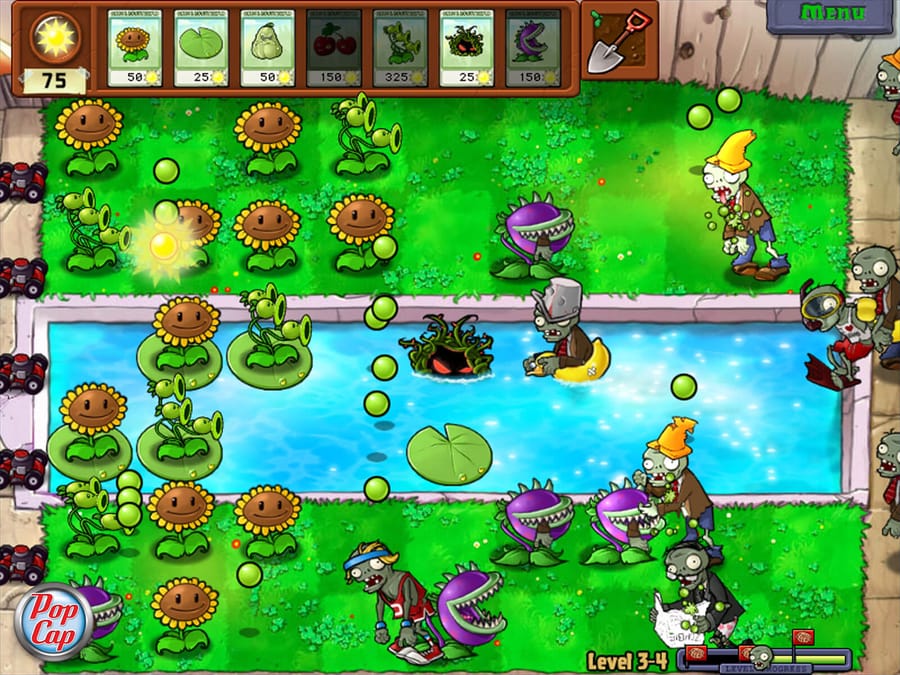
Plants vs. Zombies strips lane defense down to its essentials. Straight rows, clear threat entry points, simple economy management, and instantly readable tower roles make it one of the purest examples of structured wave defense.
For Bloons TD 6 fans, the connection is obvious even if the scale is smaller. You are constantly making efficient placement decisions under pressure: when to invest in economy, when to cover a weak lane, when to stack damage, and when to commit precious slots to utility. The satisfaction comes from reading lane pressure early and solving it with a compact plan.
This is best for players who value clarity over complexity and want a more approachable defensive loop without losing lane discipline. The tradeoff is depth ceiling. Compared with Bloons TD 6, the long-term upgrade experimentation and tower-path complexity are much lighter.
Defense Grid: The Awakening
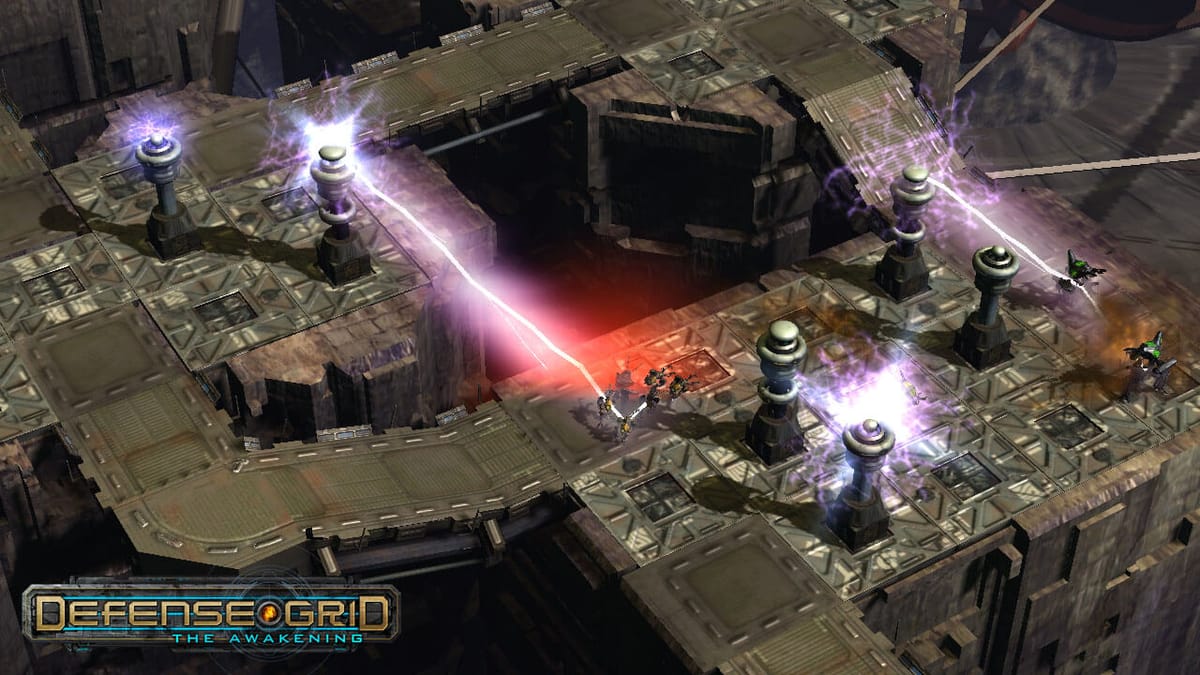
Defense Grid: The Awakening is for the player who cares less about charm and more about exact route control. This is classic tower defense in a sharper, more engineered form. You study lanes, shape kill zones, and squeeze value from placement angles rather than relying on flashy active tools.
It belongs high on a list of games like Bloons TD 6 because it delivers the same core reward: a map that becomes increasingly manageable as you understand enemy flow and tower coverage. But its flavor is more tactical than arcade. You are often thinking about how to force enemies through longer paths, where splash damage overlaps best, and how to hold the line with minimal waste.
Best for players who want a cleaner, more systems-first defense game with strong lane logic and less hero micromanagement. The tradeoff is presentation. It is drier, less playful, and less immediately expressive than Bloons or Kingdom Rush.
Defense Grid 2
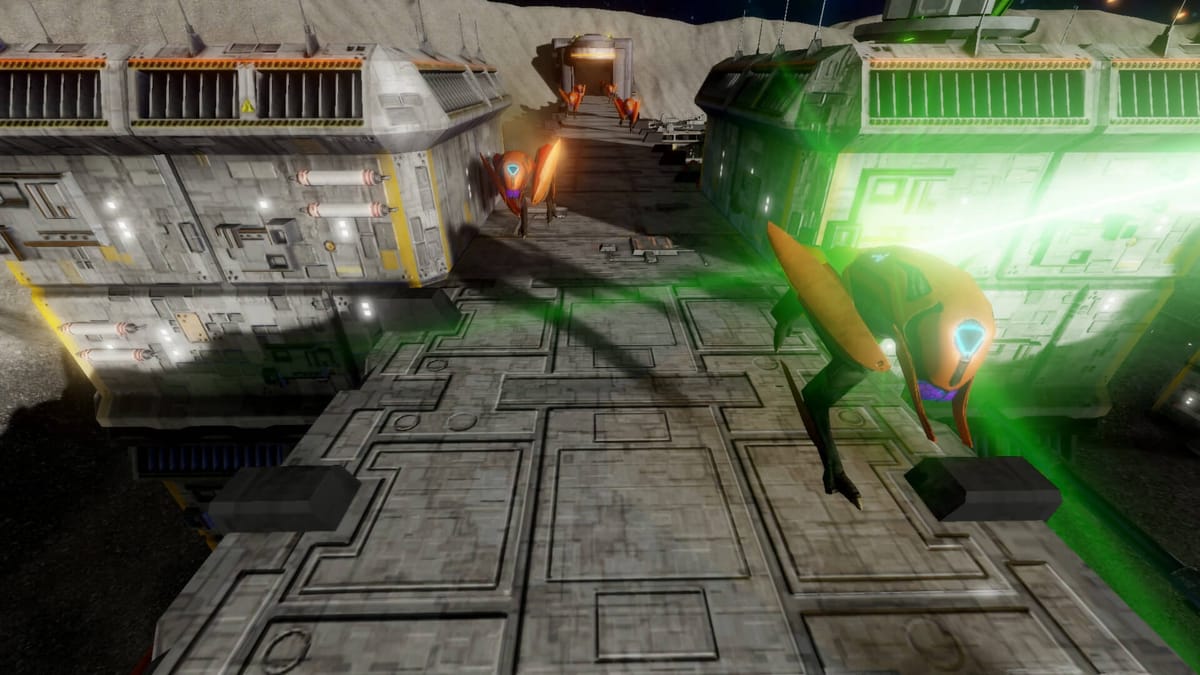
Defense Grid 2 takes the route-control strengths of the first game and gives them a more modern feel. The core defense loop is still about lanes, endpoint protection, and high-value placement, but the pacing is smoother and the overall structure feels broader.
Why it fits this article is simple: it understands that good classic tower defense lives or dies on map flow. You are not just placing damage towers at random. You are building around corners, travel time, overlap, and wave timing. That is the same kind of readable planning that makes Bloons TD 6 replayable.
This one is ideal for players who liked the sound of Defense Grid but want a slightly more expansive package. The reason it may not click is also the reason some people love it: it stays committed to a precise, less whimsical style. If you want more playful tower personalities, Kingdom Rush still lands better.
Rogue Tower
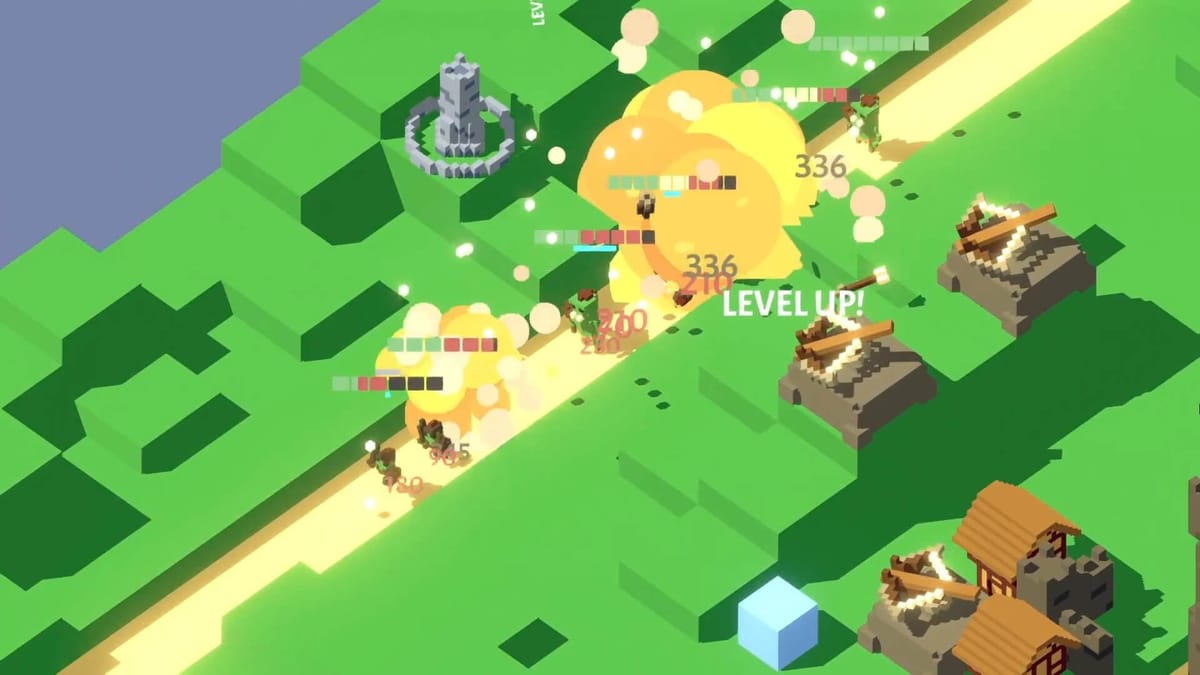
Rogue Tower is a much more specific recommendation. The defense loop revolves around expanding a path, creating future lane shape as you go, and then trying to survive scaling wave pressure with increasingly strained tower coverage. It is lane defense, but unstable lane defense.
That makes it a fit for Bloons TD 6 players who enjoy adaptation as much as optimization. You still care about chokepoints, tower synergy, and where to commit upgrades, but the map can become awkward by design. Instead of solving a fixed route cleanly, you are often salvaging a defense as lane geometry grows messier.
Best for players who want a more experimental, survival-leaning version of classic tower defense. The tradeoff is consistency. Its procedural structure can create less elegant maps than the carefully authored stage design in Bloons TD 6, so it will not scratch the same polished puzzle feel every run.
Dungeon Warfare 2
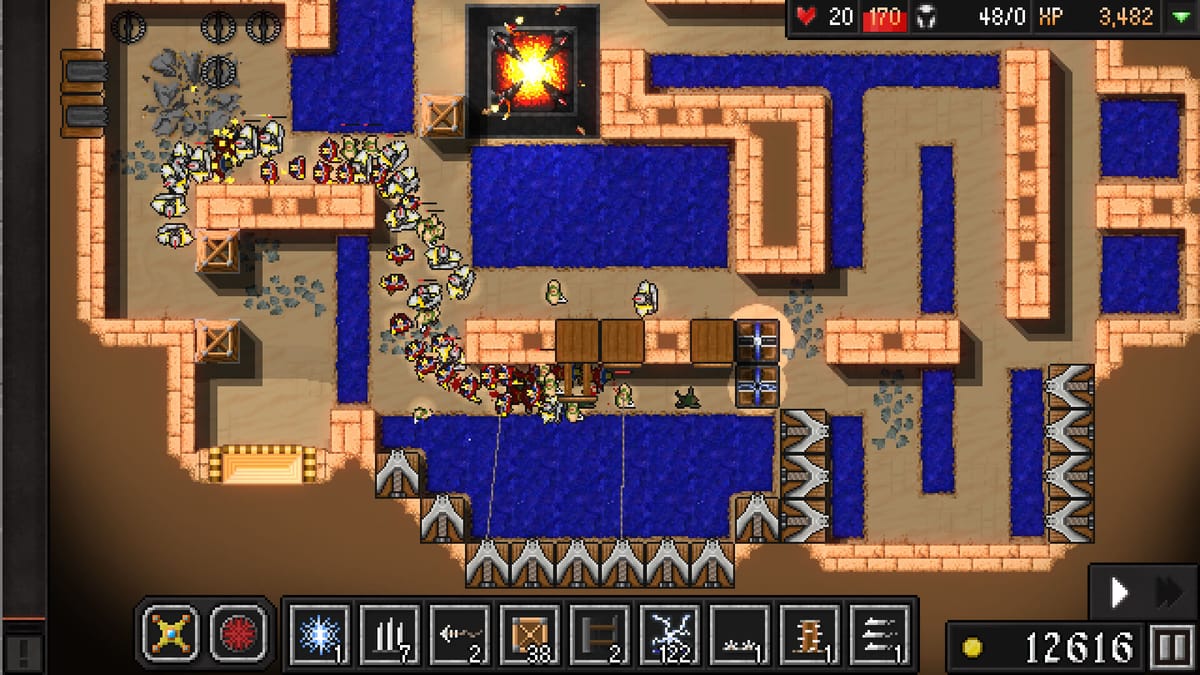
Dungeon Warfare 2 shifts the center of gravity from traditional tower lines to trap-heavy hold-the-line defense. Instead of simply placing damage towers along obvious lanes, you turn corridors into kill chambers with forced movement, knockback, and layered hazard timing.
It still fits here because the heart of the experience is route control and choke management. You are reading enemy pathing, setting up pressure points, and making sure waves die before they break through your stronghold. For players who enjoy Bloons when it feels most system-driven, this can be a great change of pace.
This is the right pick for players who want a more tactical, physics-aware defensive loop and do not mind a harsher, more mechanical tone. The reason it may miss is that it is less about broad tower roster fantasy and more about trap interaction mastery. If you want colorful lane defense with lighter execution demands, look higher on the list.
GemCraft: Frostborn Wrath
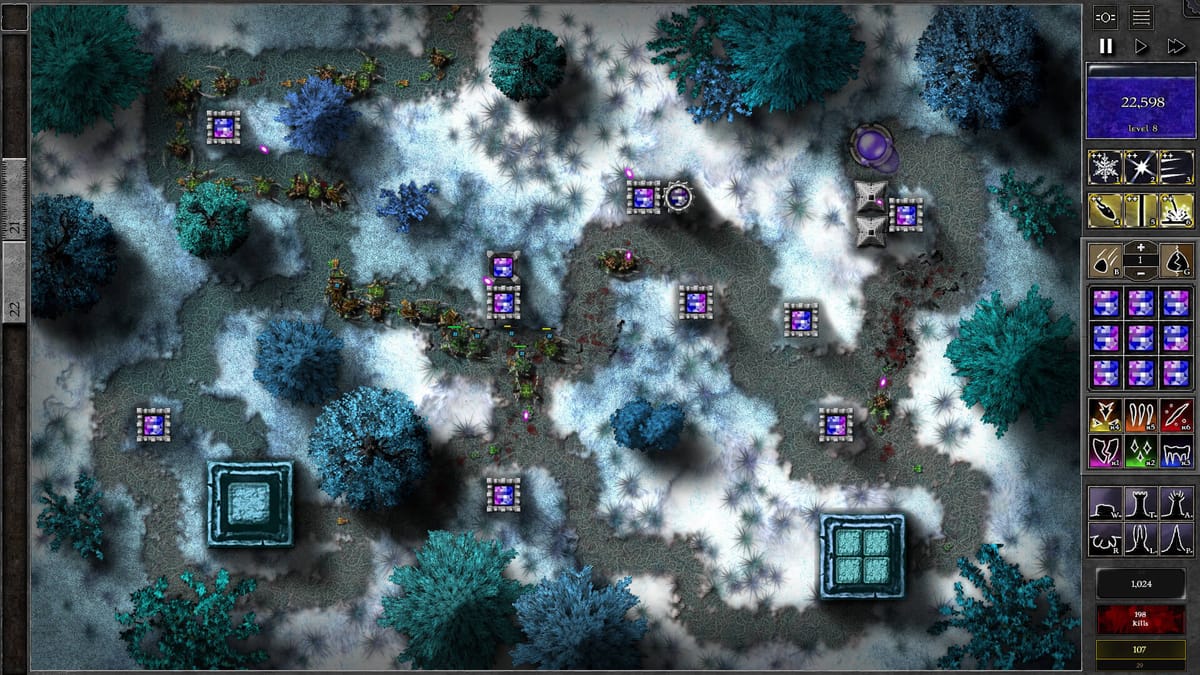
GemCraft: Frostborn Wrath is the dense, grindy, deeply systems-heavy option. Its defense loop revolves around building kill zones, amplifying towers and traps with gem combinations, and surviving long-form wave pressure that rewards planning well ahead of the current lane state.
For the right Bloons TD 6 player, this absolutely fits. The appeal is not surface similarity so much as upgrade depth and defensive scaling. You are still controlling routes, protecting endpoints, and deciding where your strongest firepower belongs, but the optimization layer is much heavier and more technical.
This is best for players who want long-term progression and are happy spending time learning how systems stack. The tradeoff is readability. Compared with Bloons TD 6, it is less breezy, less instantly legible, and much more willing to drown you in numbers and layered mechanics.
Infinitode 2
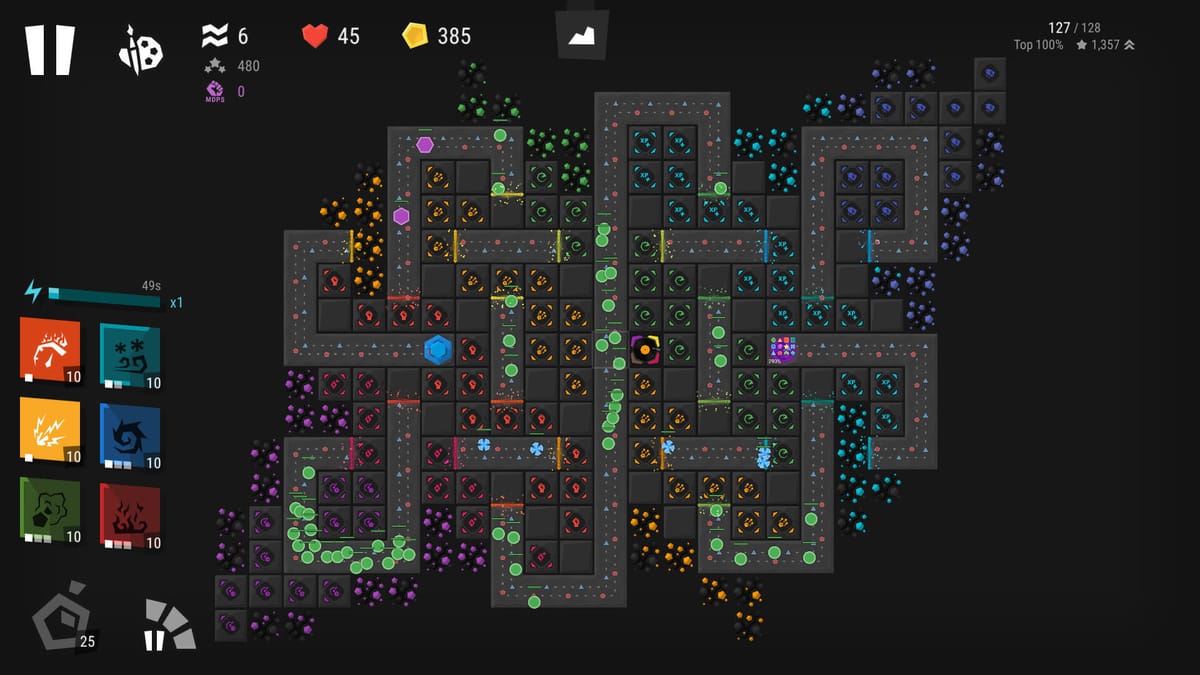
Infinitode 2 is the minimalist optimizer's pick. The maps, visuals, and tower presentation are stripped down, but the lane defense underneath is extremely focused on efficiency, scaling, and repeatable upgrade planning.
It belongs on this list because it captures one of the most important things Bloons TD 6 players often want next: a game that feels good to revisit because every run teaches better placement, stronger tower priorities, and cleaner wave management. You are always making cost-to-coverage decisions, figuring out where a lane breaks, and smoothing out weak points in your defense grid.
This suits players who enjoy the math and structure of tower defense more than theme or spectacle. The tradeoff is obvious: if part of your Bloons attachment comes from charm, visual personality, or expressive tower identity, Infinitode 2 can feel clinical.
Kingdom Rush 5: Alliance TD
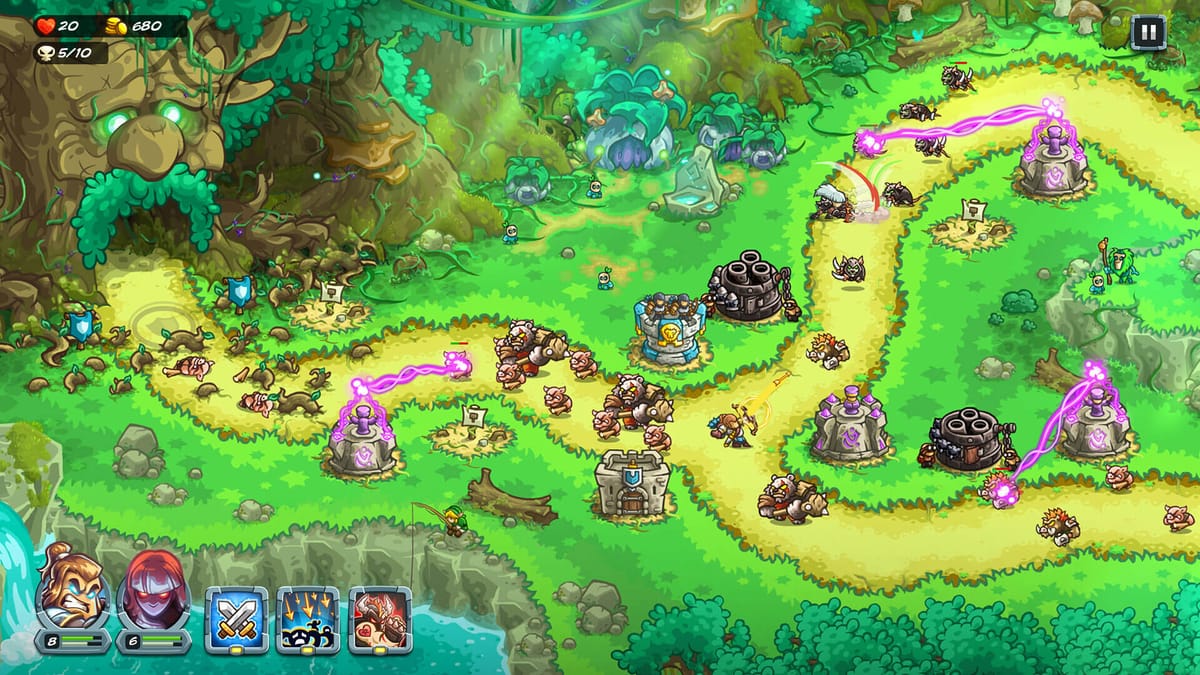
Alliance TD closes this list because it is still a strong fit, but it is the most conditional of the Kingdom Rush recommendations. The core remains classic lane defense with heroes, towers, and stage-based wave handling, yet the emphasis on paired hero play changes the feel of battlefield control.
There is still plenty here for a Bloons TD 6 player: readable map layouts, chokepoints that matter, tower branches that solve specific lane problems, and enough replayable stage pressure to keep experimenting. But compared with the earlier Kingdom Rush entries, this one leans a bit harder into active unit involvement.
It works best for players who like classic TD structure but want more hero presence layered over their tower plan. The tradeoff is that the stronger hero focus can dilute the pure lane-and-upgrade satisfaction some players are chasing when they search for games like Bloons TD 6.
Which type of player will enjoy these most
Players who love clean lane reads and predictable wave structure will get the most from the top half of this list. Kingdom Rush, Frontiers, Plants vs. Zombies, and both Defense Grid games all make it easy to understand where pressure is coming from and how your tower placement changes the map.
If your favorite part of Bloons TD 6 is refining builds, squeezing more value from upgrades, and replaying maps with better efficiency, the lower half gets more interesting. Rogue Tower, GemCraft: Frostborn Wrath, and Infinitode 2 all reward repeated runs and tighter optimization, but they ask for more patience.
Players who want strict classic tower defense should start with Kingdom Rush or Defense Grid. Players who enjoy lane control plus mechanical interactions should look harder at Dungeon Warfare 2. If you mainly want light, readable, low-friction defense, Plants vs. Zombies is still one of the cleanest answers.
What matters most when picking your next game
The first decision is how much structure you want in the lanes. Bloons TD 6 feels good partly because maps are readable and routes are deliberate. If that is the exact feeling you want, choose authored-map games like Kingdom Rush or Defense Grid. If you are okay with messier adaptation, Rogue Tower makes more sense.
Second, decide whether you want pure placement strategy or active battlefield management. Bloons sits in a comfortable middle ground. Kingdom Rush pushes more hero and ability interaction. Defense Grid pulls toward placement precision. Dungeon Warfare 2 pushes trap timing and forced movement.
Third, pay attention to readability versus system depth. Some players say they want bloons td 6 alternatives, but what they really want is another polished lane defense game that is easy to read at a glance. That points to Plants vs. Zombies or Kingdom Rush. If what you actually want is a deeper optimization sink, GemCraft: Frostborn Wrath or Infinitode 2 will land better.
A common mistake is chasing "more content" instead of chasing the same defensive feel. Bloons TD 6 works because lane pressure, upgrades, and tower roles stay understandable even when the screen gets busy. The best pick for you is the one that preserves that clarity at the level of complexity you actually enjoy.
FAQ
What is the closest game to Bloons TD 6 on this list?
Kingdom Rush is the safest overall answer. It matches the polished feel, readable lanes, strong upgrades, and replayable stage structure better than anything else here, even though it uses heroes and reinforcements more actively.
Are these all classic tower defense games?
Most are, but not in exactly the same way. Kingdom Rush, Plants vs. Zombies, Defense Grid: The Awakening, Defense Grid 2, and Infinitode 2 are the cleanest classic fits. Dungeon Warfare 2 is more trap-heavy, and Rogue Tower is more experimental, but both still center on route defense and wave survival.
Which pick is best for pure lane control and tower placement?
Go with Defense Grid: The Awakening or Defense Grid 2. Those games are the most placement-driven and the least distracted by hero actions or side systems. They are excellent tower defense games like Bloons TD 6 for players who want route shaping to matter most.
What should I play if I want something simpler and more readable?
Plants vs. Zombies. It is lighter than Bloons TD 6, but its lane structure is incredibly clear and the defensive decisions are immediate. It is the easiest recommendation here for players who want low-friction wave defense.
Which game here is the most demanding?
GemCraft: Frostborn Wrath is probably the heaviest in terms of systems and optimization load. Infinitode 2 can also get very technical. They are great fits for players who want long-term mastery, but they are less welcoming if you mainly want relaxed lane defense.
Takeaway
The best games like Bloons TD 6 are the ones that keep lane defense readable while still giving you meaningful tower upgrades and steady wave pressure. Start with Kingdom Rush if you want the safest match, move to Defense Grid if placement precision matters most, and dip into Rogue Tower, GemCraft: Frostborn Wrath, or Infinitode 2 if you want your next hold-the-line game to be more demanding.