Best Tower Defense Games for Beginners
Beginner-friendly tower defense games with readable lanes, clear upgrades, and a smoother learning curve for new players.
Best Tower Defense Games for Beginners
The best tower defense games for beginners teach lane control, tower placement, and wave timing without burying you in messy systems. Good onboarding matters here. New players need readable paths, clear upgrade choices, and enough room to recover from early mistakes.
This list stays focused on classic tower defense. That means lanes, towers, route control, and wave-based planning rather than base-building sprawl or action-heavy hybrids. These picks are for new players who want to learn core defensive fundamentals first, then decide how tactical, arcade, or complex they want their hold-the-line games to become.
Quick take
- Bloons TD 6 is the safest first pick. Clear lanes, strong visual readability, and tower upgrades that teach core defense logic without feeling dry.
- Kingdom Rush is ideal if you want faster pacing and stronger hero presence, but still within a very readable lane-defense structure.
- Plants vs. Zombies remains one of the best onboarding games in the genre because every lane decision is easy to read at a glance.
- Defense Grid: The Awakening is where beginners should go next if they want stricter route control and more tactical tower placement.
- Dungeon Warfare fits players who like traps, chokepoints, and killbox planning more than traditional lane coverage.
The picks
Bloons TD 6
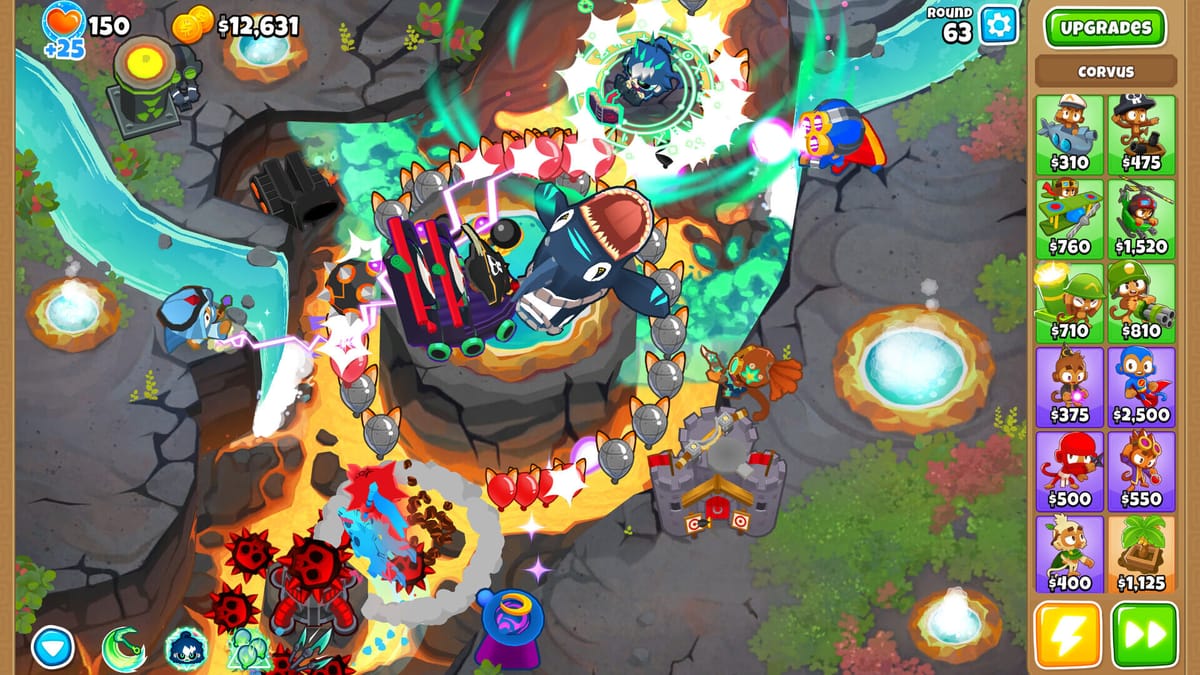
This is the best starting point for most new players because it explains tower defense through clean lane pressure and obvious tower roles. Even when maps get busy, the path structure is readable, ranges are clear, and upgrade paths communicate their purpose well. You can learn the basics of coverage, damage types, support placement, and wave scaling without fighting the interface.
Its defense loop is pure classic tower defense: fixed routes, wave pressure, tower placement, and layered upgrades. That makes it a direct fit for this list. It teaches fundamentals that transfer cleanly to other beginner tower defense games, especially target priority, overlap, economy timing, and the difference between early stabilizing towers and late-wave carries.
It fits players who want a smooth ramp from casual to tactical. You can start by reacting to what leaks through, then gradually learn stronger lane planning and better upgrade timing. It also works well for players who enjoy a more arcade-forward presentation but still want real strategy underneath.
The tradeoff is that it can eventually become system-heavy. Once you move past the basics, there are many tower interactions, mode variations, and optimization layers. That depth is a strength long term, but brand-new players who want the absolute simplest ruleset may find the later complexity a little dense.
Kingdom Rush
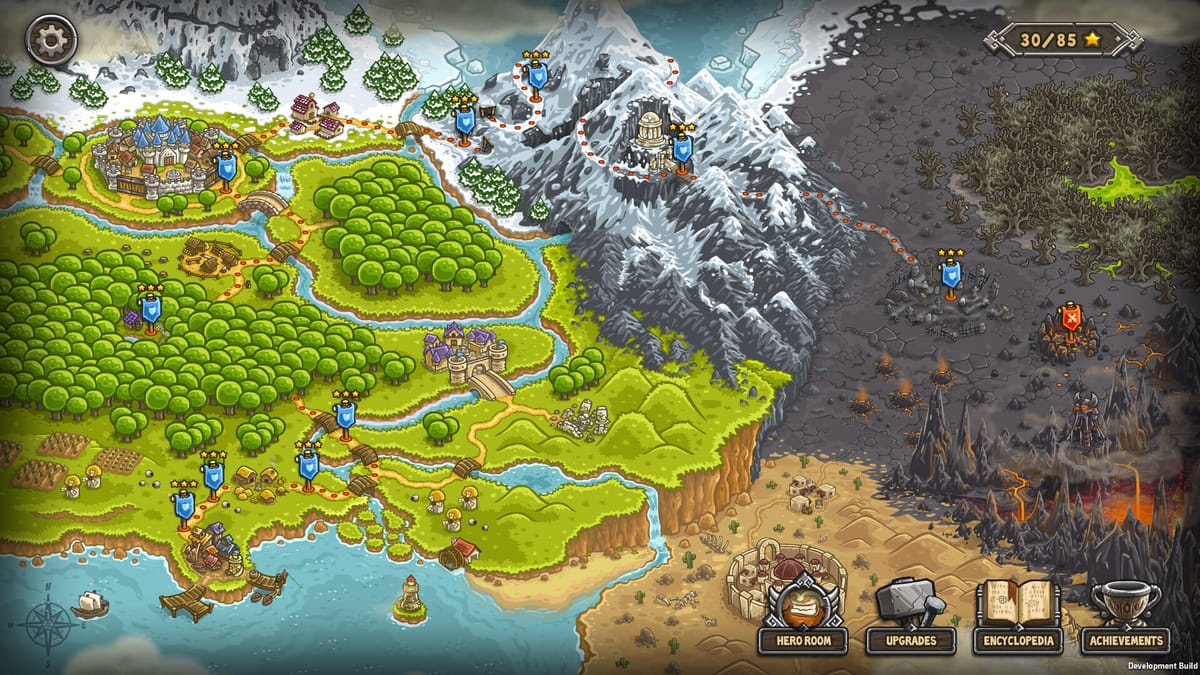
Kingdom Rush is one of the cleanest examples of lane defense with immediate feedback. Maps are built around visible roads, obvious choke areas, and tower spots that invite clear decisions. You can look at a stage and quickly understand where artillery belongs, where barracks can stall a lane, and where archer or mage coverage should overlap.
For beginners, that readability matters more than raw depth. This game teaches core route control extremely well. Barracks introduce the idea that tower defense is not only about damage per second; it is also about slowing wave flow, holding enemies in kill zones, and managing pressure at key bends in the path. That makes it one of the best tower defense games for beginners who want to learn planning instead of just spamming damage.
It is best for players who like a slightly more active defense style. Hero use and timed abilities give you tools to correct mistakes, which is useful when you are still learning lane priorities. The pacing is faster and more animated than stricter tactical TD games, but the defensive structure stays easy to follow.
The reason it may not click is that it is less open-ended than some other picks here. Tower spots are fixed, so the challenge is about choosing the right defensive mix rather than building your own route logic from scratch. If you want maximum freedom in placement, this can feel a little constrained.
Plants vs. Zombies
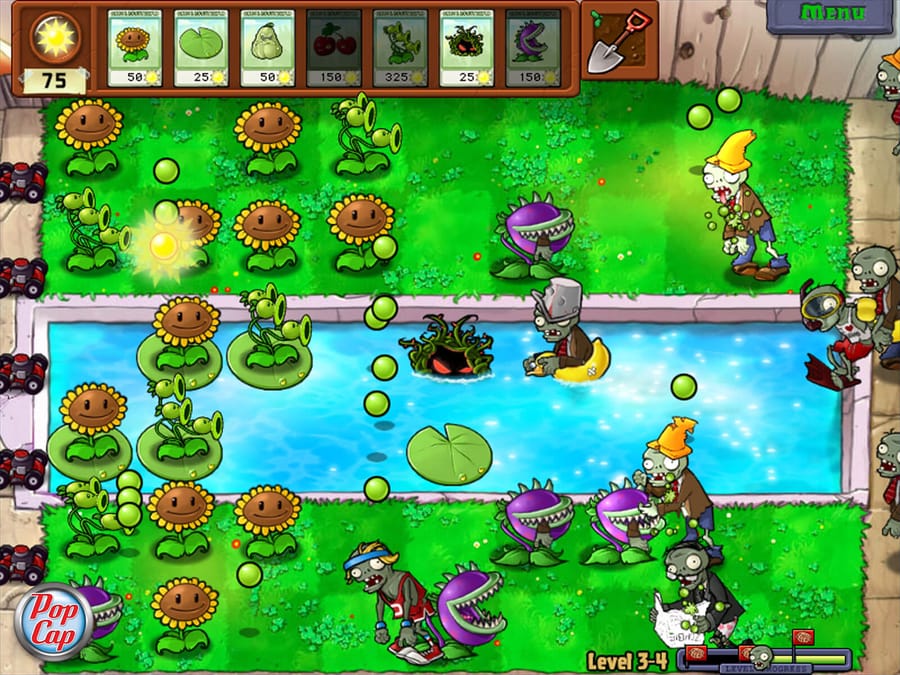
Plants vs. Zombies strips tower defense down to one of the clearest lane structures the genre has ever produced. Five to six lanes, visible enemy approach, simple resource generation, and plant roles that are easy to understand within minutes. For a new player, that clarity is hard to beat.
Its defense loop is lane defense in the purest sense: build economy, stabilize each lane, respond to new enemy pressure, and avoid weak rows before a wave spikes. Because every lane is separated, the game teaches a critical beginner lesson: one bad lane can lose the whole defense. You learn to read pressure horizontally, manage timing, and decide when to add damage versus when to shore up a weak point.
This is the right fit for players who want easy tower defense games that still teach fundamentals. It is especially good for people who bounce off dense upgrade trees or games with too much information on screen. The map readability is excellent, and the early game does a strong job of introducing one defensive problem at a time.
The tradeoff is long-term tactical depth. Plants vs. Zombies is highly polished and smart, but it is also simpler than most of the other games on this list in terms of route control and tower customization. That simplicity is why it ranks so high for beginners, but players chasing more granular optimization will eventually want to move on.
Defense Grid: The Awakening
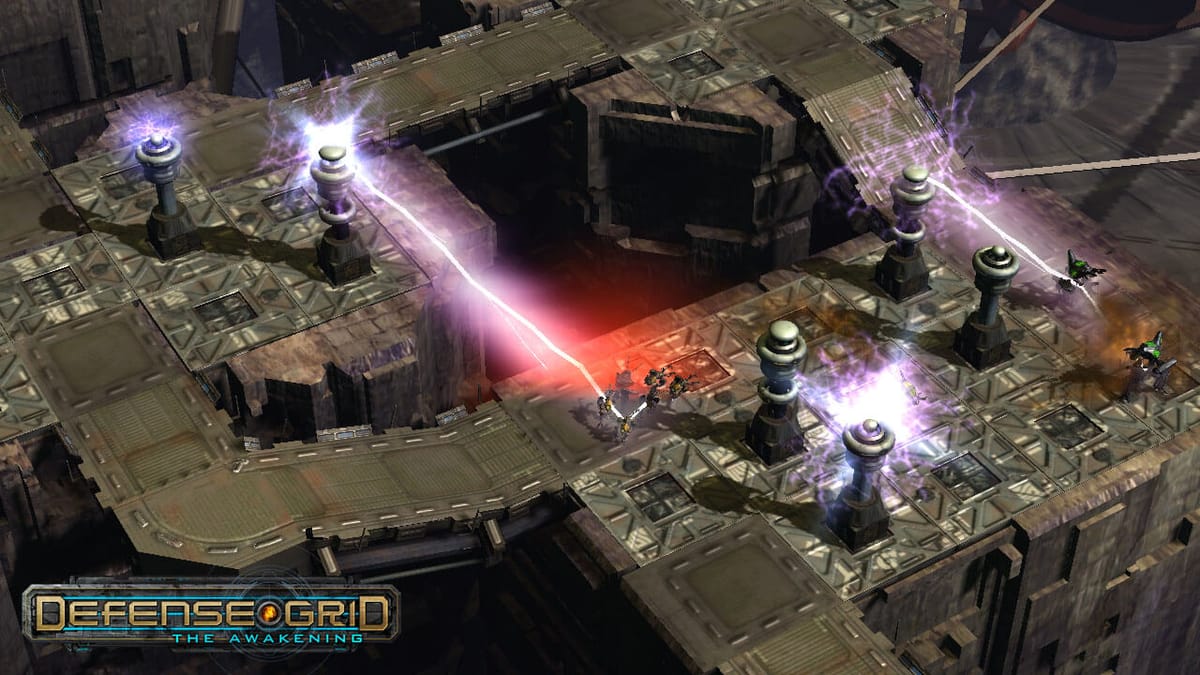
Once you want stricter lane manipulation, Defense Grid is the next step. It is more tactical than the top three picks, and it cares more about path shaping, killbox planning, and exact tower placement. The maps ask you to think about how your defenses force enemy movement and where to extract the most value from overlapping fire.
That makes it a strong fit for this article, even if it is not the softest onboarding option in the top half. It still teaches clean fundamentals, but with less hand-holding and more emphasis on route control. If Bloons TD 6 and Kingdom Rush teach what towers do, Defense Grid teaches why position matters just as much as tower type.
This one fits methodical players. If you like pausing, reading lanes, and building a defense that funnels waves through efficient chokepoints, it lands well. It is less arcade, more planning-heavy. The feedback loop is satisfying because small adjustments in placement can noticeably improve wave control.
The drawback is that it can feel less forgiving early on. Poor placements hurt more, and the game expects you to understand lane flow sooner. Beginners who want the most relaxed learning curve should start with the higher-ranked picks before moving here.
Dungeon Warfare
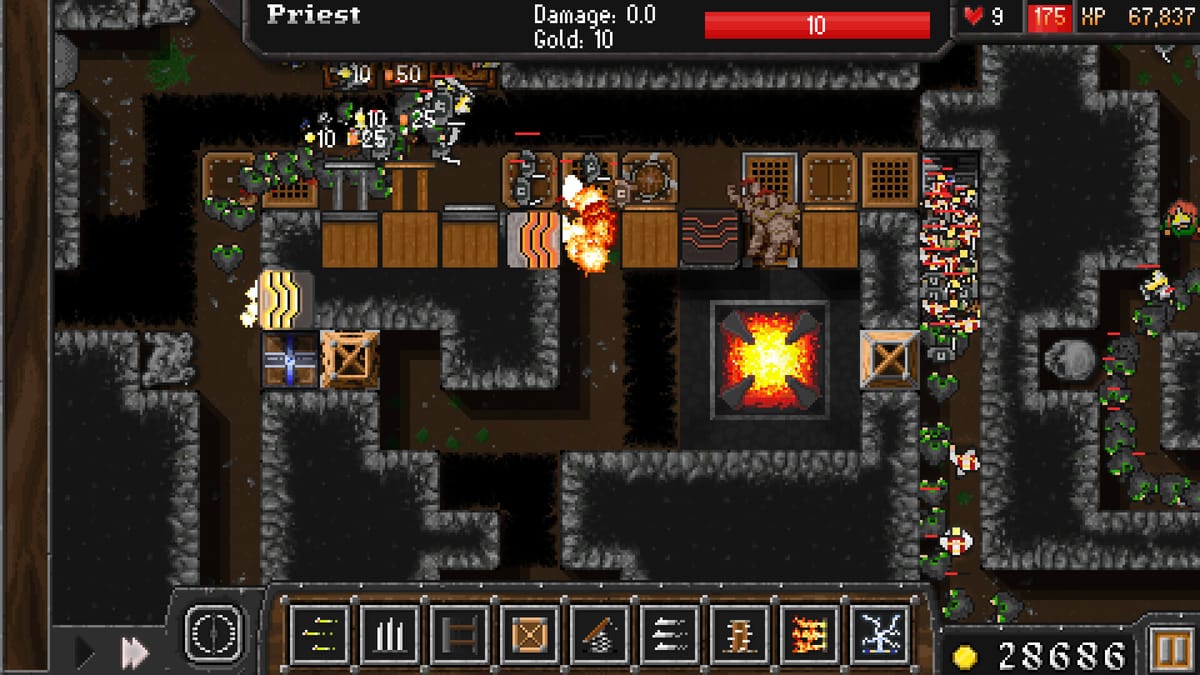
Dungeon Warfare shifts the beginner-friendly formula away from standard tower rows and toward trap-heavy defense. The loop is still wave-based and lane-driven, but the real focus is on chokepoints, forced movement, knockback, and trap combinations. You are building a kill corridor, not just covering a route with damage towers.
That is exactly why it belongs here. It teaches another core side of classic defensive planning: controlling where enemies spend time. Instead of asking only, "Which tower hits hardest?" it asks, "How do I keep enemies in danger longer?" For new players curious about traps, route denial, and compact map setups, it is an excellent bridge into more systems-driven defense design.
It fits players who enjoy tactical setups and visible cause-and-effect. Trap placement is readable, maps are contained, and the defensive logic is easy to grasp once you understand how enemy movement interacts with hazards. It is less about broad map coverage and more about engineered choke pressure.
The tradeoff is that it is not the most traditional beginner TD. If someone specifically wants the classic feeling of placing towers along lanes and upgrading standard damage types, this may feel like a side branch of the genre rather than the first stop.
Infinitode 2
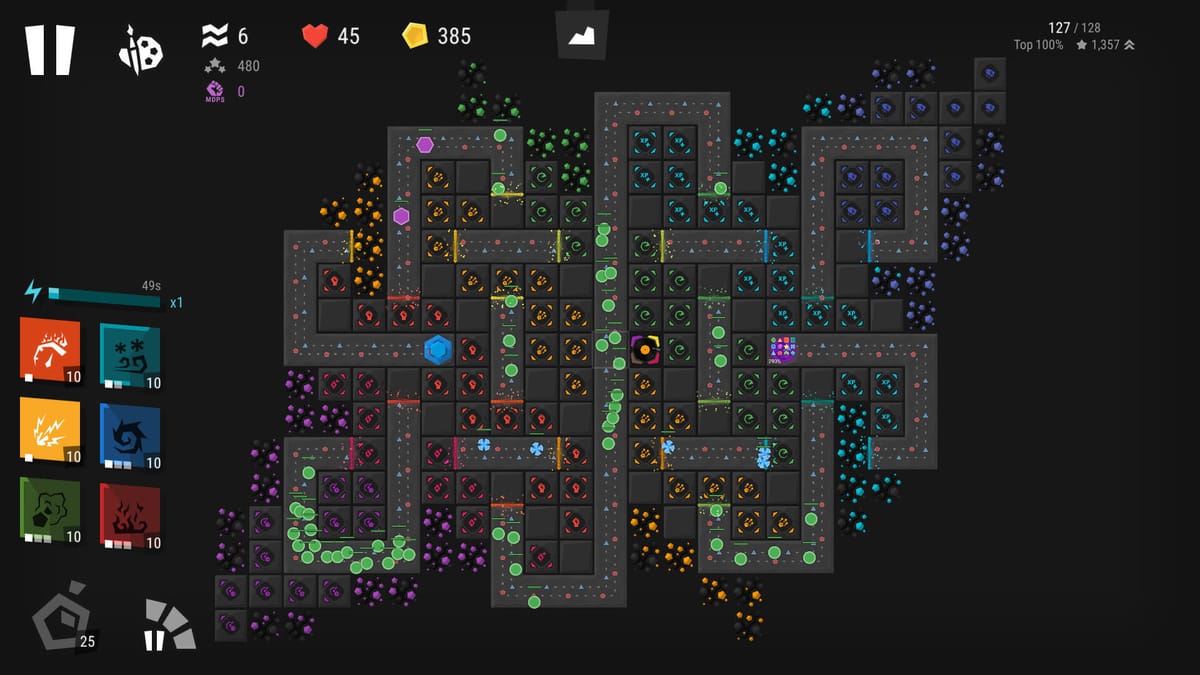
Infinitode 2 is the most system-forward game in this list that still earns beginner consideration. At its core, the defense loop is pure classic TD: defend fixed paths, place specialized towers, upgrade efficiently, and survive scaling waves. It fits because the actual lane structure is clean, the mechanics are transparent, and the game communicates numbers well.
What pushes it lower is not the lane defense itself, but the amount of progression and optimization wrapped around it. New players who enjoy understanding how systems work will appreciate that. You can see what towers are doing, why a setup fails, and how an upgrade changes your hold on a lane. It is a good match for players who want beginner tower defense games with room to grow into deeper planning.
This is best for analytical players who like clarity more than spectacle. The presentation is minimal, but that can help. It keeps attention on route coverage, firing patterns, and upgrade efficiency instead of visual chaos. If you want to study the defense loop, it is strong.
The downside is obvious: it can feel dry. Players who need character, theme, or stronger visual excitement may bounce off its stripped-down style before they appreciate how good the underlying lane strategy is.
GemCraft: Frostborn Wrath
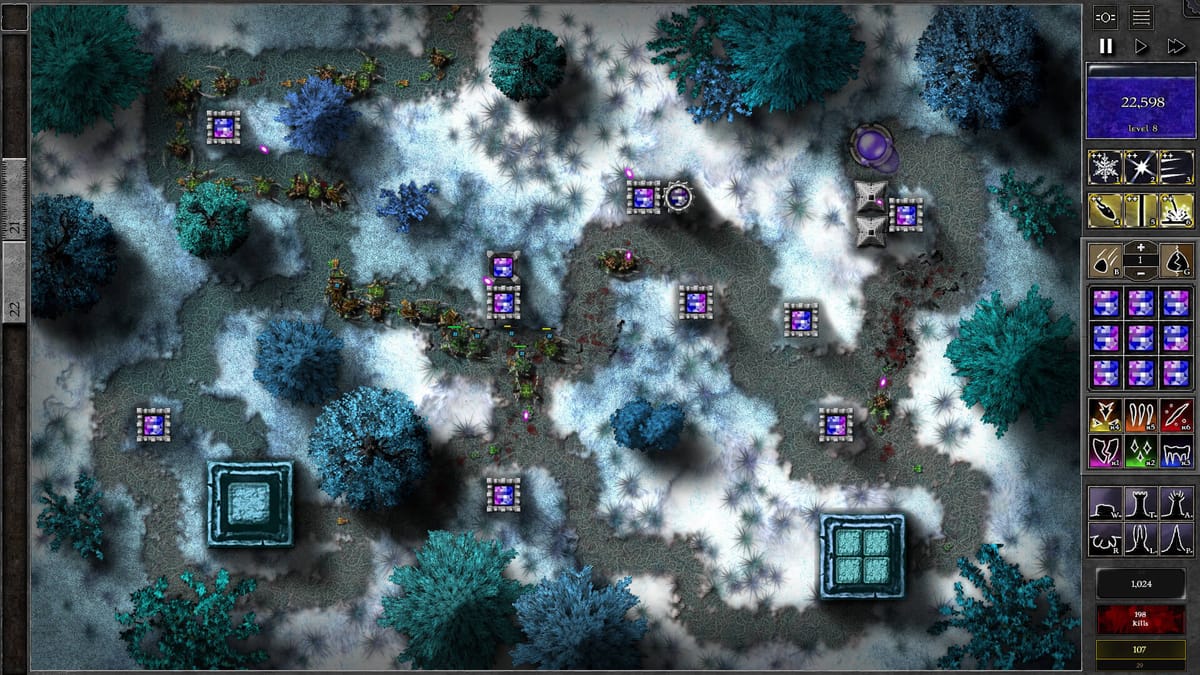
GemCraft: Frostborn Wrath is for beginners who already know they want depth and do not mind a steeper climb. The defense loop revolves around lanes, towers, gems, amplification, and sustained wave pressure, but the real draw is how much control you get over scaling damage and defensive specialization.
It fits this article because it is still fundamentally about route defense, tower placement, and wave planning. The difference is that the game asks more from you. Instead of broad beginner readability as its main strength, it offers a more technical version of classic TD where understanding your build matters a lot. That makes it a lower-ranked recommendation here: still valid, but more conditional.
This is a strong fit for players who enjoy tinkering and want a game they can grow into rather than quickly outgrow. If you like seeing a defensive setup evolve through layered upgrades and compounding choices, it has real staying power.
The tradeoff is onboarding friction. Compared with the higher-ranked entries, it is less immediate and less forgiving. New players who are still learning basic lane priorities may find the extra systems more demanding than helpful.
Kingdom Rush Origins
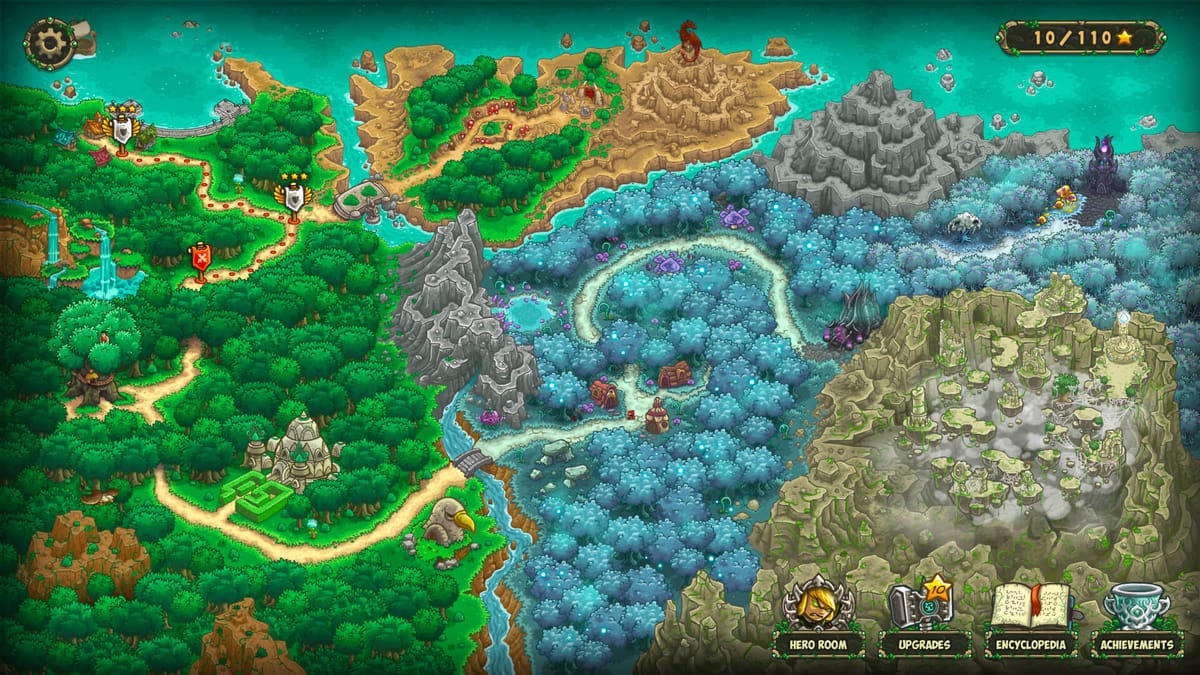
Kingdom Rush Origins is still beginner-friendly, but it lands lower because it makes the most sense after regular Kingdom Rush, not before it. The core loop is familiar: fixed tower sites, lane pressure, choke control, barracks stalling, and active hero support. If you already know you like that structure, Origins gives you more of it with a slightly more specialized feel.
It belongs on this list because the lane readability is strong and the defensive planning remains approachable. You still get the same clean relationship between map layout and tower role. New players can read the roads, identify high-value bends, and understand where stall tactics create better tower uptime.
This fits players who want polished lane defense with a touch more complexity than the base Kingdom Rush formula. It is still accessible, but it assumes you are ready for more tower interactions and less of the pure first-timer simplicity that makes the original such a safe recommendation.
The reason it may not click as a first-ever tower defense game is simple: there is less reason to start here than with Kingdom Rush itself. It is a good second step, not the best entry point.
Which type of player will enjoy these most
These games click best for players who want clear defensive information. You should be able to look at a map, identify the lanes, understand where enemies will pressure your line, and make placement decisions without reading ten hidden systems first.
They are especially good for:
- Players who want to learn tower roles clearly: damage, stall, splash, support, economy
- New players who prefer readable lanes and obvious chokepoints over chaotic maps
- People who like wave-based planning more than action-heavy manual combat
- Players who want room to recover from mistakes instead of losing instantly to one bad build
- Anyone trying to understand the difference between arcade-forward TD and more tactical route-control TD
If you want heavy base-building, direct hero combat, or survival crafting layered on top of defense, this is the wrong subset. These picks are here to teach classic tower defense first.
What matters most when picking your next game
For the best tower defense games for beginners, the first question is not difficulty. It is readability.
Look for these traits first:
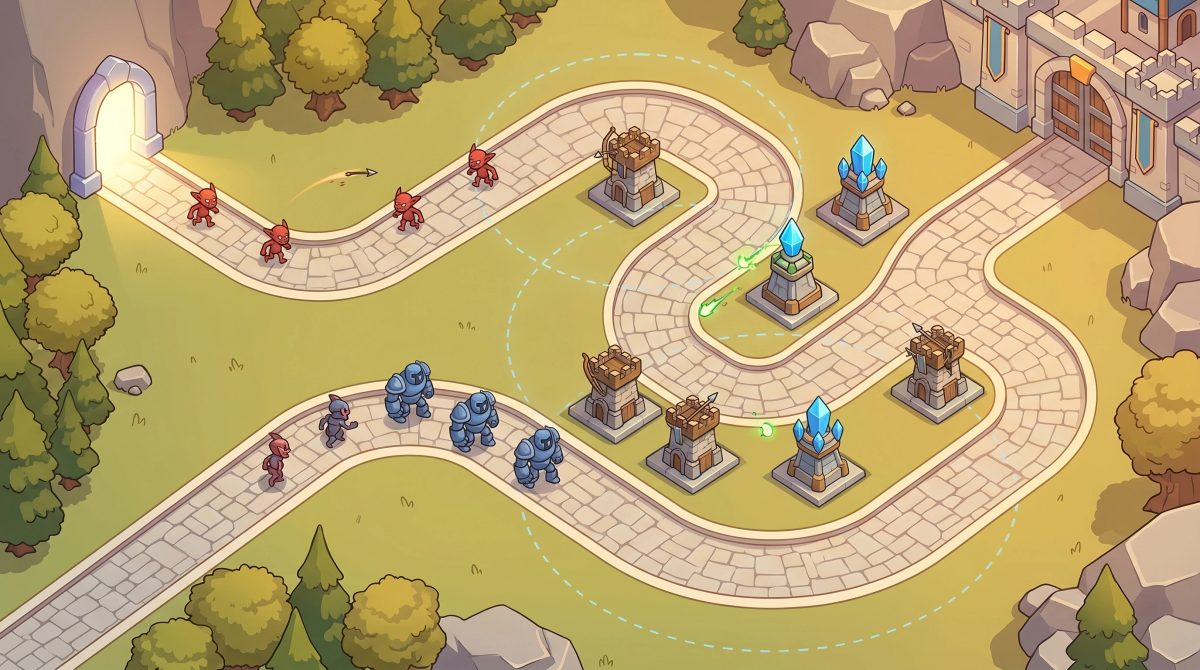
- Clear lane structure: You should immediately understand where waves enter, where they turn, and where your defense can concentrate fire.
- Understandable tower jobs: Good beginner games make it obvious which towers handle crowds, armor, stall, or support.
- A forgiving early game: Early mistakes should hurt, but not end the run before you understand why your line failed.
- Good map readability: Clean paths and visible ranges matter more for new players than huge upgrade trees.
- Manageable upgrade pressure: A smoother learning curve comes from fewer high-stakes choices at once.
A common mistake is choosing a game because it looks deep, then learning the genre through a system-heavy edge case. That usually slows down the fun part: understanding lane control and wave management. Start with clean structure, then move toward complexity.
FAQ
What is the best first tower defense game for a complete beginner?
Bloons TD 6 is the safest first choice for most people. It teaches core lane defense well, the towers are easy to understand, and the early game gives you room to learn without punishing every small mistake.
Which of these is the easiest to understand at a glance?
Plants vs. Zombies is probably the clearest. The lane layout is simple, enemy pressure is easy to read, and each plant has a very understandable defensive role.
Which game teaches classic tower defense fundamentals the best?
For raw fundamentals, Kingdom Rush and Defense Grid: The Awakening are both excellent. Kingdom Rush is the easier on-ramp. Defense Grid teaches stricter placement and route control once you want a more tactical lane-defense structure.
Are these all pure tower defense games?
Yes, this list stays close to classic tower defense. Some picks lean more arcade and some lean more tactical or trap-heavy, but they all center on lanes, towers or traps, waves, and hold-the-line defensive planning.
What should I play after I finish the easiest ones?
Move from Plants vs. Zombies or Kingdom Rush into Bloons TD 6 if you want broader tower interactions, or into Defense Grid: The Awakening if you want more exact placement and route control. If traps and chokepoints interest you, go to Dungeon Warfare.
Takeaway
The best tower defense games for beginners are the ones that make lanes readable, tower jobs obvious, and wave pressure easy to learn from. Start with Bloons TD 6, Kingdom Rush, or Plants vs. Zombies for the clearest first step, then move into the more tactical picks once you want tighter route control and deeper defensive planning.