Best Survival Defense Games
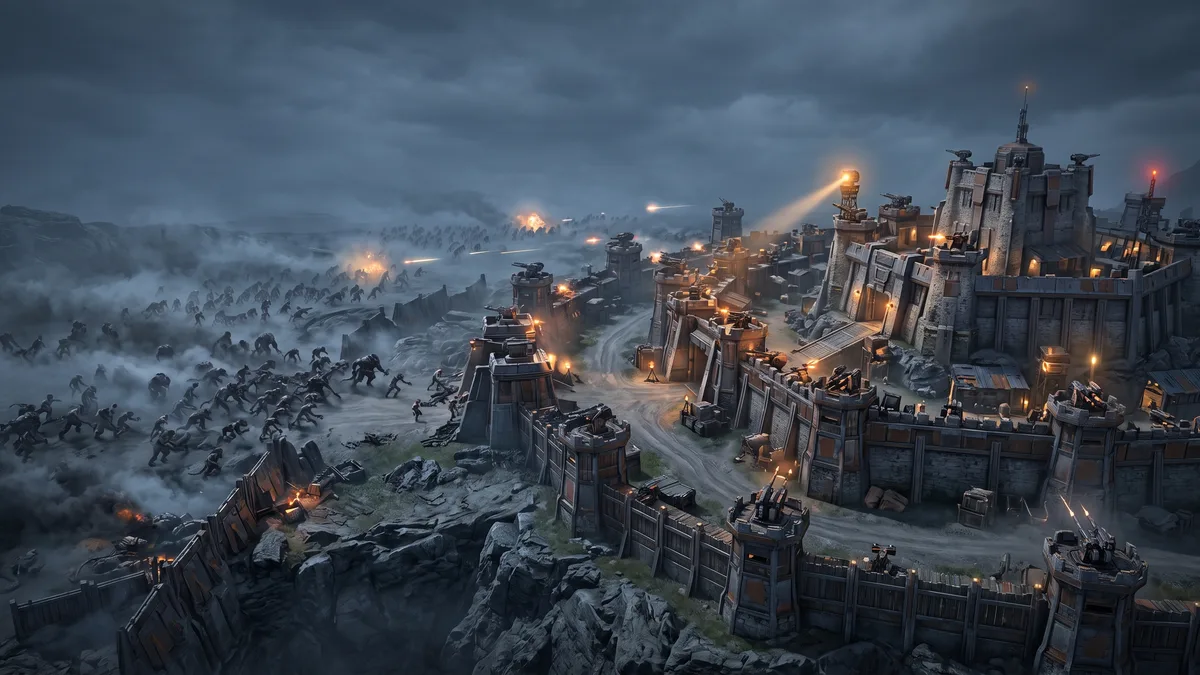
Trying to find survival defense games where fortifications actually matter and one breach can end the run? These are the best picks for constant siege pressure, base survival, and hold-the-line defense.

Best Survival Defense Games
Survival defense games don't give you a countdown before the next wave. The pressure is permanent. The best survival defense games work because the map keeps leaning on your perimeter while you expand, scout, and try to build a base that does not fold the moment one wall segment goes down.
This list stays tight to base-defense and hold-the-line design. That means fortifications, kill zones, perimeter management, and siege pressure first. Some picks lean more tactical, some are more action-heavy, but all of them care about surviving attacks on a real base rather than just solving neat lanes in isolation.
The short answer
The top three are They Are Billions, Riftbreaker, and Age of Darkness: Final Stand.
They Are Billions is still the clearest expression of survival base defense under constant pressure. Riftbreaker is the strongest action-heavy alternative if you want to fight alongside your walls and towers. Age of Darkness: Final Stand hits the same creeping-perimeter anxiety as They Are Billions, but with a darker survival loop and more emphasis on surviving major pressure spikes without losing map control.
The full breakdown
They Are Billions
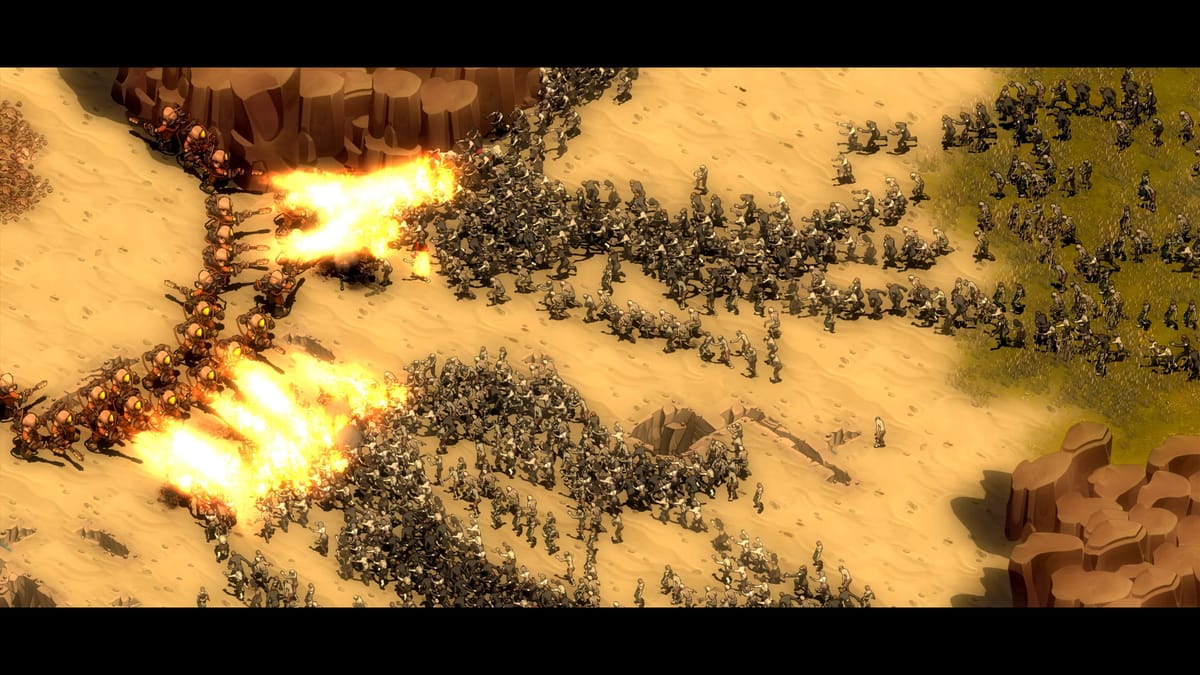
This is still the benchmark for survival base defense. The pressure in They Are Billions does not come from a clean wave timer. It comes from the infected mass constantly creeping toward your walls while fog of war hides the exact point where your next disaster is forming.
That changes the whole defensive loop. You are not just building towers for scheduled attacks. You are laying out a colony where economy and perimeter are inseparable: one bad expansion, one greedy resource grab, one under-defended edge, and the run starts unraveling. The important decisions are all defensive decisions in disguise. Can that new housing block be covered by towers? Can you hold that choke with wood walls long enough to justify pushing there? Do you have enough shock coverage if a side lane collapses?
It fits this topic better than anything else because base survival here is about cascade failure. The moment your perimeter breaks, it rarely stays local. One gap becomes multiple infected inside the base, then workers die, then production stalls, then the rest of the wall gets hit without support behind it. Few games sell that feeling of defensive collapse so cleanly.
Best for players who want survival-heavy, perimeter-first defense with harsh punishment for sloppy scouting and overexpansion. It is less about active hero control and more about strategic base shape, killbox planning, and respecting every blind edge of the map.
Riftbreaker
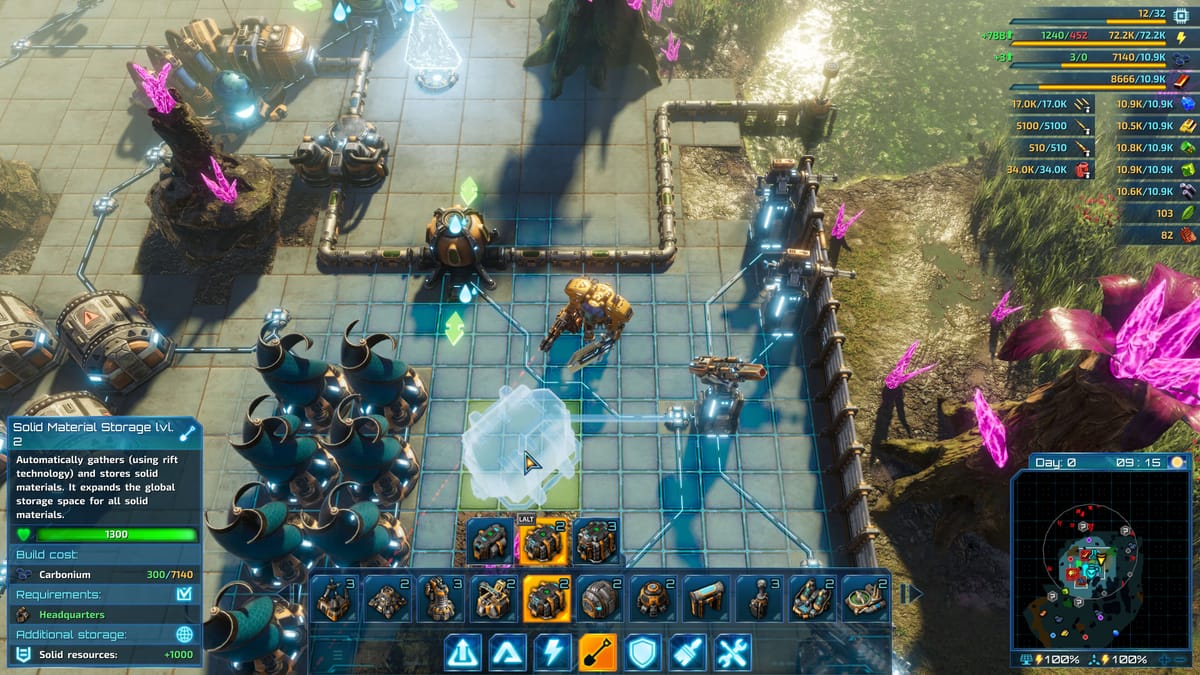
Riftbreaker is what you pick when you want your base defense to stay tower-and-wall driven, but you also want to be the emergency response unit. It is much more action-heavy than They Are Billions, and that changes the pacing in a good way if static defense alone feels too passive.
The core loop is strong because your towers, resource lines, and power grid all sit under real siege pressure. You are building perimeter segments, covering exposed approaches, and deciding where automated defenses can hold versus where the mech has to intervene. Good defenses matter, but so does your ability to sprint to a breach, clear pressure, rebuild, and stabilize before the next push lands somewhere else.
What makes it stand out on this list is how physical the hold-the-line gameplay feels. Chokepoints still matter. So does map coverage. But instead of just watching a fortified line work or fail, you are actively reinforcing weak sectors and using your own combat power to prevent a small breach from becoming a full collapse.
The limitation is simple: this is a hybrid. Players who want pure overhead colony defense with slower planning and clearer macro structure may find the hero-action side too dominant. For everyone else, it is the best base-defense game here for direct involvement.
Age of Darkness: Final Stand
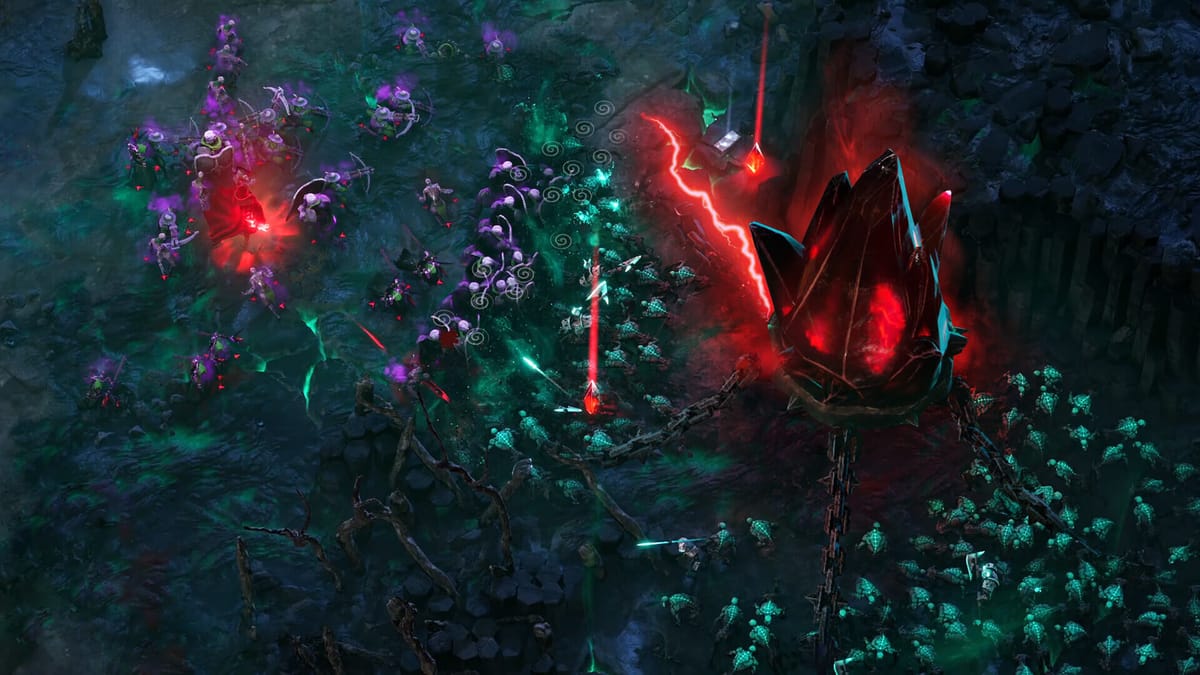
Age of Darkness: Final Stand is the closest high-pressure alternative to They Are Billions for players who want that same creeping dread around the edge of the map. It understands that survival defense is scarier when the threat is ambient, not politely announced.
Its defensive identity is wall-first and choke-first. You expand carefully, lock down approach angles, and build for survival under escalating siege pressure rather than comfortable efficiency. The map never feels fully safe, and the darkness itself adds the same anxiety fog of war creates in stronger survival defense games: you are often defending against what you have not fully seen yet.
This one works especially well for players who like stronger set-piece pressure layered over colony defense. Big attack windows force you to test whether your fortifications are actually stable, not just wide. Can your towers hold if one side gets swarmed? Do you have enough depth behind the first wall? Is your economy strong enough to replace losses without opening another flank?
It is rougher and narrower than the top two, and some players will prefer the cleaner readability of They Are Billions. But if your favorite part of the genre is building a perimeter under constant psychological pressure, this belongs near the top.
Cataclismo
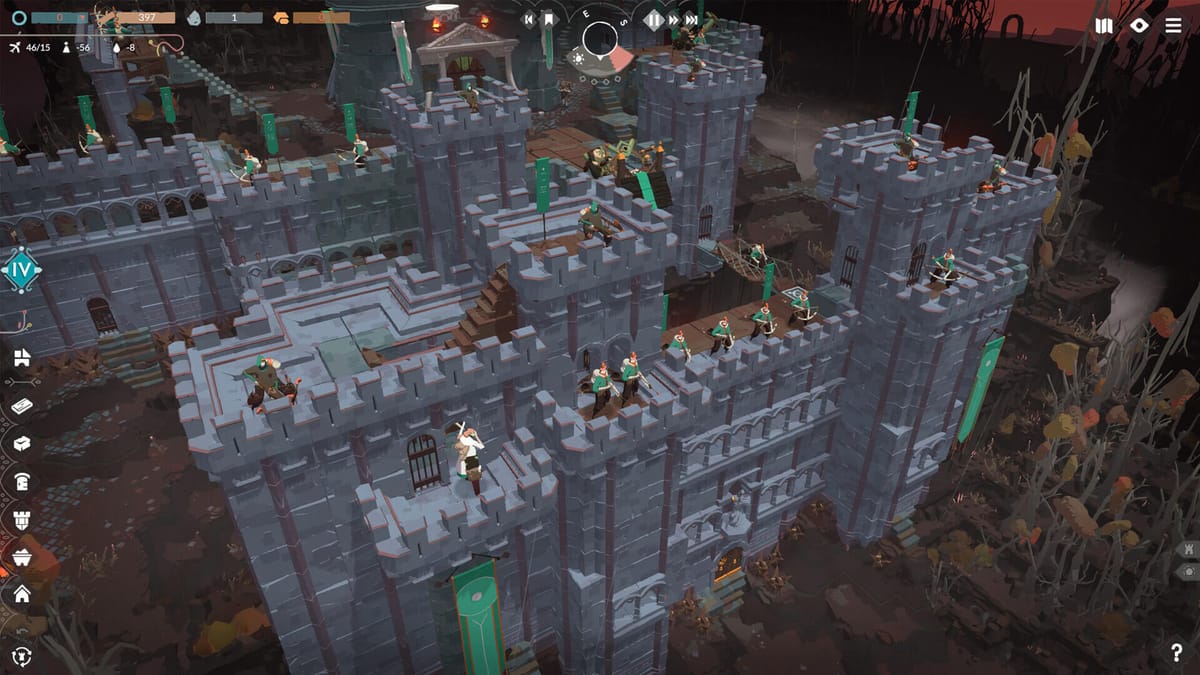
Cataclismo leans harder into fortification architecture than almost anything else here. The hook is not just that you defend a base. The shape, height, and stability of your defensive structures are part of the defense plan.
That makes the hold-the-line loop feel unusually tactile. You are not only covering approach routes with ranged units and defensive emplacements. You are also thinking about how your walls and towers physically create safe firing positions, how they protect support units, and how they hold when sustained siege pressure hits. The result is a more tactical, construction-driven style of survival defense.
For players who care about map geometry, layered walls, and stronghold design, Cataclismo is excellent. It captures the part of base defense where fortification itself is the puzzle, not just unit production behind it.
It is a more deliberate game than the top three. If you want constant scramble energy or lots of direct action, this can feel slower and more methodical than the article’s best all-around picks.
Diplomacy Is Not an Option
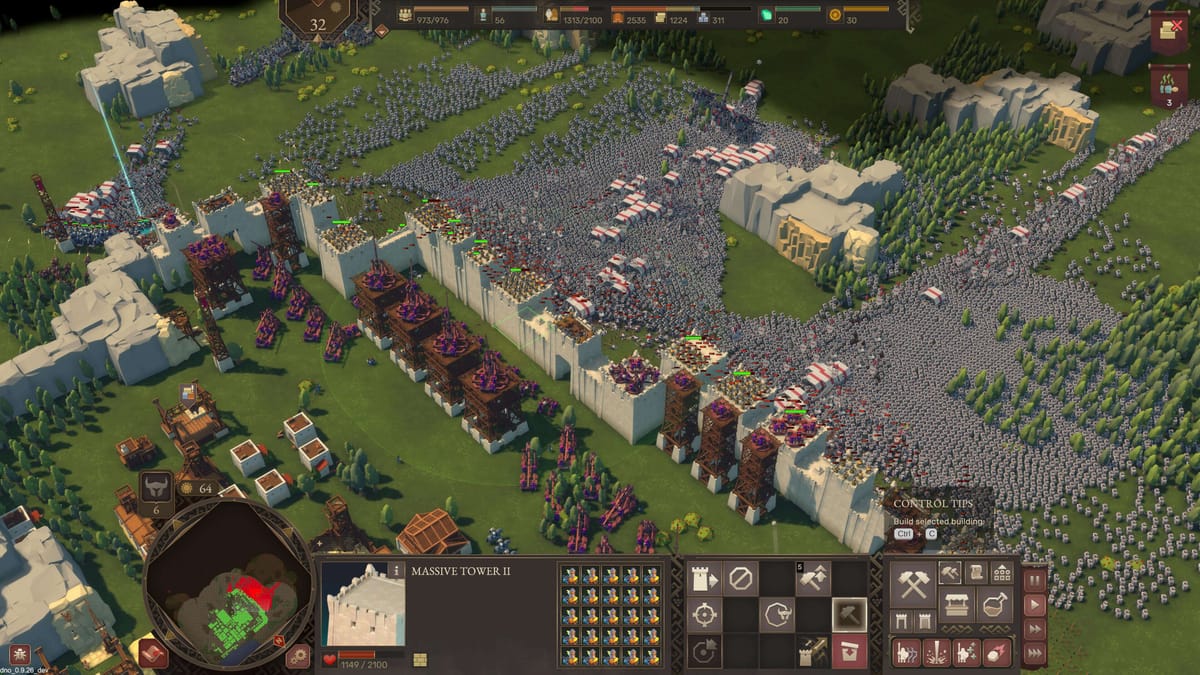
The first thing to know: this game leans into spectacle. Huge enemy masses crash into your walls, and the appeal is watching whether your defensive line, towers, and troop support actually hold under absurd siege density.
That narrower identity is exactly why it makes the list. Diplomacy Is Not an Option is less about pristine macro elegance and more about pressure-testing fortifications against overwhelming numbers. You build up a castle defense, shape kill zones, and try to maintain enough economy to keep archers, siege support, and walls functioning while enemy bodies stack at the perimeter.
Resource management still matters, but the draw is the visual clarity of a wall under stress. You can read where the line is breaking. You can see when a choke is working. And once a side starts collapsing, the game communicates that cascading risk well.
It will click most with players who want survival-heavy base defense with a more arcade-siege feel than They Are Billions. If you want the sharpest systems or the most polished economy-defense balance, there are stronger picks above it.
Rise to Ruins
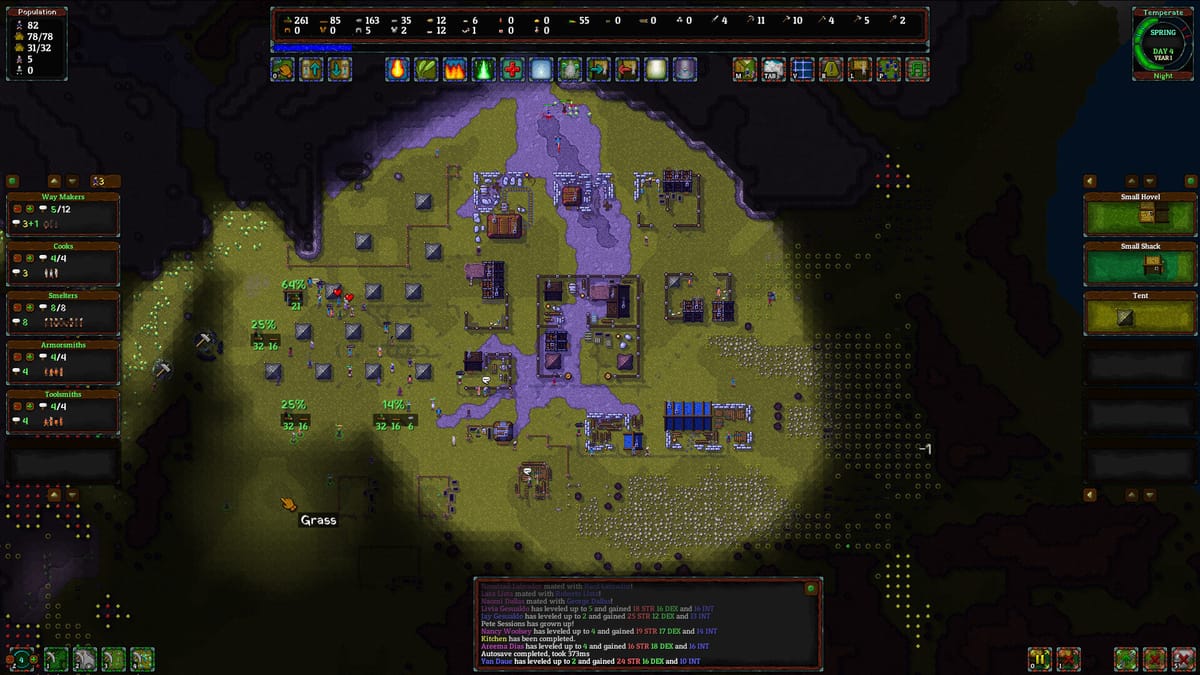
Rise to Ruins is messier than the games above, and that is part of the appeal. Instead of a crisp military perimeter, you are defending a living settlement where economy, villagers, spells, and fortifications all overlap under continuous threat.
The defense loop is base-heavy and survival-heavy. You establish walls and towers, keep the colony supplied, and react to attacks that can punish weak layouts or underdeveloped defensive zones. It has that useful survival defense tension where spending on growth too early often means your perimeter is not ready when pressure spikes.
This fits players who like colony management with their holdout gameplay rather than pure lane logic. The defensive planning is there, but it lives inside a broader settlement sim frame. That means less clean map readability than a stricter defense game and more tolerance for systems friction.
If you want survival base defense with a bit more roughness and sandbox texture, it has a real place here. If you need cleaner frontline clarity, it may feel too diffuse.
Thronefall
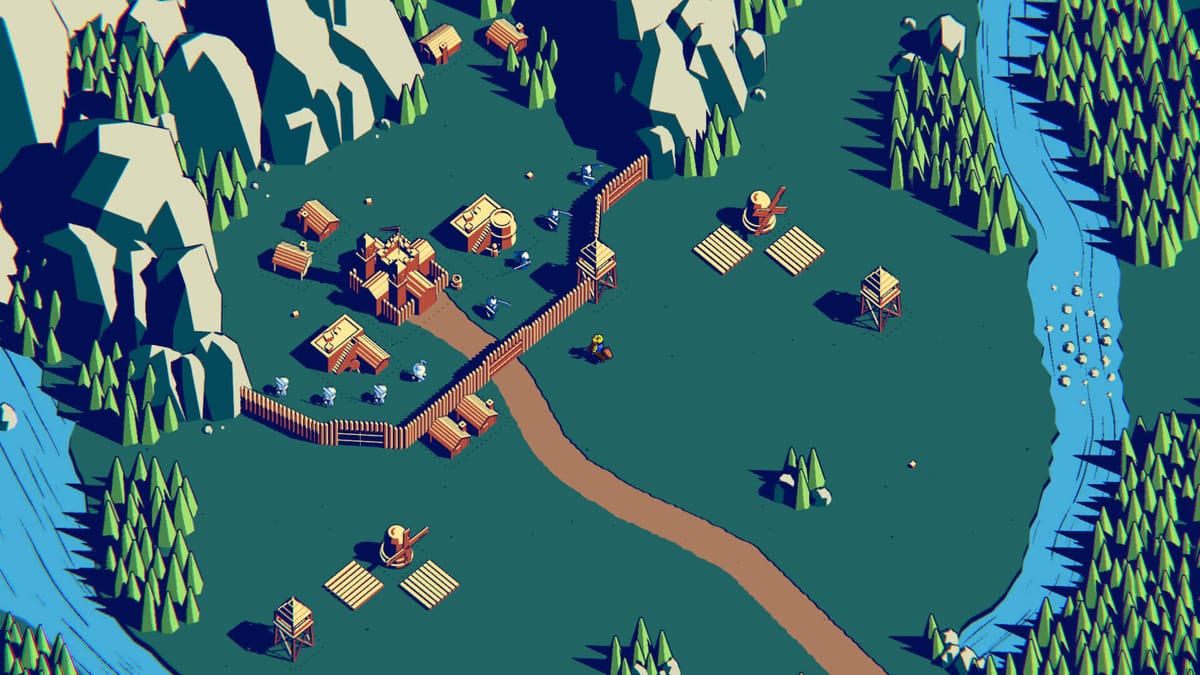
Not everyone wants a long colony sim. Thronefall strips survival base defense down to compact, readable decisions: where the walls go, which approach needs tower support, when to invest in economy, and how much risk you can take before the next assault crashes into your stronghold.
That compression is its advantage. The game moves fast, but the defense choices stay meaningful. You are still building a holdout, still reading incoming pressure by direction, and still making the classic survival-defense tradeoff between greed and stability. A weak flank in Thronefall gets punished quickly, and because the maps are smaller, mistakes are easy to read.
It is the best pick here for players who want a more arcade-tactical version of survival defense without losing the base-protection loop. Your own mounted combat matters, but the game still revolves around whether the settlement layout can survive sustained pressure.
The catch is scope. Thronefall is not trying to be a giant systems-heavy siege sim, so players chasing dense colony management or sprawling perimeter planning should look higher on the list.
Mindustry
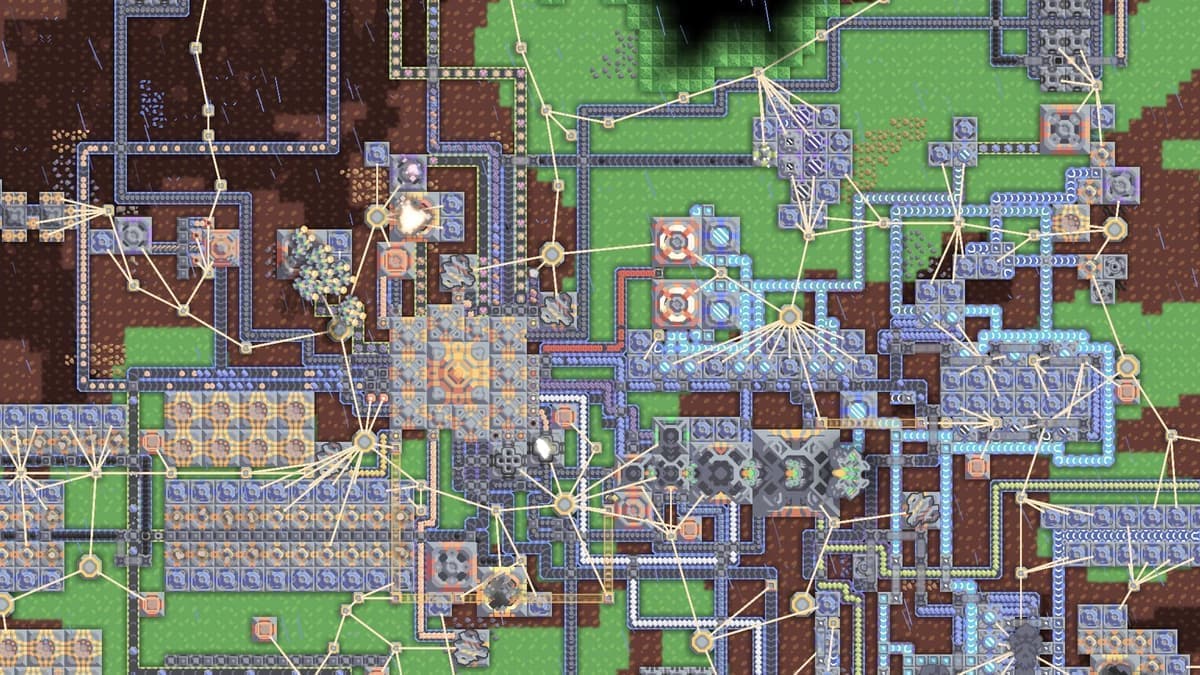
Mindustry is the systems-heavy option. Belts, power, production lines, turret coverage, and base layout all feed directly into whether your defenses survive incoming pressure. It is not just about placing towers on a border and calling it done; your industrial backbone is part of the wall.
That matters for this topic because survival defense gets sharper when logistics can kill you. A turret network with bad ammo flow is not a real perimeter. A power grid that fails under attack is a breach waiting to happen. Mindustry turns those support systems into frontline concerns, which gives it a different kind of hold-the-line tension than more straightforward horde defense games.
It suits players who like exact base planning and clear cause and effect. You can look at a failed defense and usually trace the problem back to production, routing, or coverage gaps. That is strong defense design.
Less ideal if you want atmospheric siege survival or dramatic fortification collapse. Mindustry is more technical and abstract than the stronger survival-heavy picks above it, even though the base-defense core is absolutely real.
Creeper World 4
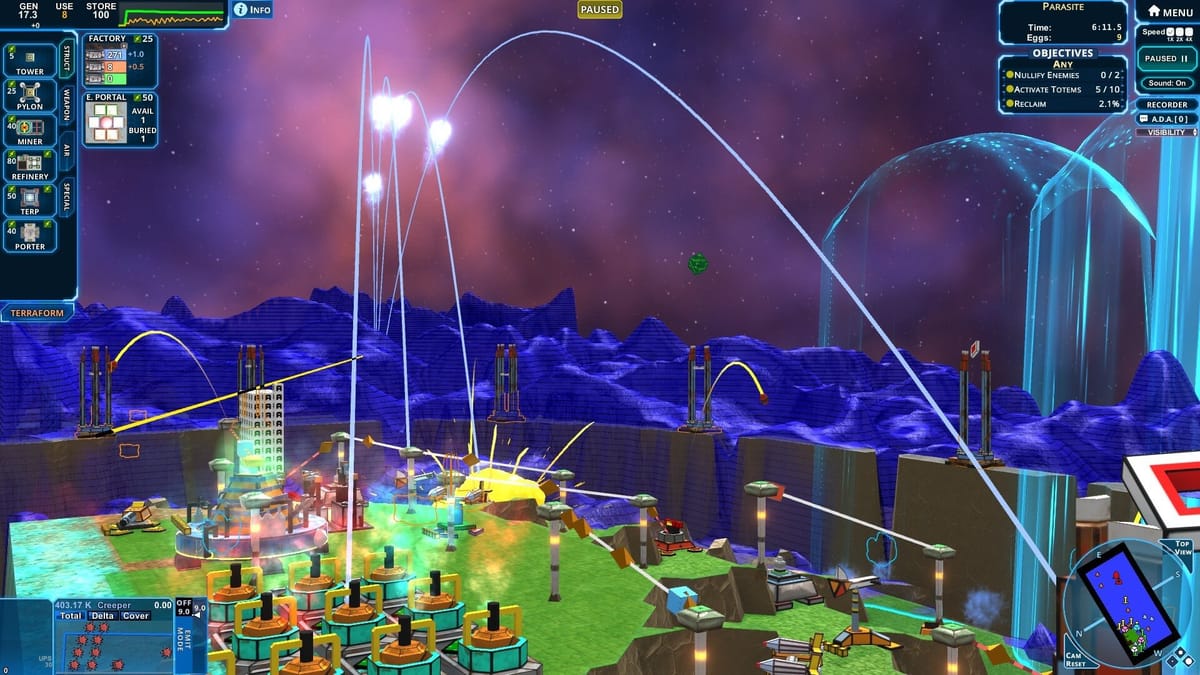
This is a specialist pick, not a conventional horde-siege recommendation. You are not defending against humanoid waves battering walls. You are holding ground against a spreading fluid-like threat that overwhelms territory if your defensive line and forward positions are not managed properly.
The reason it still earns a spot is simple: few games are this good at sustained perimeter pressure. You establish fortified positions, extend carefully, and use emplacements to stop your base from getting drowned by ambient enemy presence. It captures the feeling that the battlefield itself is hostile and that losing one sector can compromise everything behind it.
Creeper World 4 is best for tactical players who care more about frontlines, pressure gradients, and base-safe expansion than about traditional castle fantasy or colony sim texture. Chokepoints still matter, but in a more spatial, systems-like way.
If your idea of the best holdout defense games requires walls, archers, and obvious siege waves, this is a partial fit rather than a pure one. For sustained territorial defense, though, it is very strong.
Border Pioneer
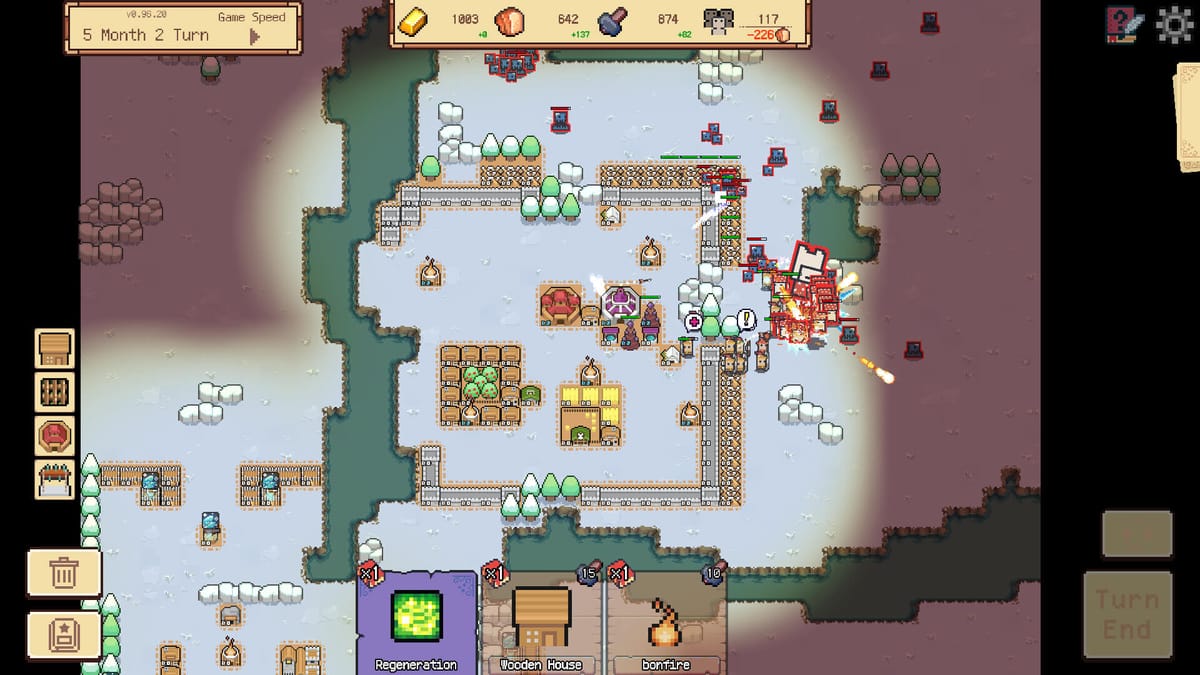
Border Pioneer is the most edge-case recommendation on this list, and that is exactly why it sits last. It has the base-defense spine the article needs, but it is lighter, narrower, and more conditional than the stronger picks above it.
The interesting part is how it ties frontier expansion to defense readiness. You are building out a vulnerable settlement while trying to maintain enough defensive structure to survive pressure on the border. That creates a familiar survival-defense problem: every economic step outward also creates another angle that has to be defended.
It works best for players who want something smaller-scale and more run-driven without abandoning walls, towers, and settlement protection. The appeal is not giant spectacle. It is the tension of trying to stabilize a growing outpost before pressure catches up.
Players wanting the broadest, safest recommendation should start much higher on the list. But if you have already played the core names and want another base-survival defense game with clear perimeter stakes, Border Pioneer is worth a look.
Honorable mentions
Northgard almost made it because it does produce real holdout moments around settlement defense and territorial chokepoints. It fell short because the defensive loop is too often subordinate to broader RTS-style expansion and faction play rather than sustained perimeter survival.
Factorio is another near miss. The base-defense side is real, especially when biters start testing walls and turret coverage, but the game’s center of gravity is still factory optimization first. For this list, the defense loop had to stay more visibly front-and-center.
FAQ
What makes a survival defense game different from tower defense?
The key difference is pressure shape. Classic tower defense usually gives you defined lanes and clearer wave starts. Survival defense games keep the threat ambient and persistent. You are protecting a base, managing a perimeter, and trying to prevent one breach from cascading through the whole settlement.
What is the best survival defense game overall?
For most players, They Are Billions is still the best survival defense game overall. It has the clearest mix of colony building, perimeter defense, creeping external pressure, and catastrophic punishment when your line breaks.
Which survival defense game is best if I want more direct combat?
Riftbreaker is the obvious pick. It keeps towers, walls, and base survival central, but adds active mech combat so you can personally respond to breaches and pressure spikes.
Are these mostly wave survival defense games or constant-pressure games?
Mostly constant-pressure games. Some have larger assault phases or major attack spikes, but the list prioritizes survival base defense games where the threat keeps building in the background instead of waiting politely for a wave timer.
Which game here is best for fortification building?
Cataclismo is the strongest pick if your main interest is fortification design itself. Structural layout, elevated firing positions, and how your walls physically support defense are a bigger part of the game than in most other entries.
Bottom line
The best survival defense games make every expansion feel risky and every wall segment feel important. Start with They Are Billions if you want the purest answer, move to Riftbreaker for action-heavy base defense, and pick Age of Darkness: Final Stand if you want that same creeping perimeter dread with a darker, harsher survival tone.